
Unnumbered pageScan 168 of 180
Continued from scan 167
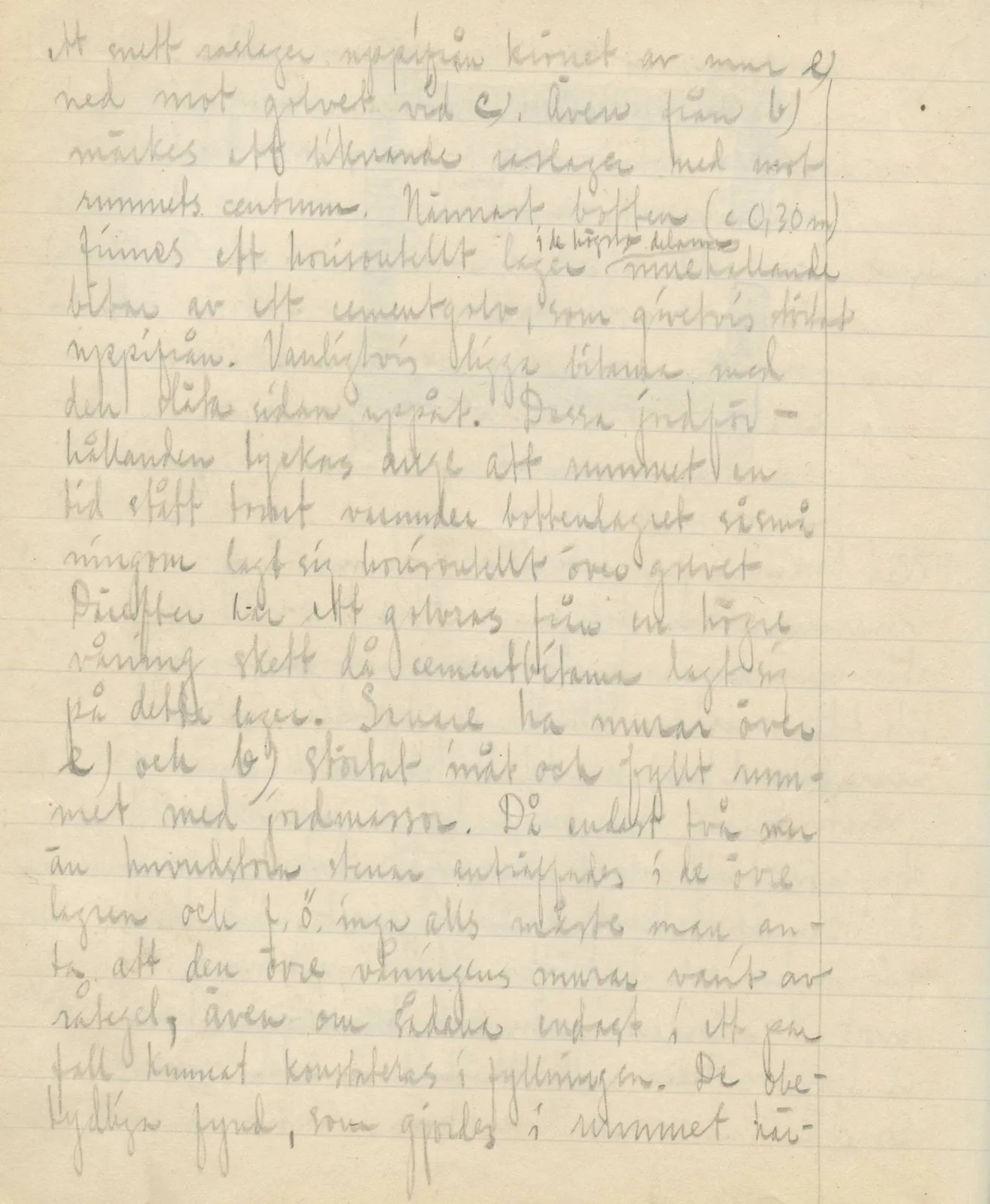
… a sloping collapse layer from above the crest of wall e) down towards the floor at c). Also from b) a similar collapse layer is noted down towards the centre of the room. Nearest the bottom (c 0,30 m) there is a horizontal layer in the highest parts containing pieces of a cement floor, which had evidently collapsed from above. Usually the pieces lie with the smooth side upwards. These earth-conditions seem to indicate that the room for a time stood empty, during which the bottom layer gradually settled horizontally over the floor. Afterwards a floor collapse from a higher storey has occurred, when the cement pieces settled on this layer. Later walls above e) and b) collapsed inward and filled the room with earth masses. Since only two more than head-sized stones were found in the upper layers and besides none at all, one must assume that the walls of the upper storey were of mudbrick, even if such were only in a couple cases established in the fill. The insignificant finds, which were made in the room here … continues
65 figures hard to readstruck struck outadded written in above” jug ditto, and what it repeatsword reading not certain