
Unnumbered pageScan 156 of 180
Continued from scan 155
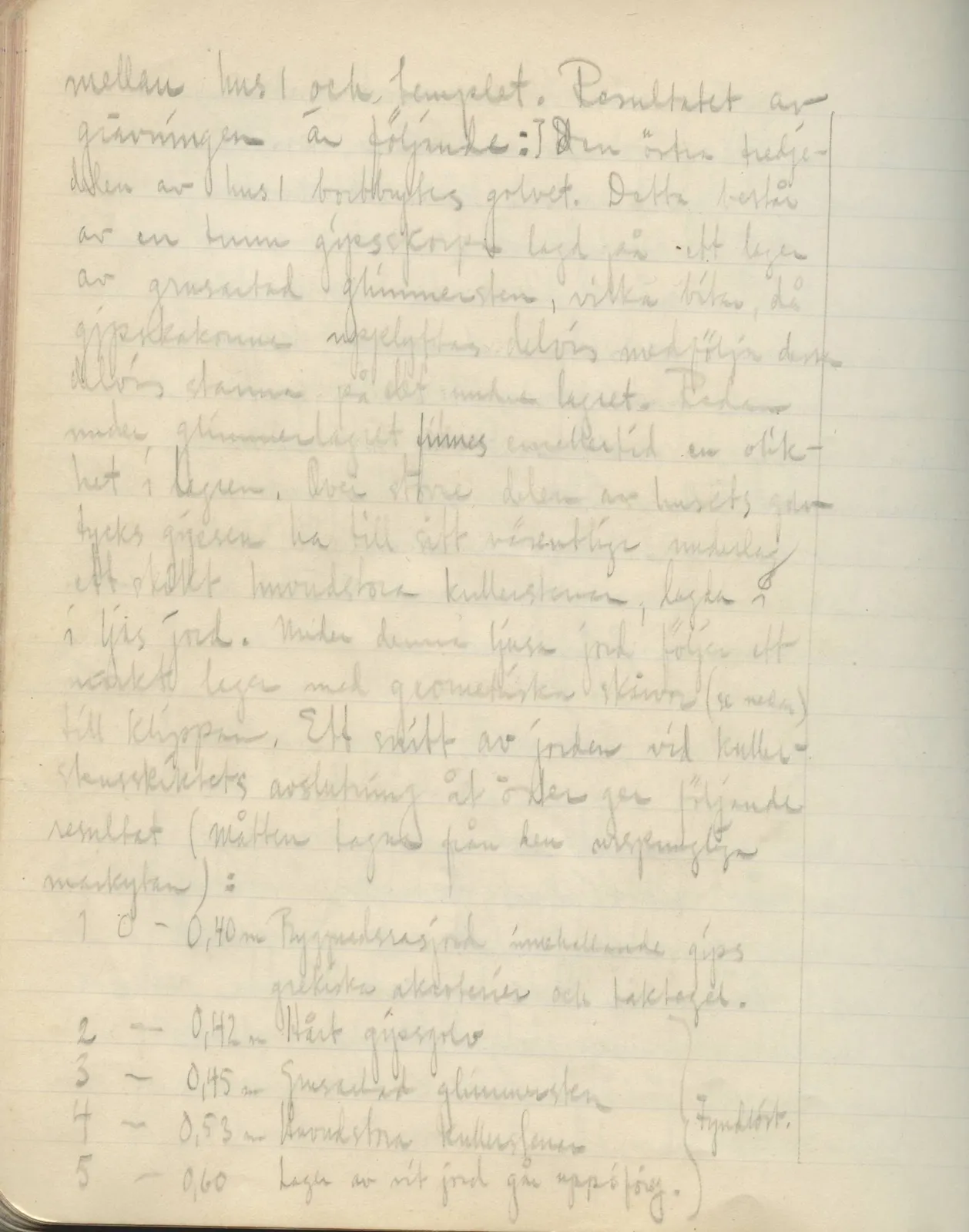
… between house 1 and the temple. The result of the excavation is as follows: In the eastern third of house 1 the floor is cut away. This consists of a thin gypsum crust laid on a layer of gravelly mica-stone, which pieces, when the gypsum cakes are lifted, partly accompany these and partly remain on the lower layer. Already beneath the mica layer, however, there is a difference in the layers. Over the greater part of the house's floor the gypsum appears to have as its essential bedding a level of head-sized cobblestones, laid in light earth. Beneath this light earth follows a dark layer with geometric sherds (see below) down to the rock. A section of the earth at the cobblestone level's termination to the east gives the following result (measurements taken from the original ground surface):
| 1 | 0 – 0,40 m | Building debris earth containing gypsum |
| Greek akroteria and roof tile. | ||
| 2 | – 0,42 m | Hard gypsum floor |
| 3 | – 0,45 m | Gravelly micaceous stone} Without finds. |
| 4 | – 0,53 m | Head-sized cobblestones |
| 5 | – 0,60 | Layer of white earth goes upside down. |
65 figures hard to readstruck struck outadded written in above” jug ditto, and what it repeatsword reading not certain