
Page 128Scan 84 of 95
Continued from p. 127
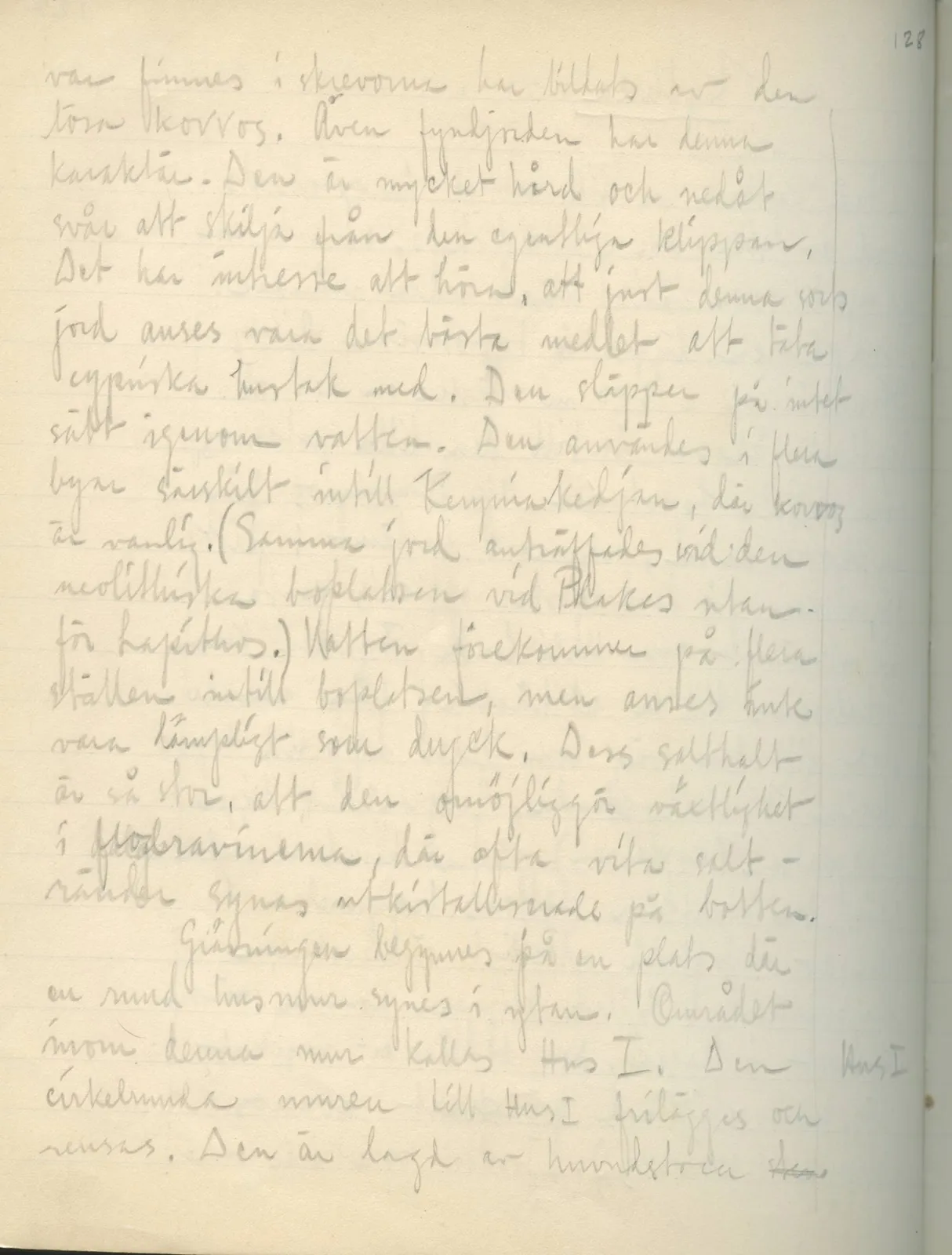
… where the cracks in the rock have been formed by the loose konnos. The find earth also has this character. It is very hard, and downwards difficult to distinguish from the actual rock. It is of interest to hear that this very kind of earth is considered the best means of sealing Cypriot roofs. It lets through no water whatsoever. It has been used in several villages, particularly close to the Kerynia range, where konnos is common. (The same earth was found at the Neolithic settlement near Plakes southof Lapithos.) Water occurs in several places close to the settlement, but is not considered suitable for drinking. Its salt content is so great that it makes plant life impossible in the river ravines, where white salt-streaks often show crystallized out on the bottom.
House Ithe excavation is begun at a place where a round house wall shows in the surface. The area within this wall is called House I. The circular wall of House I is exposed and cleared. It is laid of head-sized stones … continues
65 figures hard to readstruck struck outadded written in above” jug ditto, and what it repeatsword reading not certain