
Unnumbered pageScan 95 of 133
Continued from p. 93
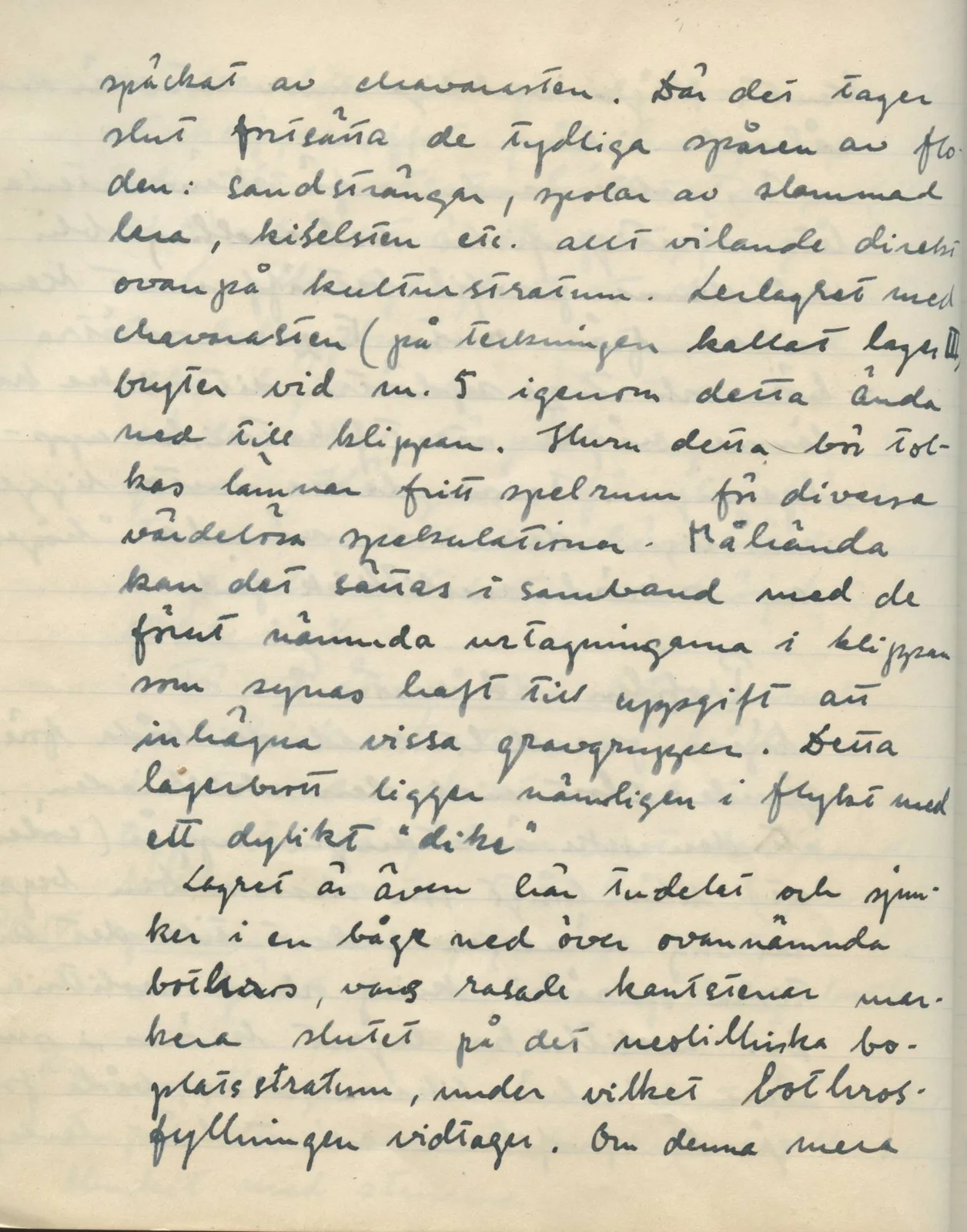
… full of chavara stones. Where it ends at last, the clear traces of the flood continue: sand streaks, lenses of washed clay, pebbles etc., all lying directly on top of the cultural stratum. The clay layer with chavara stones (on the drawing called layer III) breaks through this at m. 5 all the way down to the rock. How this is to be explained leaves free scope for various worthless speculations. Perhaps it can be connected with the previously mentioned cuttings in the rock which seem to have had the purpose of enclosing certain tomb groups. This layer break namely lies in line with such a "ditch" The layer is here too divided in two and sinks in an arc down over the above-mentioned bothros, whose collapsed edge stones mark the end of the Neolithic settlement stratum, beneath which the bothros fill begins. About this more … continues
65 figures hard to readstruck struck outadded written in above” jug ditto, and what it repeatsword reading not certain