Mould-made hollow bust of a standing woman, Salamis
Object card: 1969. Mission archéologique française de Kition-Salamine (MOM, Lyon), Nakala, SAL_4871. "Mould-made hollow bust of a standing woman, Salamis". CC BY 4.0. Resized.
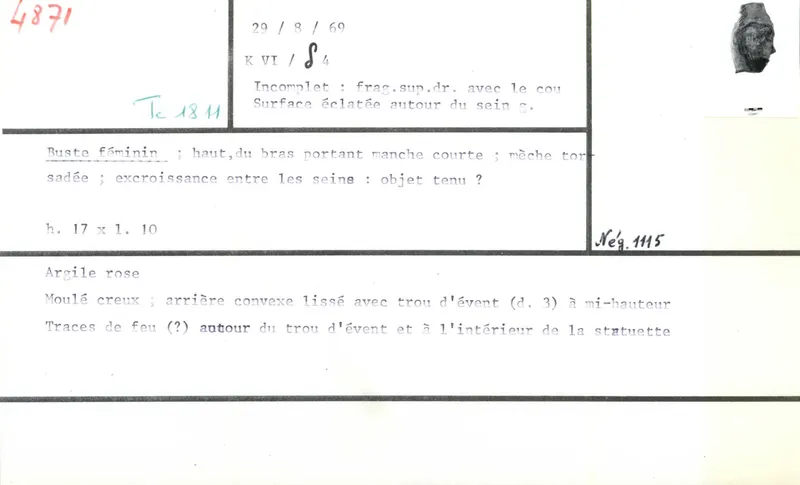
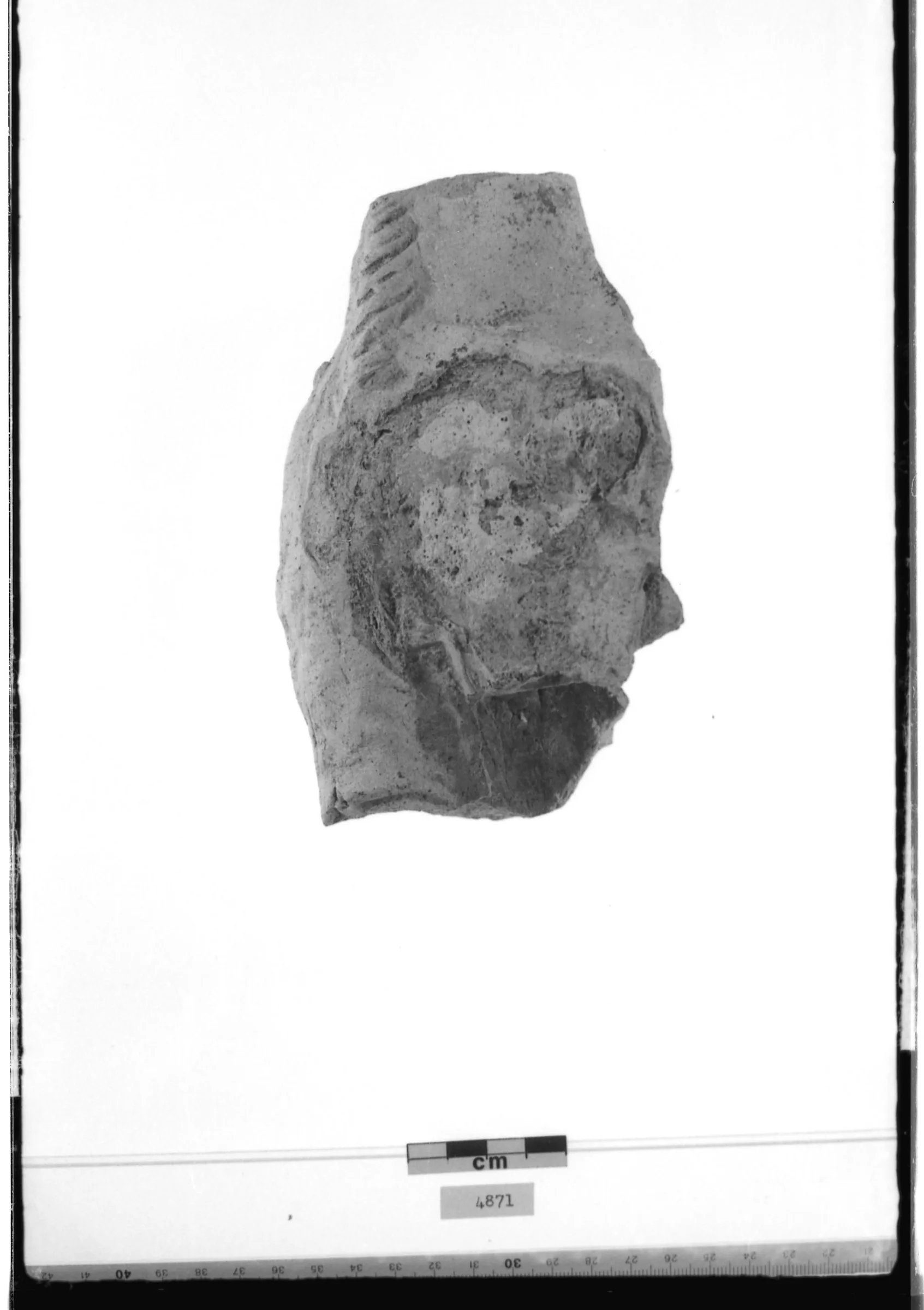
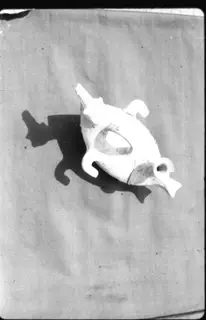
Fragment of a hollow mould-made bust and neck of a standing woman, right side, with the arm and back; Classical period; Salamis, area south of the rampart, square K VI/δ4. Pink fabric; the back is convex and well smoothed, with a vent hole at mid-back, H. 17; the surface is flaked over almost all the preserved part of the bust, and fire traces surround the vent hole and the inside of the figurine; L. 10. The neck is strong and fully exposed, the tunic has a very open V neckline with no necklace visible though surface loss may have removed it, and the arm hangs along the bust, drawn slightly forward, in a mid-length sleeve with a hem visible at the elbow; a fine twisted parotid lock runs straight down the neck from the ear (not visible) to the shoulder. Inventory Tc_1811; 29 August 1969.
French, as on the record
chantier : Zone au sud du rempart
epoque : Classique
objet : Femme debout drapé indéterminé
carre : K VI/δ4
forme : Figurines moulées creuses
type :Bustes
caracterique : Drapé du dessous : chiton, tunique
arrière convexe bien lissé
trou d'évent à mi-dos. H. 17
surface éclatée sur presque toute la partie du buste conservée
diapositives : C_4877
inv objet : Tc_1811
inv tessons : Tc_1811
negatif : 01115_01
pub : SAL_PUB_139892_XIV_CAT_14_0431_p_0134
traces de feu autour du trou d'évent et à l'intérieur de la figurine. Pâte rose. Moulé creux
Fragment de buste et de cou, côté droit, avec le bras et l'arrière
l. 10. Cou fort, entièrement dégagé, car la tunique présente un décolleté en V très ouvert, dans lequel on ne voit pas de collier, mais l'arrachement de surface a tout emporté à cet endroit. Le bras pend le long du buste, en revenant légèrement en avant, pris dans une manche mi-longue (ourlet visible au coude). Une belle mèche parotide torsadée longe le cou, toute droite, de l'oreille (non visible) à l'épaule.
Corrections and additions
Can you tell us more about this?
If you can identify, date or place this item, or know where else it is recorded, we would like to hear.