
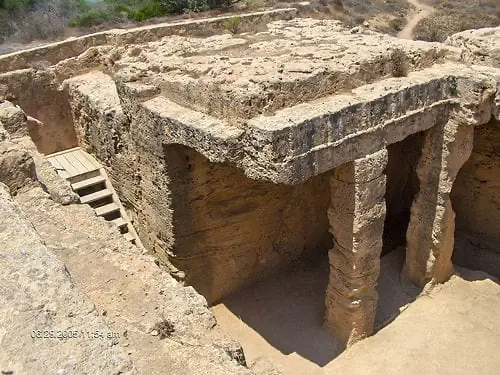
Makronissos Tombs
The archaeological site of the Makronissos Tombs, situated in Nissi Beach on the southeastern coast of Cyprus, represents a significant funerary landscape, primarily dating to the Hellenistic and Roman periods.
A Gateway to the Afterlife
The archaeological site of the Makronissos Tombs, situated in Nissi Beach on the southeastern coast of Cyprus, represents a significant funerary landscape, primarily dating to the Hellenistic and Roman periods. While its immediate prominence lies in these later historical phases, the broader archaeological context of Nissi Beach, and indeed Cyprus as a whole, reveals a much deeper and more complex history of human presence and mortuary traditions. For the educated reader unfamiliar with this specific locale or the long sweep of Cypriot archaeology, the Makronissos Tombs serve as an entry point into understanding the island's distinctive burial customs, their evolution, and their reflection of changing social structures and external interactions over millennia.
The Site of Makronissos Tombs: Location and Primary Period of Occupation
The Makronissos Tombs are located in Ayia Napa, Nissi Beach, in the eastern part of Cyprus. Archaeological investigations by Sophocles Hadjisavvas in 1997 identified this necropolis, highlighting its composition of rock-cut chamber tombs. The primary period of use for these tombs extends from the Hellenistic I period (circa 310-150 BC) to the early 4th century AD, thus spanning a considerable portion of the Hellenistic and Roman eras. Comparisons have been drawn between the architectural design and dating of the Makronissos Tombs and those found at Magara Tepeçi, another necropolis in Cyprus that similarly bridges the Hellenistic and Roman periods.
Architectural Features and Burial Practices at Makronissos
The tombs at Makronissos, as rock-cut chamber tombs, align with a long-standing tradition of funerary architecture in Cyprus. While specific architectural details of Makronissos are not extensively detailed in the provided sources beyond their general classification as rock-cut chamber tombs, broader parallels can be drawn from other Cypriot necropoleis of the Hellenistic and Roman periods. These tombs were typically closely packed together, often located in marginal areas adjacent to ancient roads or on the periphery of settlements. This spatial arrangement suggests a systematic organization of burial grounds. It is posited that tracts of land or specific cemetery plots were delineated and sold to family groups or other collective organizations, such as burial clubs, sometimes marked by walled enclosures, as seen at Nea Paphos. The presence of cippi, plaques, and burial stelai at Hellenistic and Roman-period tombs across Cyprus further indicates a practice of marking tombs and often identifying the deceased by their family relationships.
Within these tombs, evidence for funerary rituals includes the lighting of lamps, performance of libations, and practices of exhumation. Notably, some of these rituals, such as the lighting of lamps, are observed to persist in burial rites in modern Cyprus, suggesting a remarkable continuity of certain traditions over centuries. The material culture recovered from such tombs, including terracotta lamps, offers insight into the specific objects involved in these mortuary practices. The concept of tomb reuse for multiple interments, a pervasive theme throughout Cypriot funerary archaeology, would also likely apply to the Makronissos Tombs, reflecting a sustained engagement with ancestral burial spaces.
Deep Time in Nissi Beach: The Earliest Human Presence
While the Makronissos Tombs themselves belong to later historical periods, the very location of Nissi Beach holds significance for understanding the earliest human presence on Cyprus. Initial surface surveys at Ayia Napa Nissi Beach identified chipped stone assemblages that were believed to be approximately contemporary with Akrotiri Aetokremnos, a pivotal Late Epipalaeolithic site. Akrotiri Aetokremnos, excavated starting in 1988, dramatically altered the understanding of Mediterranean prehistory by demonstrating an early human occupation of Cyprus around 12,000 calibrated years Before Present (cal. BP). This site is considered one of the oldest well-documented archaeological localities on any Mediterranean island and has been central to discussions regarding human involvement in the extinction of endemic fauna, such as the Cypriot pygmy hippopotamus.
However, subsequent excavations at Nissi Beach revealed that the seemingly early surface material was, in fact, relocated. The uncovered lower layers were chronologically younger, dating to the Early Neolithic period, contemporary with sites like Parekklisha Shillourokambos. Radiocarbon dates from limpet shells at Nissi Beach, specifically 8940 ± 40 and 8522 ± 39 cal. BP, corroborate an Early Neolithic placement. The presence of obsidian and long blades at Nissi Beach also shows closer parallels to Early Neolithic materials. This complexity, including debates about "stratigraphic inversion" where older materials appear on the surface due to natural phenomena like tsunamis or storm surges, underscores the challenges and nuances of interpreting early archaeological landscapes. Regardless of the exact earliest date, Nissi Beach’s archaeological record, when viewed comprehensively, represents a continuum of human activity from very early prehistoric times, providing a rich backdrop for understanding the later, more formally organized funerary complexes like the Makronissos Tombs.
The Trajectory of Mortuary Practices in Cyprus: A Broader Archaeological Perspective
The Makronissos Tombs, though Hellenistic-Roman, are part of an exceptionally long and diverse tradition of funerary practices in Cyprus. Understanding the significance of these particular tombs is enhanced by a survey of the evolution of Cypriot mortuary architecture and ritual from the prehistoric periods to the Iron Age.
Chalcolithic Period (c. 4000–2500 BC)
During the Chalcolithic period, common mortuary features included pit and chamber tombs, often cut into the hard, white secondary limestone known as havara or kafkalla. These were typically located in extramural cemeteries. A defining characteristic was the reuse of tombs for multiple primary and secondary burials, alongside the regular deposition of grave goods. Sites like Souskiou Laona and Vathyrkakas Cemetery 1 demonstrate high tomb densities. There was variability in the size and form of tomb features, including shafts and pits. "Scoop pits" might have served a mortuary function other than direct burial, possibly related to secondary manipulations of human remains. The analysis of human remains from Souskiou Laona provides insight into burial programmes and body treatments during this period, with evidence for the arrangement of bone elements within "bonestacks". Grave goods varied significantly, suggesting nascent wealth differentiation; for example, bell-shaped shaft tombs yielded different assemblages than square pit-and-shaft tombs. At Prastio Ayios Savvas, an ossuary contained disarticulated remains of multiple individuals, indicating secondary burial practices. Erimi Pamboula also contained pit graves, some under hut floors, with associated animal remains and pottery sherds. The general scarcity of intentional burials at sites like Kalavasos Ayious suggests that dedicated burial facilities might have been located elsewhere in the community.
Early and Middle Bronze Age (c. 2500–1650 BC)
The Early and Middle Cypriot (EC-MC) periods continued the use of extramural cemeteries with rock-cut chamber tombs and pit tombs. These tombs often show architectural embellishments, such as carved facades and human figures in bas-relief in the dromos (access passage), suggesting their perception as shrines for ancestors rather than mere repositories for the dead. Plank idols, sometimes found in tombs, may represent generic ancestor images. The repeated reuse of tombs for successive burials, sometimes over centuries, was a common practice, highlighting the importance of kin affiliation and intergenerational ties. The architecture varied considerably, from simple pits to more elaborate chambers with niches or benches. Sites like Lapithos Vrysi tou Barba, Vasilia Kafkallia, and Karmi Palealona exemplify these developments. The contents of these tombs, including ceramics, copper objects, and other goods, indicate a rising consumption of material wealth in funerary celebrations, although - looting and poor early excavation standards often limit detailed analysis. The largest and most lavish mortuary displays tended to focus on groups of burials, not solely individuals, reinforcing the communal aspect of status and identity.
Late Bronze Age (c. 1650–1050 BC)
The Late Cypriot (LC) period witnessed significant social and economic changes, with mortuary practices reflecting increasing urbanization and long-distance trade networks. Rock-cut chamber tombs remained the prevalent tomb type, often accommodating collective burials and demonstrating a persistence of secondary burial practices. Many tombs continued to be used for hundreds of years, posing challenges for precise chronological interpretation due to disturbances like flooding, roof collapse, and looting.
A notable development in this period was the appearance of built tombs, constructed from finely-cut ashlar blocks and topped with rough-hewn slabs, particularly at sites like Enkomi. These built tombs, along with some tholos tombs (circular, often domed chambers), are thought to have been inspired by Near Eastern or Aegean types, such as those found at Ugarit. Enkomi, a major LC urban center, is known for hundreds of tombs excavated by various missions. Tomb 66 at Enkomi, an intact built tomb, exemplifies the wealth and complexity of burials, containing a range of grave goods from across the LC period. The relationship of these built tombs to contemporary settlements indicates that they were often situated within or in alignment with urban architectural phases. Other significant LC mortuary sites include Kition, Hala Sultan Tekke (with large pit tombs), and Kourion Bamboula, which yielded a diverse range of Cypriot and imported Mycenaean-style ceramics, jewelry, and metal objects. The presence of imported goods underscores the extensive interregional connections during this period.
Iron Age (c. 1050–323 BC)
The Iron Age saw a continuation and further elaboration of tomb types, reflecting the emergence of distinct city-kingdoms and increasingly stratified societies. The "Royal Tombs" at Salamis, dating from the 8th to the early 6th centuries BC, are particularly renowned. These monumental built chamber tombs, characterized by elaborate architecture and rich funerary rituals, indicate the burial of elites, possibly a dynasty of city-kings. Their grandeur, sometimes involving monumental mounds or tumuli (like Salamis Tomb 3), is unparalleled on the island. The expansive, often paved dromoi of these tombs were central to public funerary displays and rituals, including the sacrifice of animals (horses, donkeys) and, in some cases, human sacrifice, alongside feasting and the deposition of luxury goods. These practices have been controversially linked to Homeric burial customs.
Rock-cut chamber tombs remained common across Archaic Cyprus, at sites such as Amathus, Tamassos, and Kition. Some built tombs with fine ashlar masonry also appeared at Idalion, Pyla, and Xylotymbo. The earliest constructed Iron Age tombs have been found at Amathus-Loures, dating to the Cypro-Geometric II to Cypro-Archaic I periods (10th-7th centuries BC). These tombs, while perhaps not as opulent as the Salamis "Royal Tombs," still demonstrate regional wealth through locally produced ceramics and imported Levantine pottery. The wealth of grave goods and tomb architecture provided significant status indicators, marking social differentiation within communities. The Cypro-Classical period (mid-5th to late 4th century BC) saw continued rich grave goods, such as those from Tombs 73 and 83 at Kourion.
Interpreting Social Structures and Cultural Connectivity through Tombs
The archaeological record of Cypriot mortuary practices, from the earliest prehistory through the Iron Age, offers a profound lens into the island's social complexity, ideology, and external relations. The consistent practice of collective burials and tomb reuse, as observed from the Chalcolithic through the Bronze and Iron Ages, highlights the enduring importance of kinship and familial ties in Cypriot society. Tombs were not merely resting places but communal spaces that reaffirmed social identities across generations. The degree of architectural elaboration and the richness of grave goods directly correlate with social status and hierarchy, indicating that funerary displays were significant arenas for expressing prestige and power by the living.
Furthermore, the material culture found within these tombs speaks volumes about Cyprus's extensive network of contacts throughout the Mediterranean and Near East. Imported pottery (Mycenaean, Levantine, Greek), metal objects, and other exotic goods illustrate the island’s role as a dynamic participant in regional trade and exchange networks from the Bronze Age onwards. The presence of foreign-influenced architectural styles (e.g., built tombs inspired by Ugarit) and ritual practices (e.g., debated Homeric associations at Salamis) demonstrates the selective adoption and adaptation of external ideas into distinct Cypriot cultural forms. This process of integration often resulted in unique "hybridity" in Cypriot art and material culture.
The "public versus private" nature of burial rituals is also a recurring theme. The spacious dromoi of sites like Salamis functioned as theatrical arenas for large-scale funerary ceremonies, indicating a performative aspect of grief and social display. Conversely, smaller, possibly intimate rituals, such as secondary manipulations, may have occurred within the confines of the tomb features. The placement of tombs within or immediately adjacent to settlements, rather than in separate cemeteries, could also signify a "privatization" of ancestors, linking deceased family members directly to claims of ownership over land and property by the living.
Archaeological Challenges and Future Directions
The study of Cypriot mortuary archaeology, including sites like Makronissos, faces inherent challenges. Extensive ancient and modern looting has compromised many tomb assemblages, making it difficult to fully reconstruct their original contents and interpret socio-economic implications. Early excavation techniques and reporting standards were often inadequate, leading to a scarcity of detailed stratigraphic and osteological information, crucial for understanding complex burial sequences and demographic data.
Future research must continue to prioritize systematic and interdisciplinary approaches. This includes meticulous excavation and recording of tomb contexts, comprehensive analysis of human skeletal remains (including taphonomic studies), and the application of scientific dating methods. Detailed mapping and quantification of mortuary features across entire cemetery sites, even those that have - been heavily disturbed, can still yield valuable data on spatial distribution and the scale of burying groups. Furthermore, interpreting funerary data must be balanced with insights from adjacent settlement sites to understand the variability of burial practices within the broader context of the living community's households. The case of Nissi Beach itself, with its contested early prehistoric finds, underscores the importance of rigorous methodological scrutiny in distinguishing primary archaeological contexts from redeposited material.
Conclusion
The Makronissos Tombs at Nissi Beach, while prominent for their Hellenistic and Roman phases, offer a fascinating glimpse into the profound and enduring mortuary traditions of Cyprus. They embody the rock-cut chamber tomb type, a common form throughout Cypriot history, and reflect social practices such as collective burial, tomb reuse, and rituals involving grave goods. More broadly, the Nissi Beach area itself hints at a much deeper human history, stretching back to the earliest known arrivals on the island during the Late Epipalaeolithic/Early Neolithic periods, albeit with the complexities of archaeological interpretation.
Understanding the Makronissos Tombs necessitates contextualizing them within the vast archaeological narrative of Cyprus's funerary landscapes. From the early Chalcolithic pit and chamber tombs, through the Bronze Age's increasingly elaborate collective burials and foreign contacts, to the monumental "Royal Tombs" of the Iron Age city-kingdoms, Cypriot mortuary practices consistently reflect changing societal structures, expressions of identity, and dynamic interactions with the wider Mediterranean world. The Makronissos Tombs, therefore, are not merely a local curiosity but a testament to Cyprus's continuous occupation and its rich, layered past, providing vital evidence for the enduring human concern with death, memory, and social continuity on this strategically vital island.