

Late Bronze Age III
Fragment of a spout
Fragment of a spout: Spout from possible a large vessel or a jug. Reddish buff claybwith much grit evenly fired hard, self slip wet and smoothed. Thick dark brown paint below the neck of the spout. The four vertical thick brown stripes were applied on the body of the spout rather carelessly and the type of the deocration is of the type described as the Splash painted ware (splash paint, sloppy lines, applied with thick brush, dark brown colours, mainly open vessels ) characteristic of Palaepaphos and also found in pottery from the wells at Evreti.. There are three incised vertical lines along the neck of the spout close to its mouth. The base is broken and its painted in thick brown paint. (Overall: 91 mm x 62 mm) - Made of Pottery Culture: Late Cypriot IIIA
Classification
- Object type
- Pottery vessel
- Shape
- Sherd
- Motif
- Bands and lines
- Material
- Clay
- Date
- 1200 - 1100 BC
- Place of production
- Cyprus
Collection
Provenance
- St Andrews University and Liverpool Museums Kouklia Expedition, Previous owner, Division of Finds, Owned from: 1955, Donation (by Excavation Subscription), Owned until: 1956
References
- Cypriot Pottery in the Liverpool Museum, S C Tsielepi, Piotr Bienkowski, 1988, Page: 11Kouklia. Late Bronze Age and Early Iron Age Tombs at Palaephaphos 1951-954. Excavations of the Liverpool City Museum and St Andres University Expedition to Palaepaphos, H.W. Catling, Page: Volume I, Plate: Volume II, 125
Identifiers
- Accession no.
- 56.218.161, Liverpool Museum
Corrections and additions
Do you know this object?
We are always looking for more of an object's history: who owned it, where it was sold or shown, and where it was published.
We would like to hear about
- Earlier owners, sales or exhibitions
- Publications that illustrate or mention it
- Where it is now, if it has moved
- Better photographs, or a close parallel
- A mistake in what we say about it
Messages are read by us alone and kept confidential, unless the law requires otherwise. Tell us if you would like to be thanked by name on the page.
Similar pieces
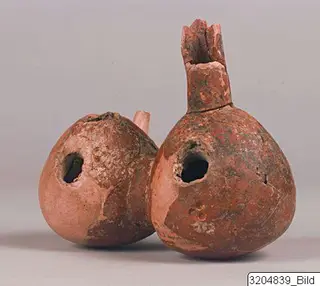 Red Polished III coupled vase fragmentsMedelhavsmuseet (Museum of Mediterranean and Near Eastern Antiquities)
 Pottery vesselIdalion
 Pottery vesselSalamis
 Pottery vesselSalamis
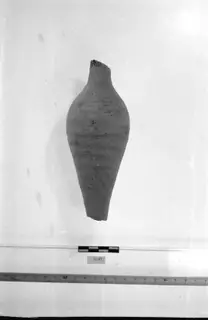 Pottery vesselSalamis
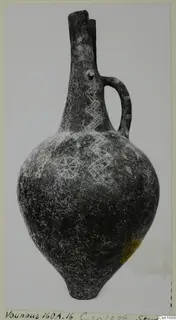 Red Polished I pottery vesselBellapais-Vounous, BSA Tomb 160A
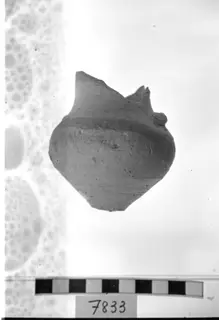 Pottery vesselSalamis
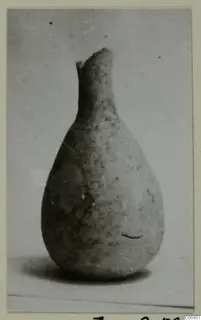 Pottery vesselIdalion
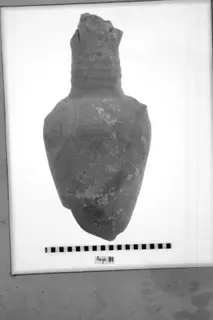 Pottery vesselSalamis
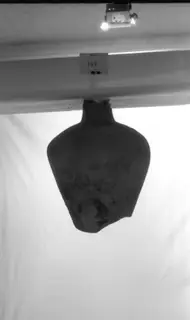 Pottery vesselSalamis
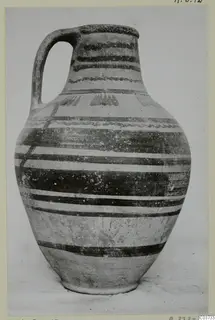 Pottery vesselSwedish Cyprus Expedition
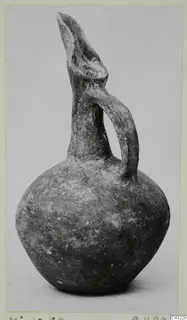 Base-ring vessel seized by police, no. 82Milia-Vikla Trachonas, SCE Tomb 10
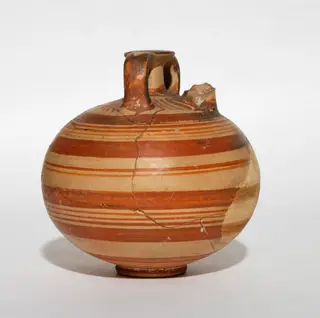 Mycenaean pseudamphora with spherical bodyBritish Museum
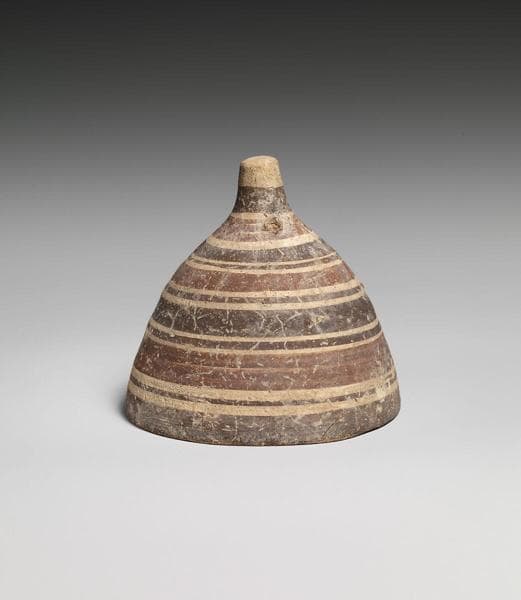 Terracotta bellMetropolitan Museum of Art
 Red Polished I pottery vesselSwedish Cyprus Expedition
 Pottery vesselEnkomi
 Pottery vesselEnkomi
 Pottery vesselEnkomi
 Pottery vesselEnkomi