
Archaic II
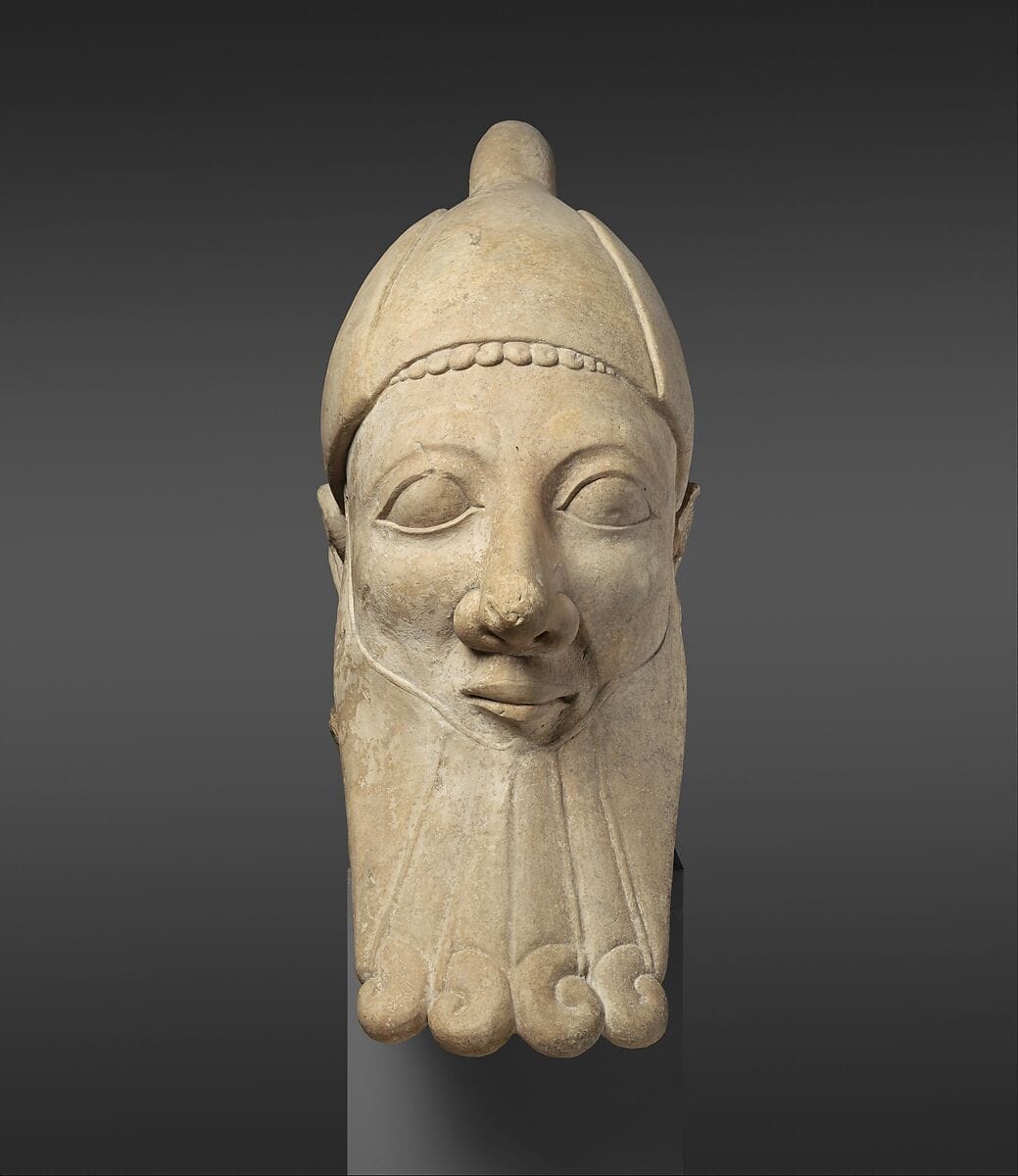
Limestone head of a bearded man
The head belonged to a figure of over lifesize proportions. The conical cap, identifying him as an individual of high rank, appears at the end of the eighth century B.C. in the Levant and had reached Cyprus by the mid-seventh century B.C. It is characterized by a protuberance at the top and flaps at the sides that could be let down or fastened up by the ties ending in tassels. While, unfortunately, nothing of the body remains, the head represents a very early and impressive example of this figural type. The articulation of the beard, with its round, generalized curls, is often interpreted as an indication of the influence of terracotta sculpture on stoneworking. 35 × 14 × 23 in., 500 lb. (88.9 × 35.6 × 58.4 cm, 226.8 kg)
Classification
- Object type
- Stone sculpture
- Period
- Iron AgeCypro-Archaic
- Date
- 599 - 550 BC
- Place of production
- probablyCyprus
- Findspot
- Golgoi
Accession No.
74.51.2857
Collection
Provenance
- From the sanctuary of Golgoi-Ayios Photios, Cyprus, “near the temple” March 6, 1870, found by Luigi Palma di Cesnola in Golgoi, Cyprus; until 1874, collection of L.P. di Cesnola; acquired in 1874, purchased from L.P. di Cesnola.
References
- Cesnola, Luigi Palma di. 1877. Cyprus: Its Ancient Cities, Tombs, and Temples. A Narrative of Researches and Excavations During Ten Years' Residence in That Island. p. 123, London: John Murray.Cesnola, Luigi Palma di. 1885. A Descriptive Atlas of the Cesnola Collection of Cypriote Antiquities in the Metropolitan Museum of Art, New York, Vol. 1. pl. XXXIX.253, Boston: James R. Osgood and Company.Myres, John L. 1914. Handbook of the Cesnola Collection of Antiquities from Cyprus. no. 1257, New York: The Metropolitan Museum of Art.Metropolitan Museum of Art. 1936[1934]. A Guide to the Collections, Part 1: Ancient and Oriental Art, 2nd edn. New York: The Metropolitan Museum of Art.Gjerstad, Einar. 1948. The Swedish Cyprus Expedition: The Cypro-Geometric, Cypro-Archaic, and Cypro-Classical Periods, Vol. 4(2). p. 96, pl. II.a, b, Stockholm: The Swedish Cyprus Expedition.Masson, Olivier. 1971. "Kypriaka IX: Recherches sur les antiquités de Golgoi." Bulletin de Correspondance Hellénique, 95(1): p. 312, fig. 12.Romano, David Gilman and Irene Bald Romano. 1999. Catalogue of the Classical Collections of the Glencairn Museum, Academy of the New Church, Bryn Athyn, Pennsylvania. p. 3, Bryn Athyn, PA: Glencairn Museum.Karageorghis, Vassos, Joan Mertens, and Marice E. Rose. 2000. Ancient Art from Cyprus: The Cesnola Collection in The Metropolitan Museum of Art. no. 171, p. 108, New York: The Metropolitan Museum of Art.Lightfoot, Christopher S. 2000. "The New Cypriot Galleries at The Metropolitan Museum of Art." Minerva, 11(3): p. 19, fig. 6.Tatton-Brown, Veronica. 2000. "The New Galleries of Cypriot Art at the Metropolitan Museum of Art." Apollo, 152: p. 7, fig. 8.Picón, Carlos A. 2007. Art of the Classical World in the Metropolitan Museum of Art: Greece, Cyprus, Etruria, Rome no. 283, pp. 242-43, 462, New York: The Metropolitan Museum of Art.Stylianou, Andreas and Patrick Schollmeyer. 2007. "Der Sarkophag aus Golgoi." Dynastensarkophage mit szenischen Reliefs aus Byblos und Zypern: Der Sarkophag aus Amathous als Beispiel kontaktinduzierten Wandels, 2. pp. 35 n. 170, 37, 45-46, pl. 18a, b, Mainz am Rhein: Philipp von Zabern.Counts, Derek B. 2011. "Local Styles and Regional Trends in Cypriot Limestone Sculpture." Crossroads and Boundaries: The Archaeology of Past and Present in the Malloura Valley, Cyprus, Annual of the American Schools of Oriental Research, Vol. 65, Michael K. Toumazou, P. Nick Kardulias, and Derek B. Counts, eds. pp. 154-55, fig. 11.4, Boston: American Schools of Oriental Research.Hermary, Antoine and Joan R. Mertens. 2013. The Cesnola Collection of Cypriot Art : Stone Sculpture. no. 1, pp. 28, 30, Online Publication, New York: The Metropolitan Museum of Art.Satraki, Anna. 2013. "The Iconography of Basileis in Archaic and Classical Cyprus: Manifestations of Royal Power in the Visual Record." Bulletin of the American School of Oriental Research, 370: pp. 129-30, fig. 4.Bombardieri, Luca. 2017. "A Possible Cypriot Origin for an Assyrian Stone Mixing Bowl in the Cesnola Collection." Metropolitan Museum Journal, 52: pp. 29-30.Bayer, Andrea and Laura D. Corey. 2020. Making the Met, 1870-2020 pp. 38-39, 245, fig. 29, New York: The Metropolitan Museum of Art.
More from the Catalogue
Browse related objects
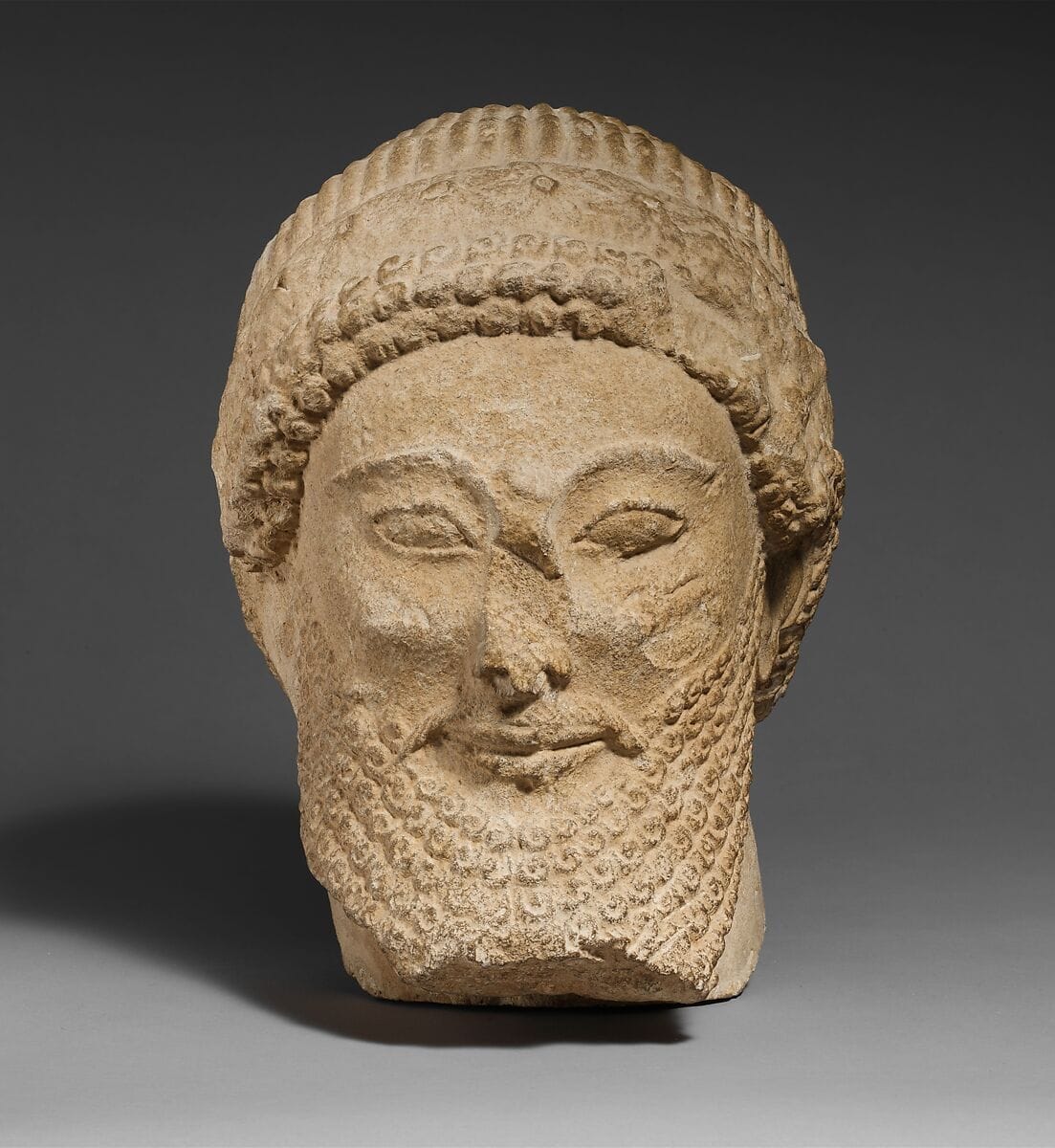
Limestone head of a bearded male with a wreath of flowers
Archaic II
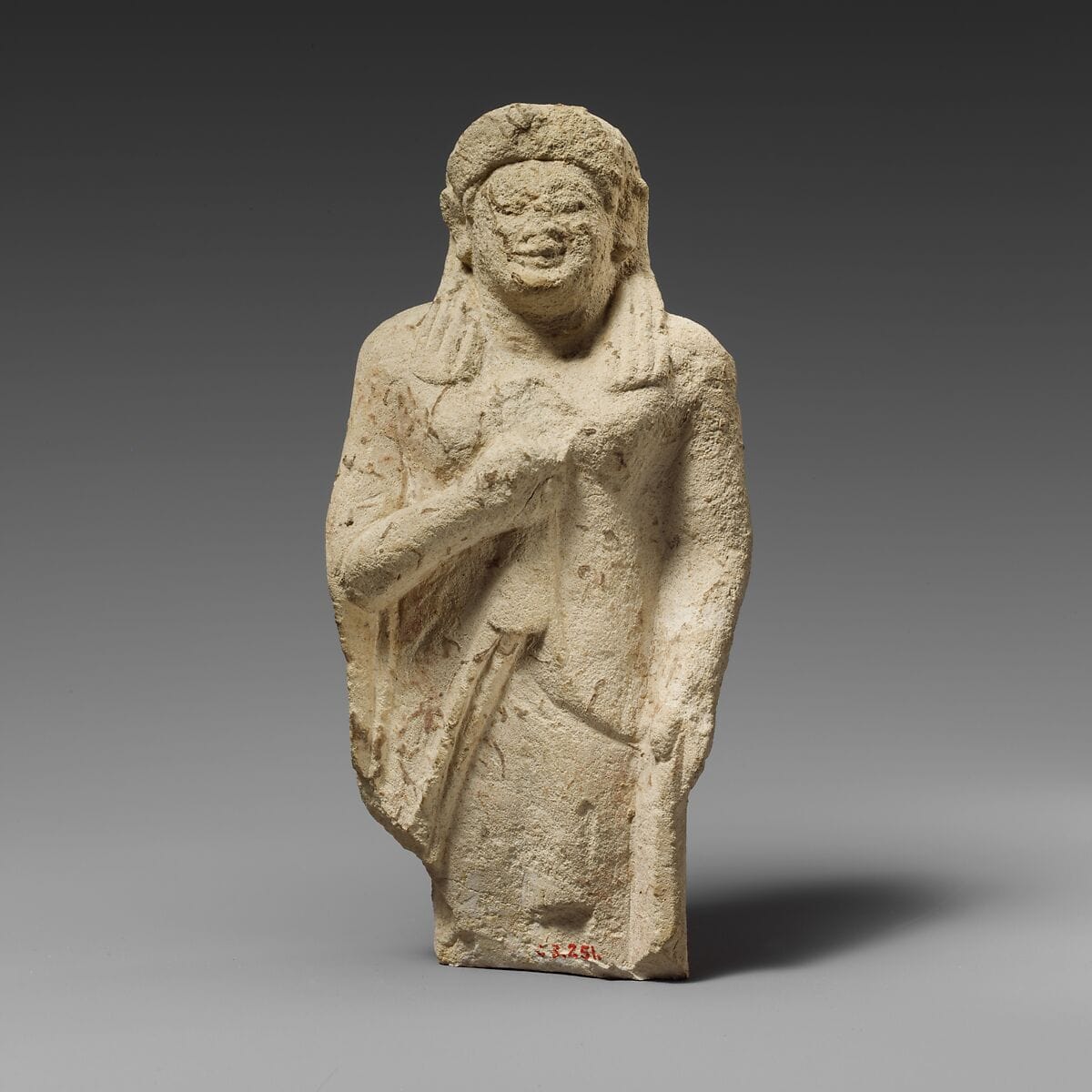
Limestone statuette of a female votary of the kore type
Archaic II
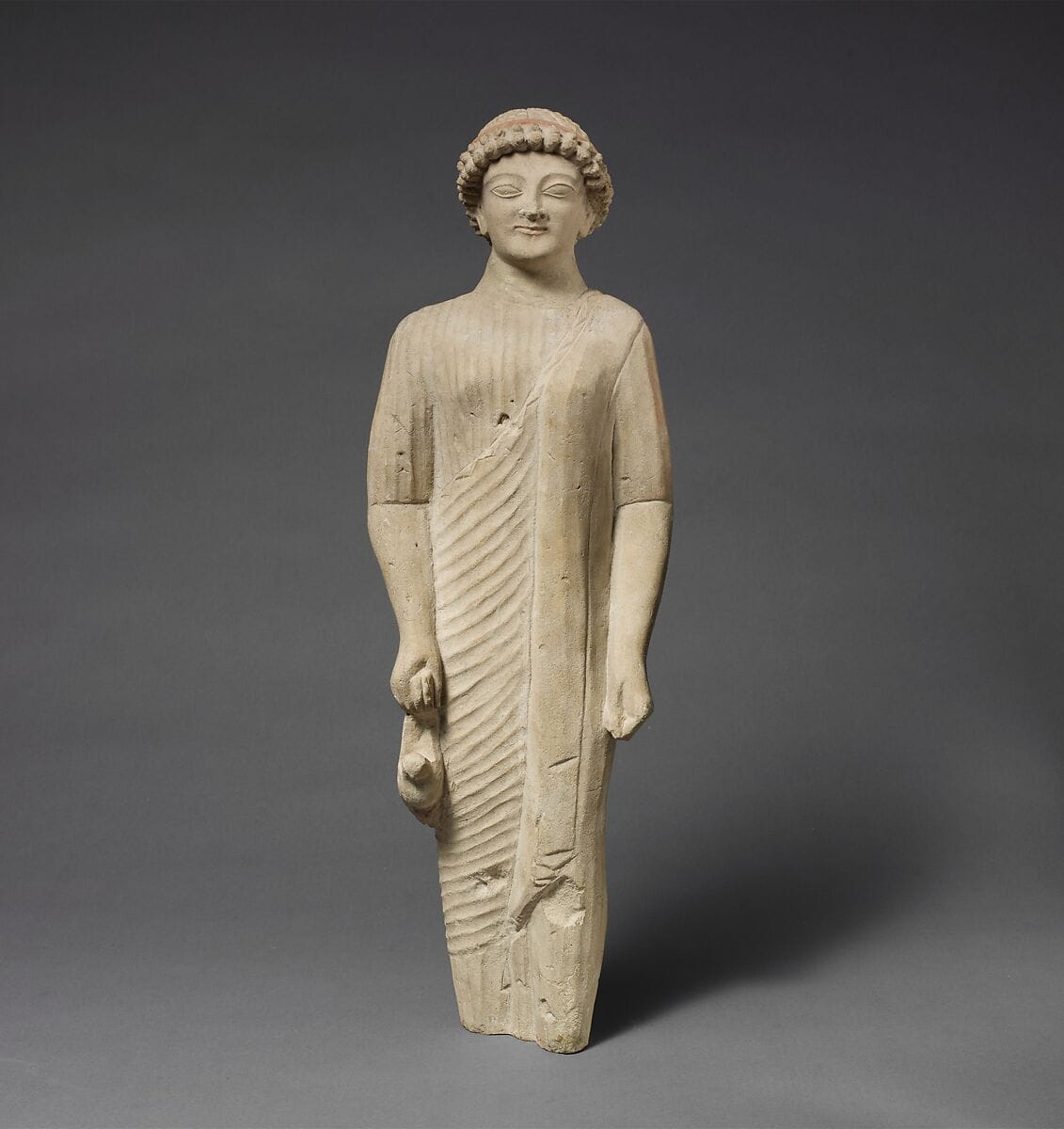
Limestone statuette of a beardless male votary with a fillet
Archaic II
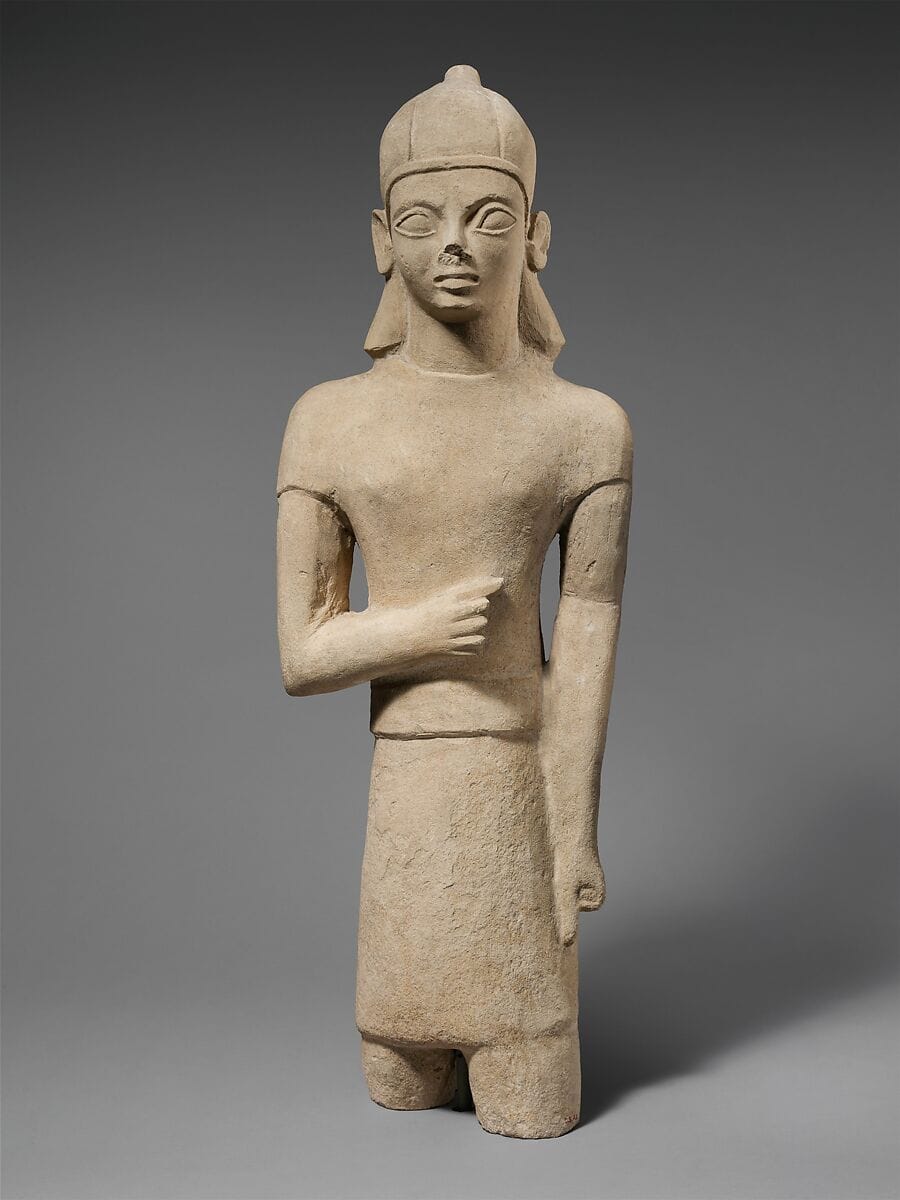
Limestone votary of a bearded male in Egyptianizing dress
Archaic I
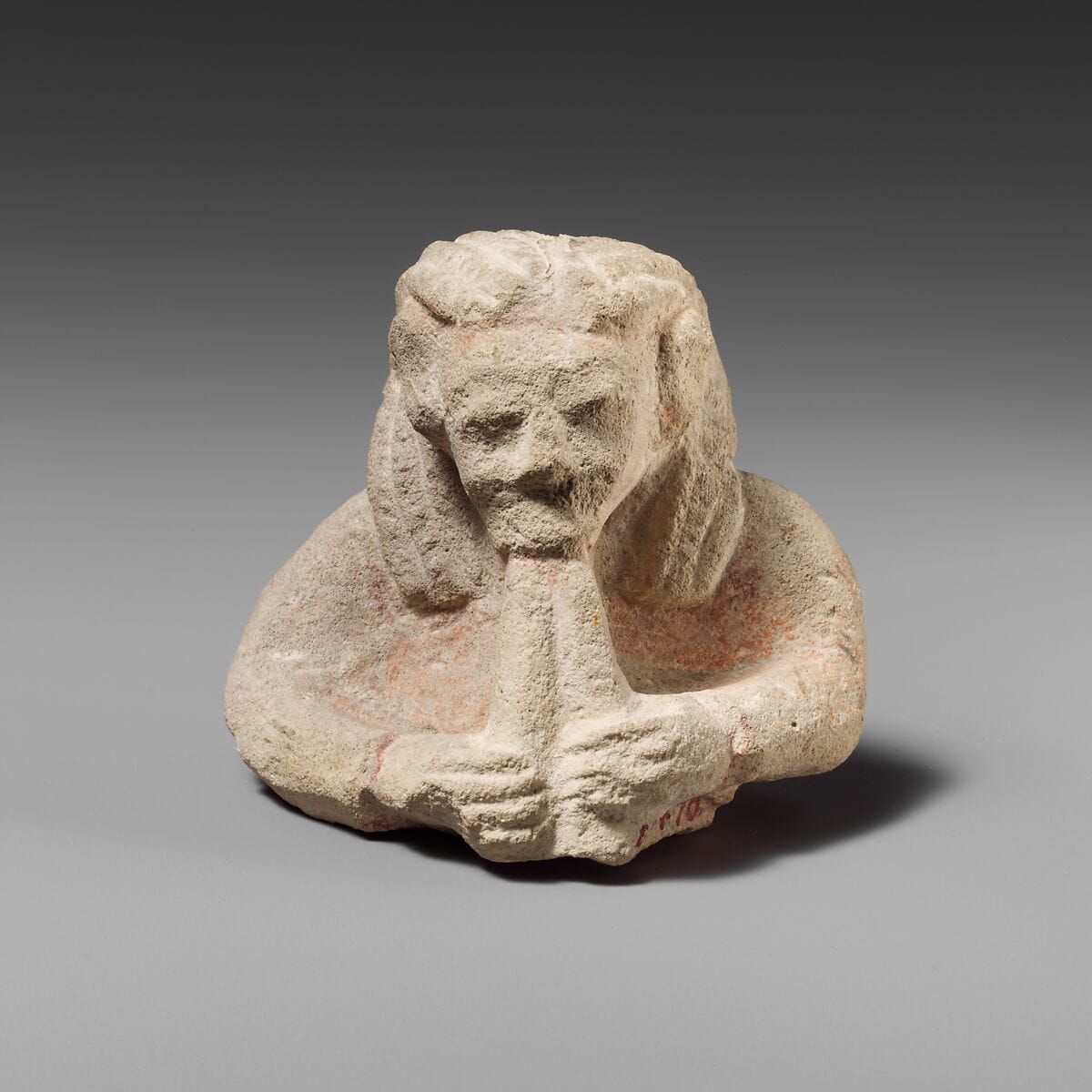
Upper part of a limestone male aulos player
Archaic II
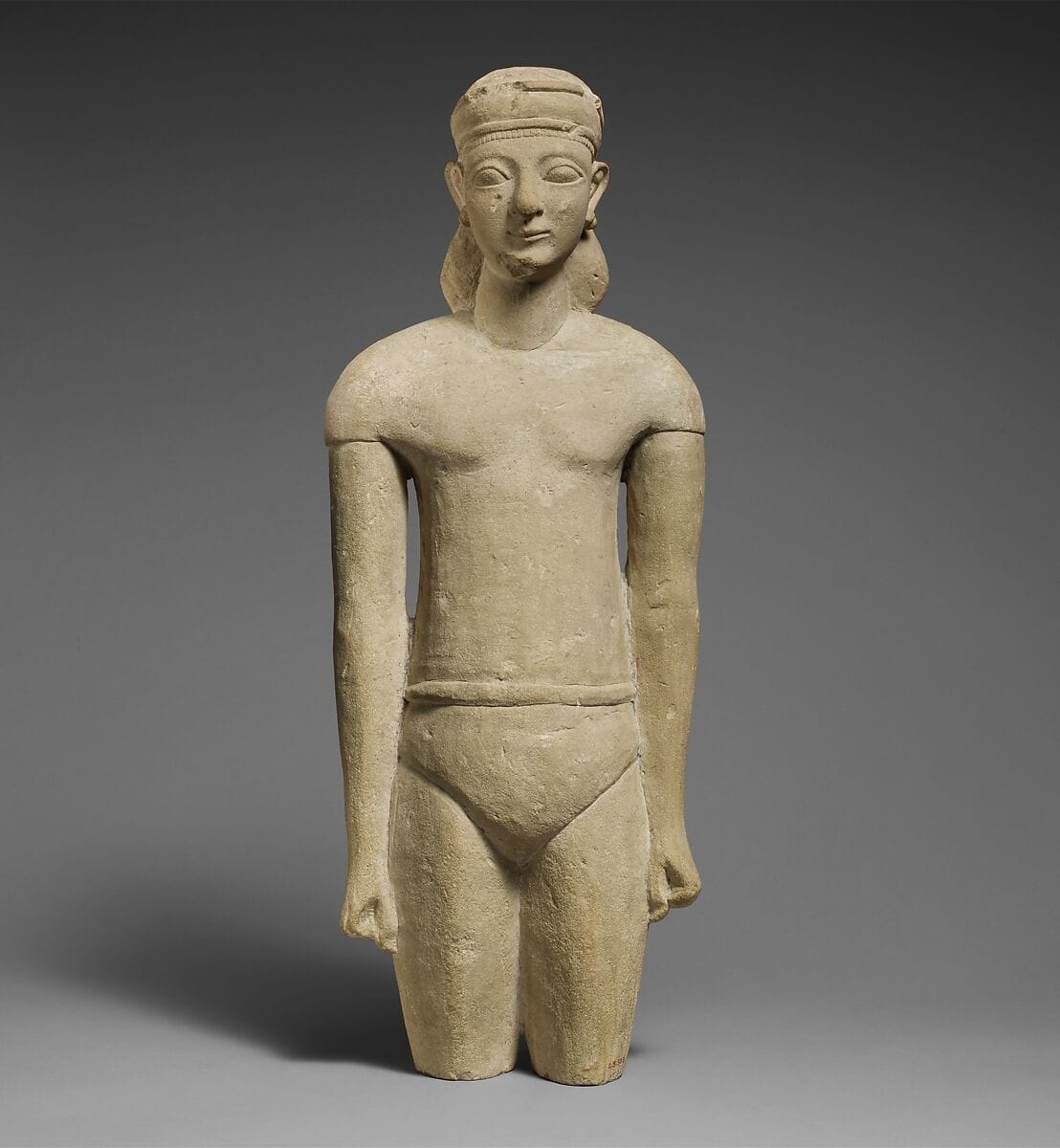
Limestone statuette of a male votary with Cypriot shorts and a diadem
Archaic II
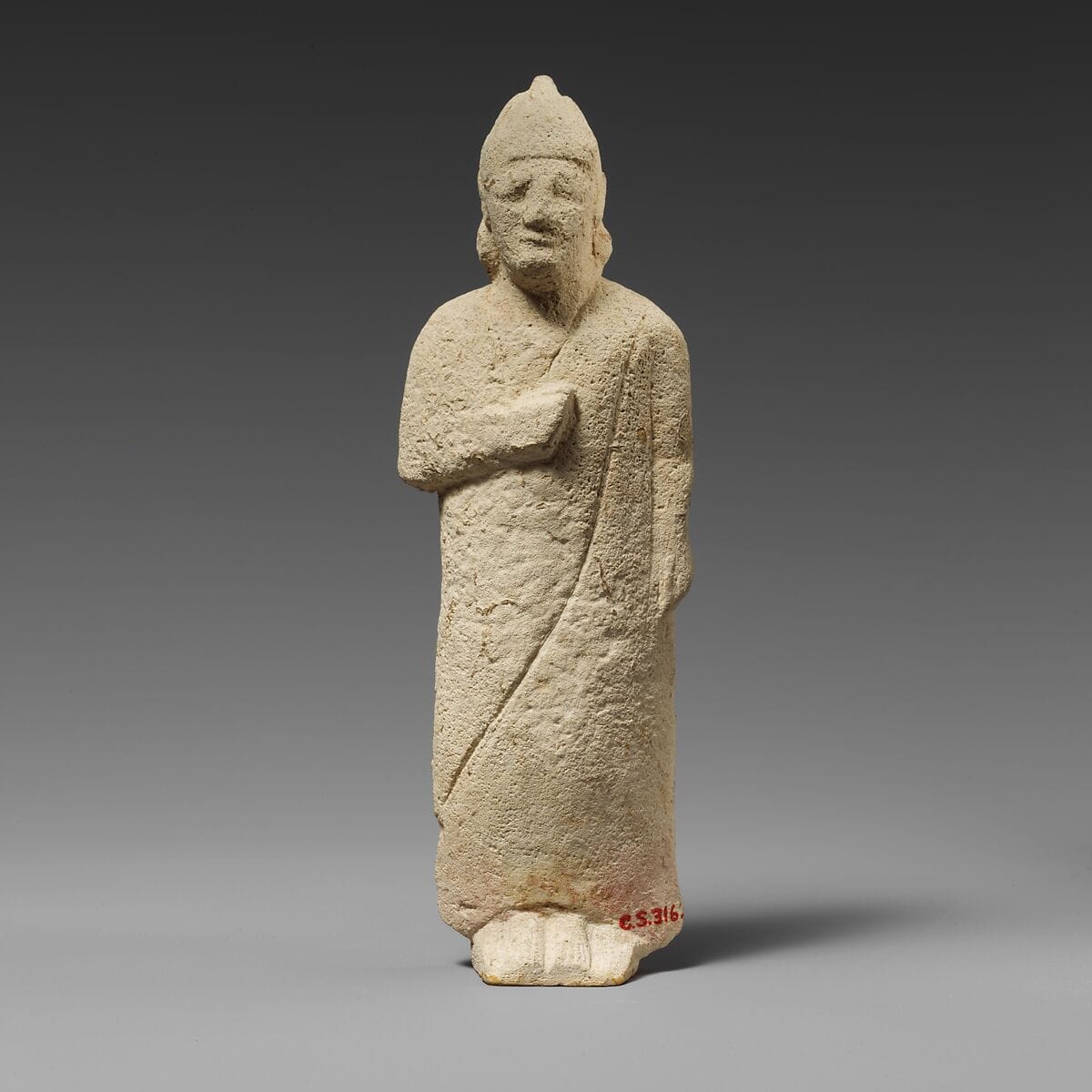
Limestone statuette of a beardless male votary with a conical helmet
Archaic II
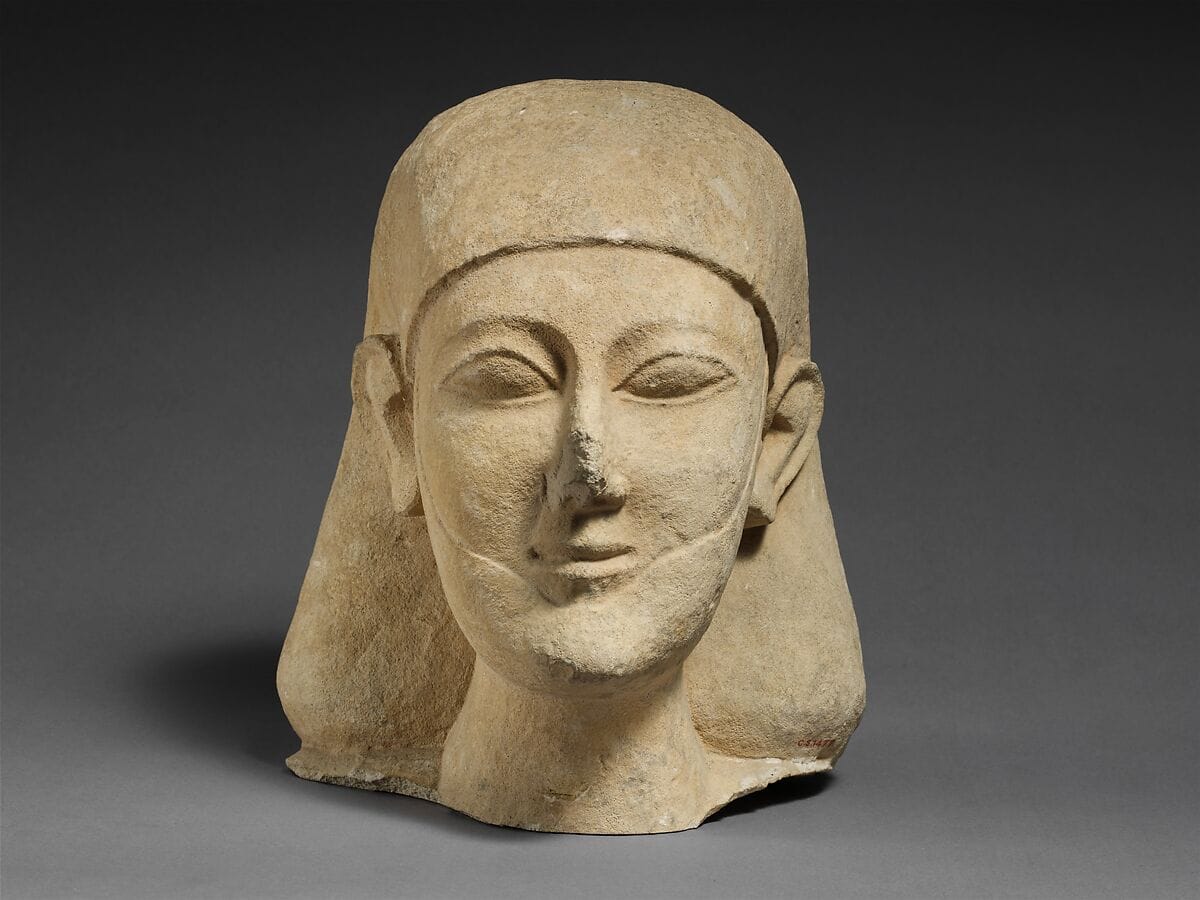
Limestone head of a bearded male with a plain headdress
Archaic II
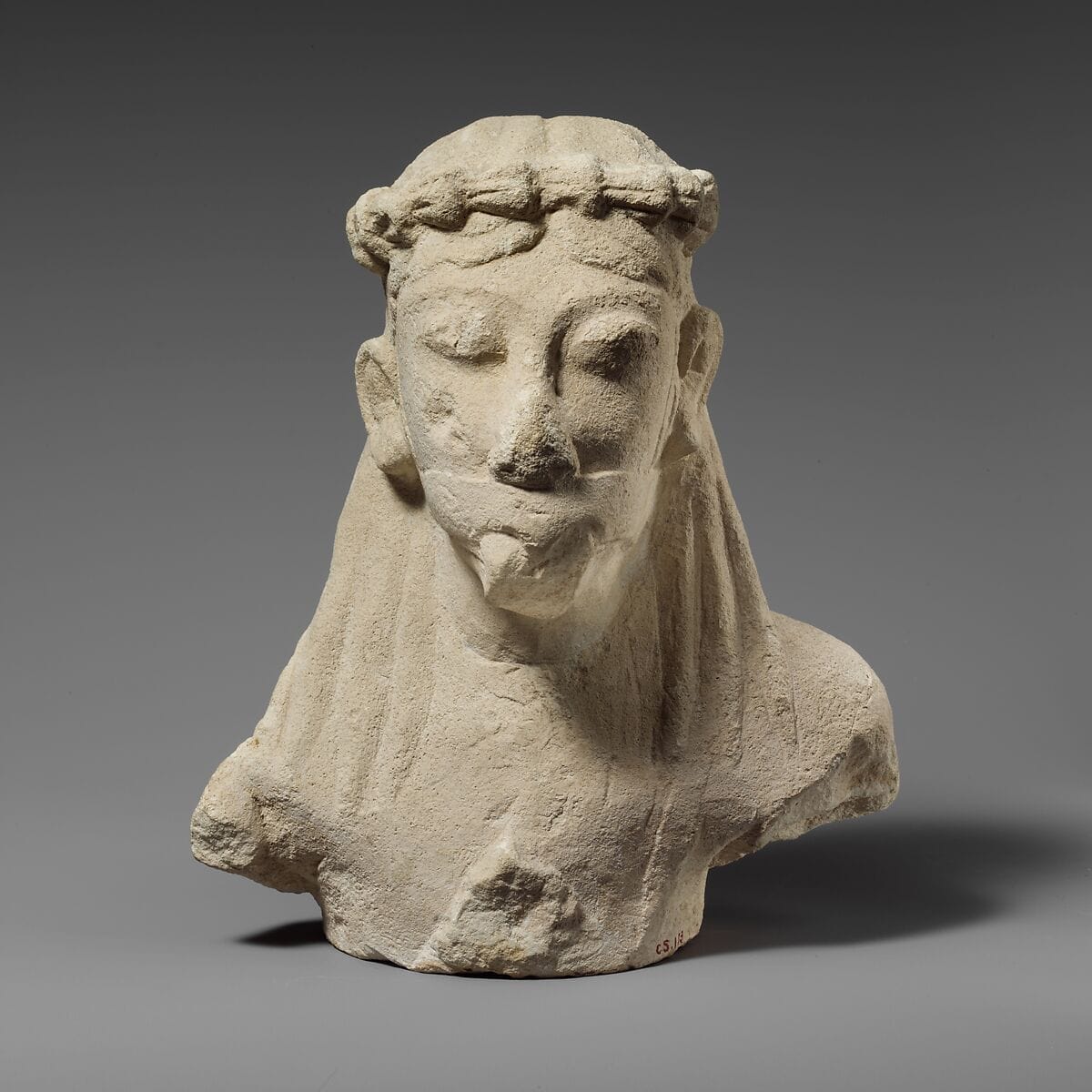
Upper part of a limestone statuette of a male aulos player
Archaic II
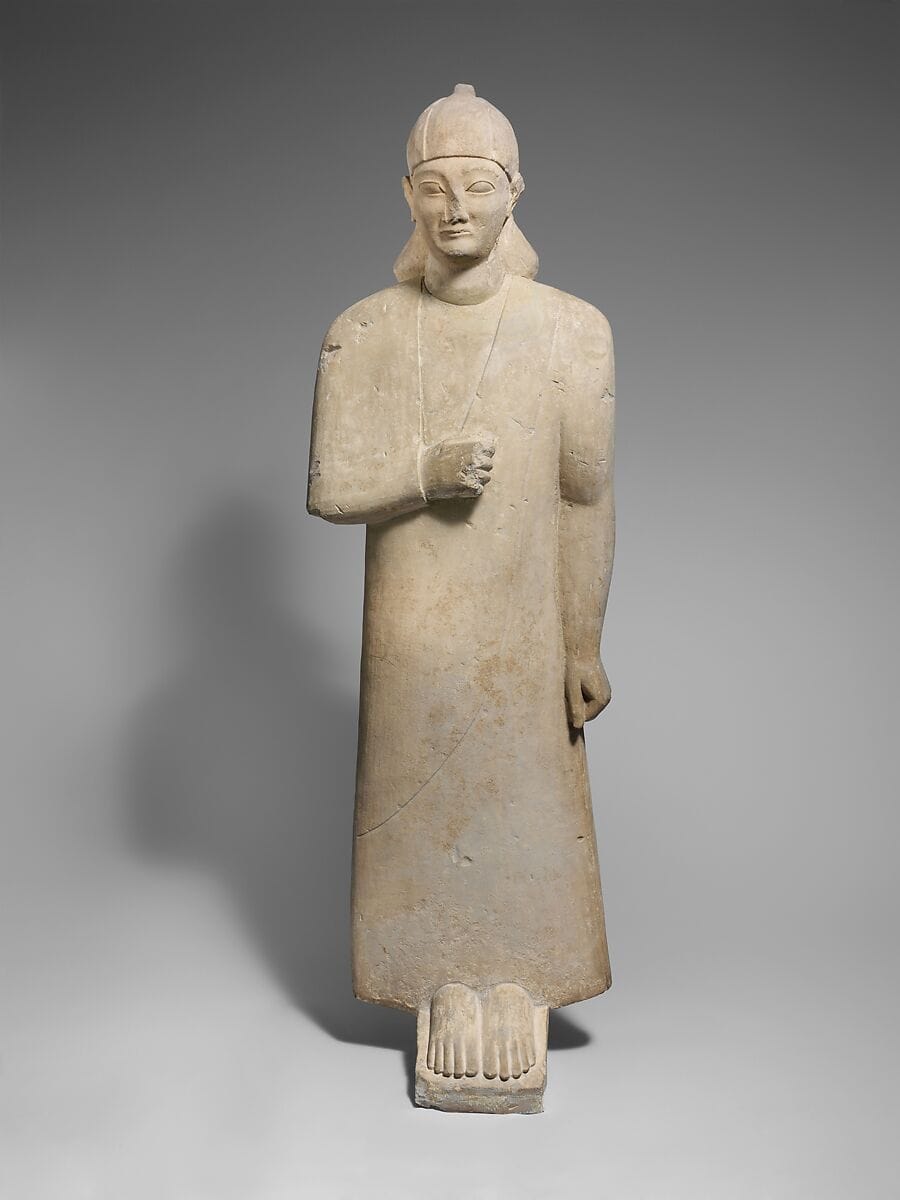
Limestone votary of a beardless male wearing a long garment and a conical helmet
Archaic II
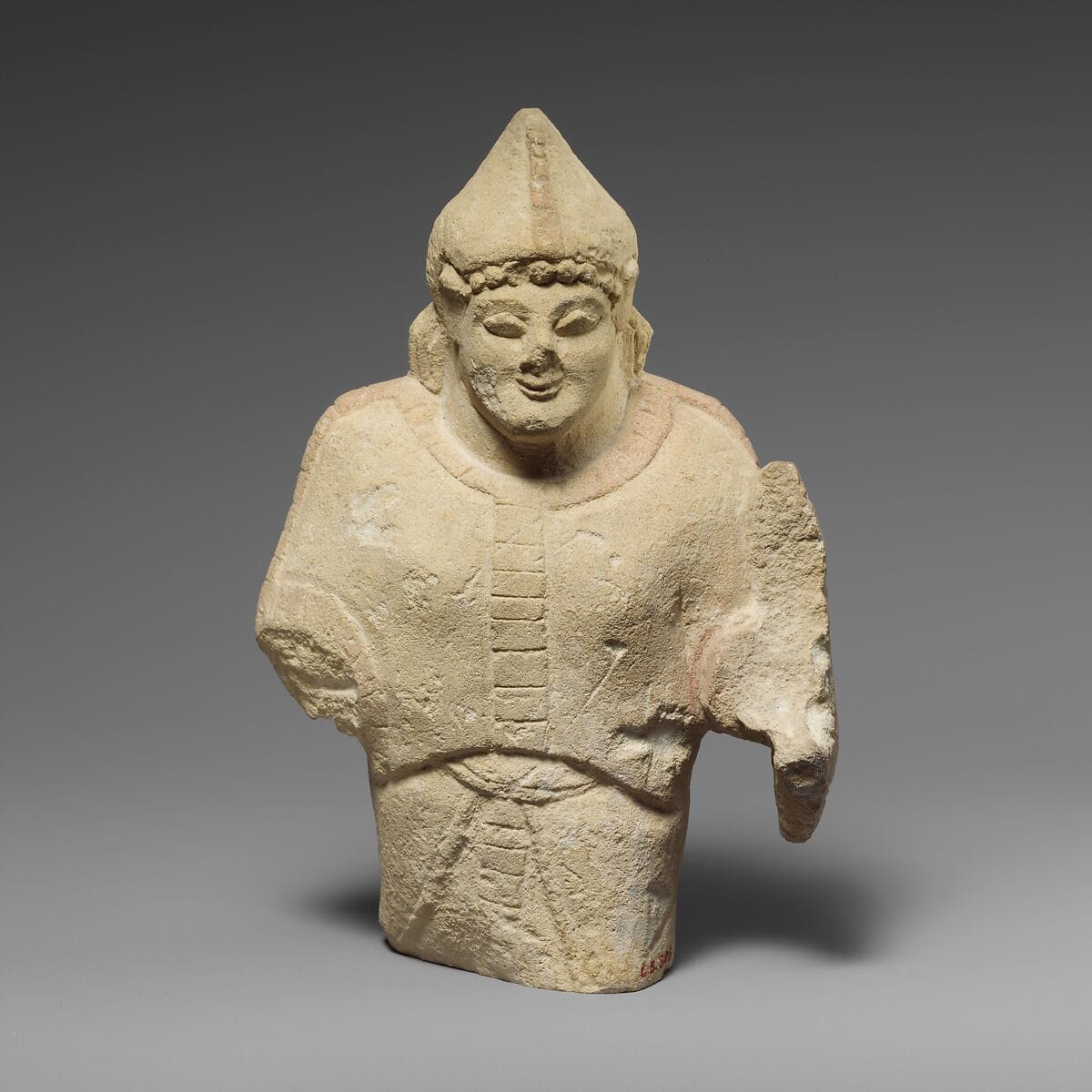
Limestone statuette of a warrior holding a shield
Archaic II
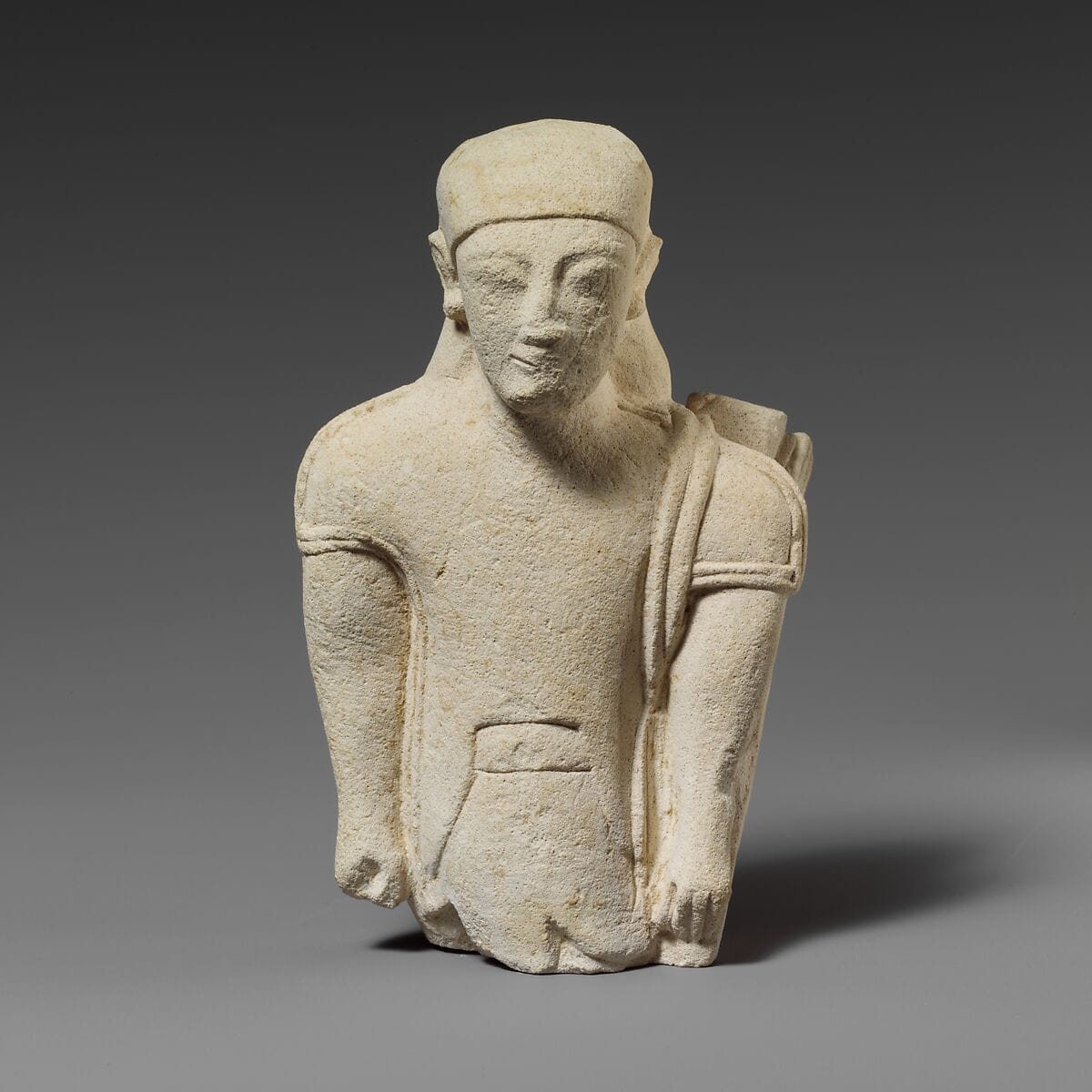
Limestone statuette of a “hunter” in Egyptianizing dress
Archaic II
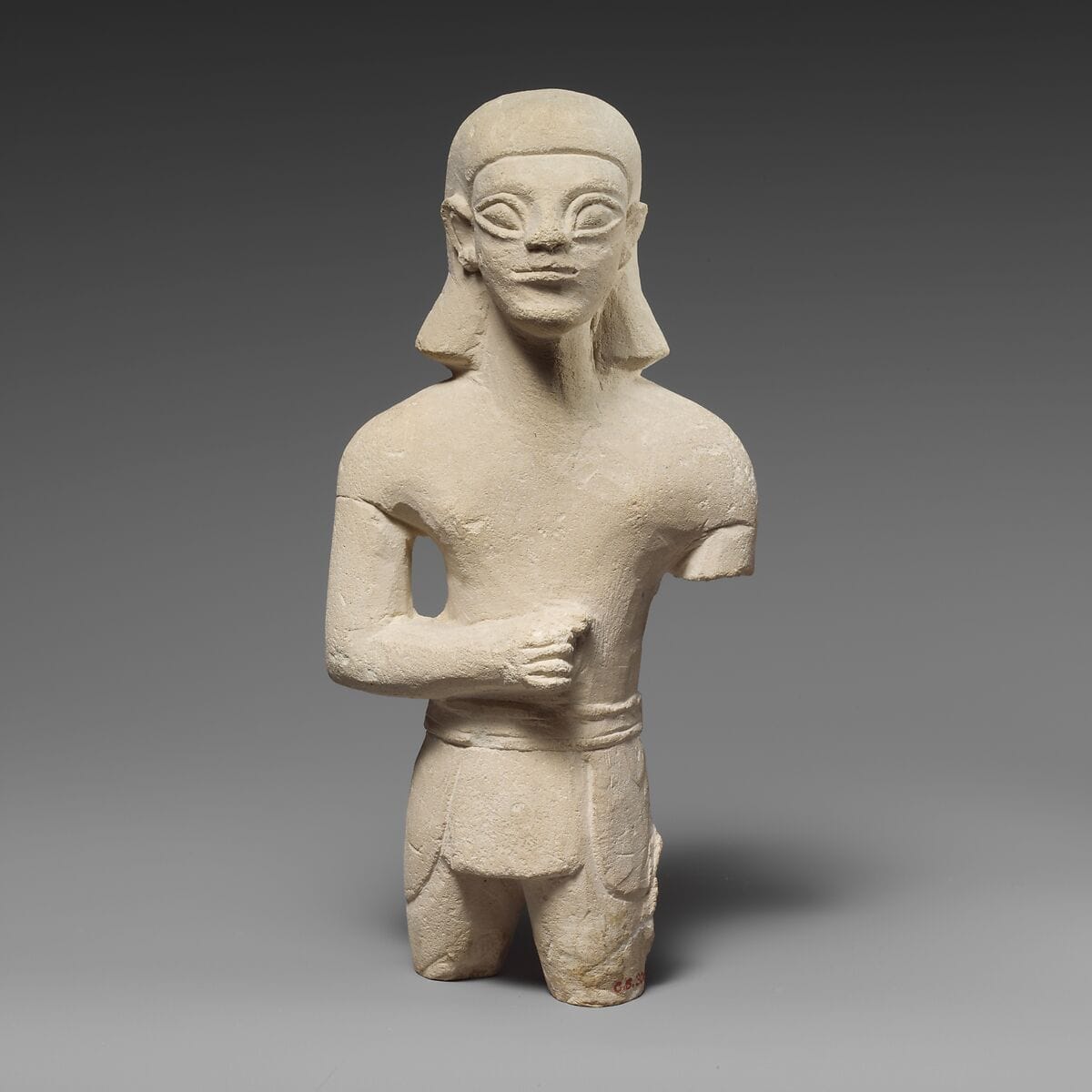
Limestone statuette of a beardless male votary in Egyptianizing dress
Archaic II
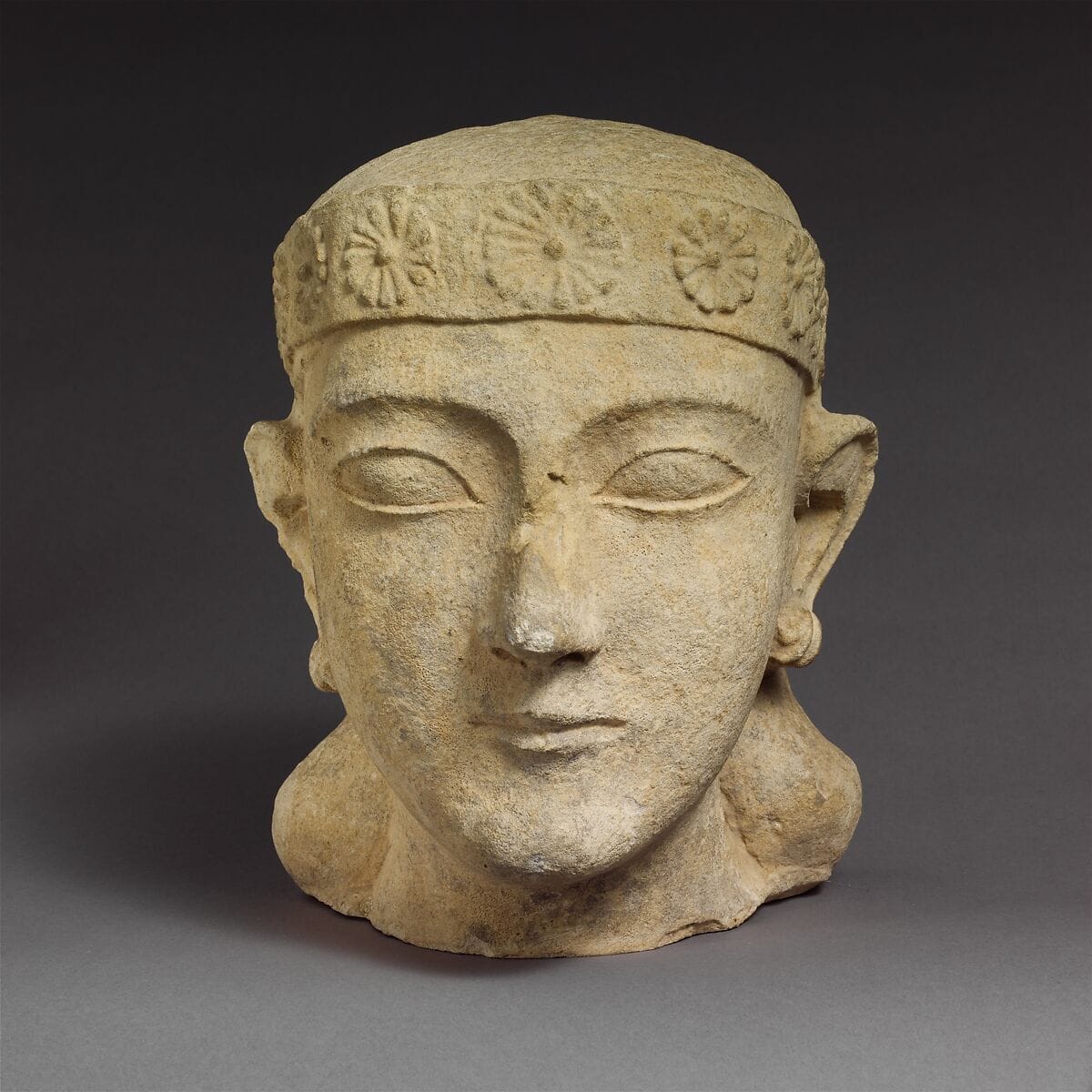
Limestone head of a beardless male with a diadem
Archaic II
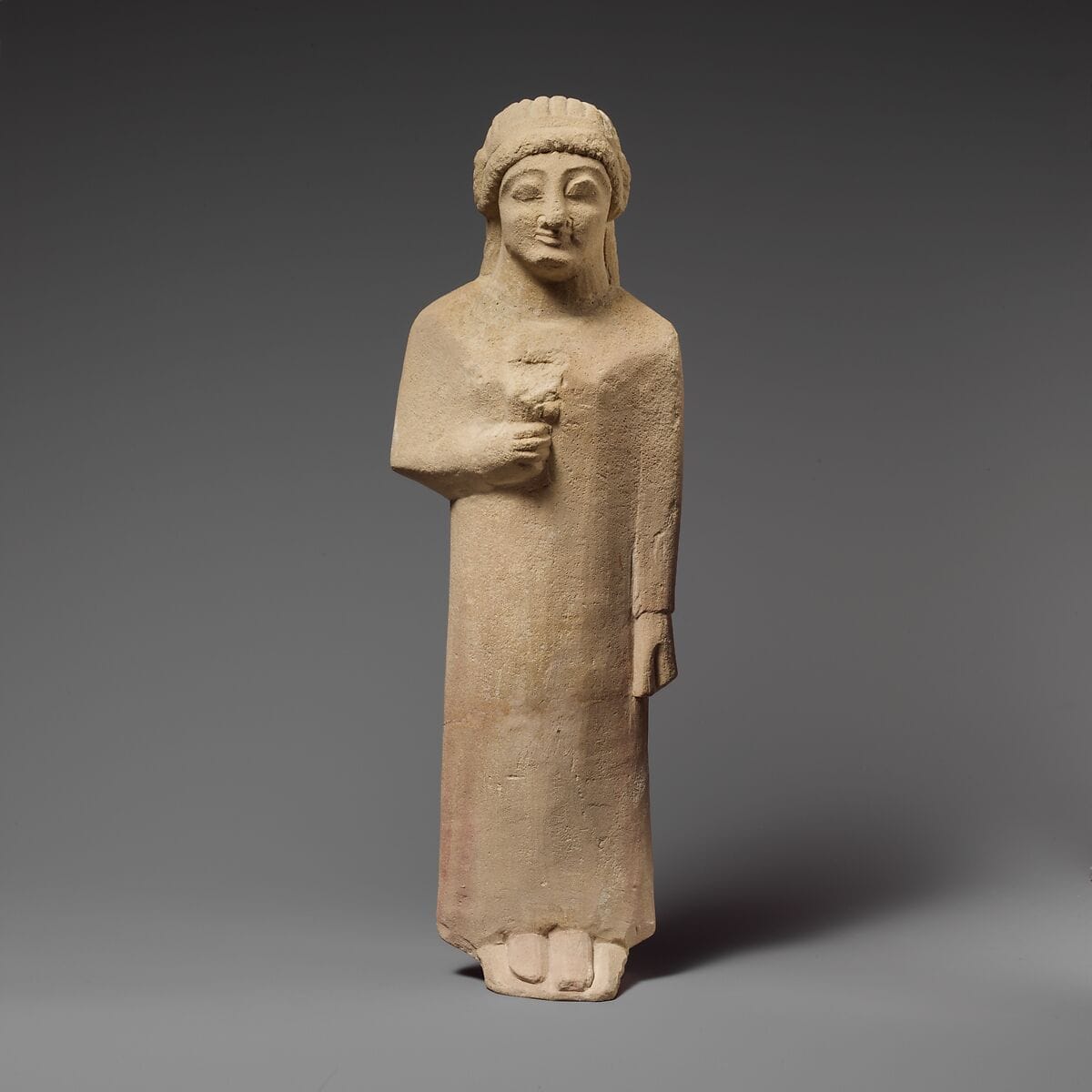
Limestone statuette of a female votary holding a flower
Archaic II
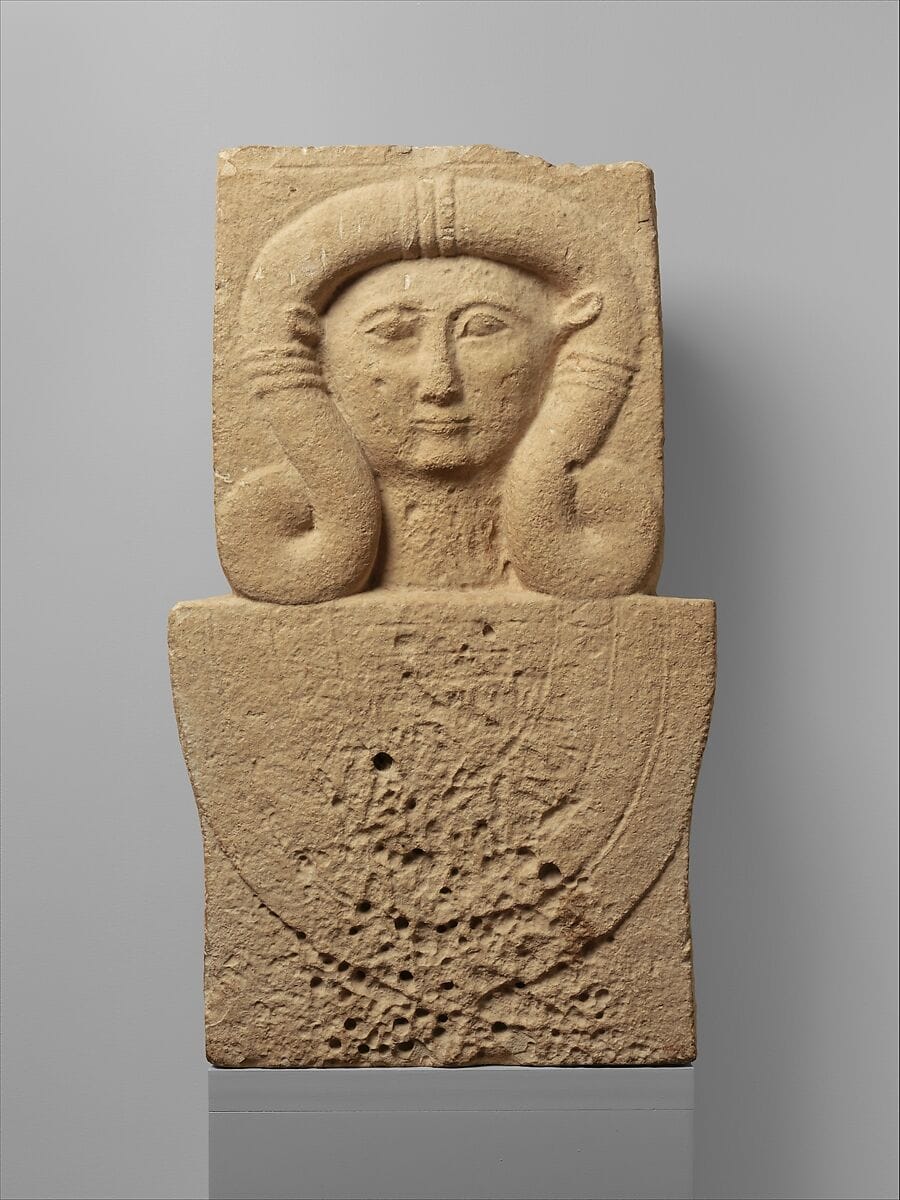
Limestone stele (shaft) with the head of Hathor
Archaic II
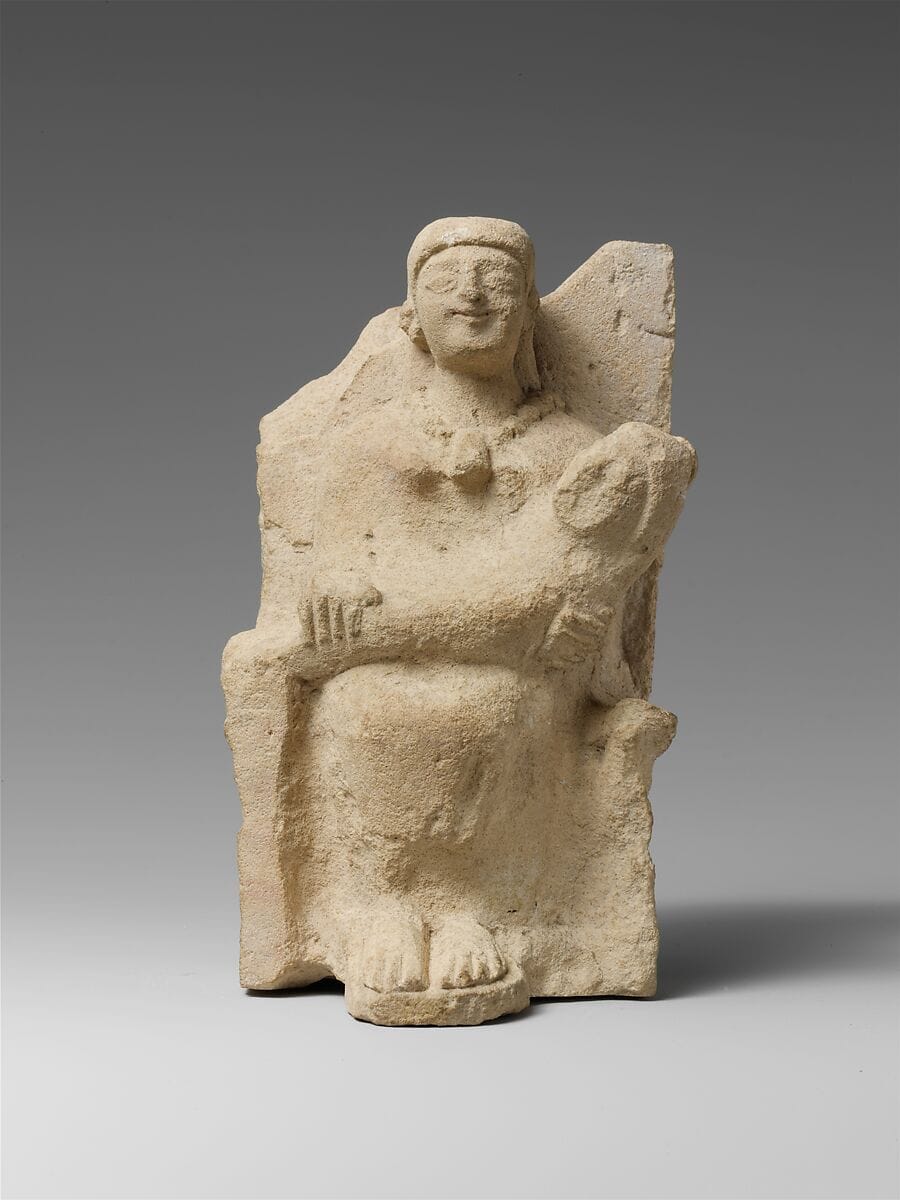
Limestone statuette of a nursing mother
Archaic II
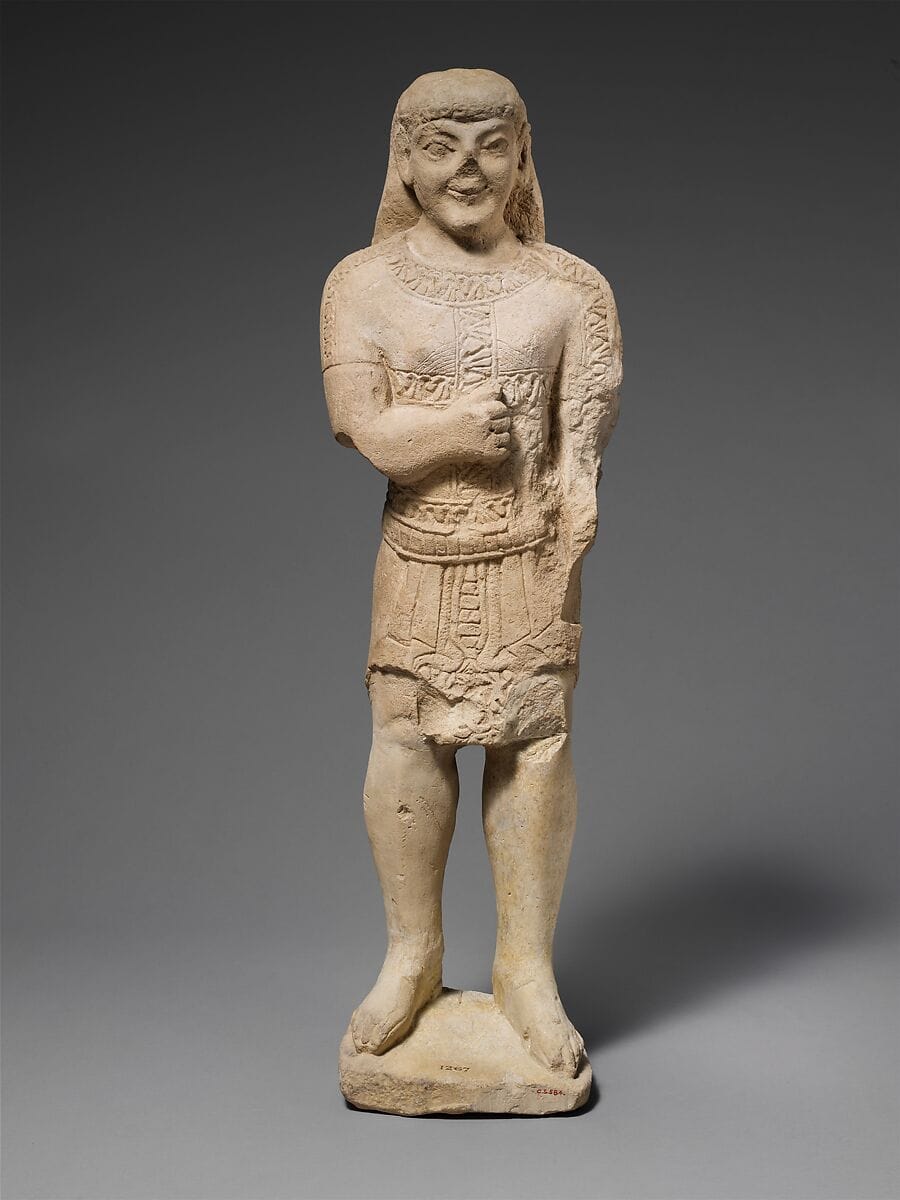
Limestone statuette of a beardless male votary in Egyptianizing dress
Archaic II