
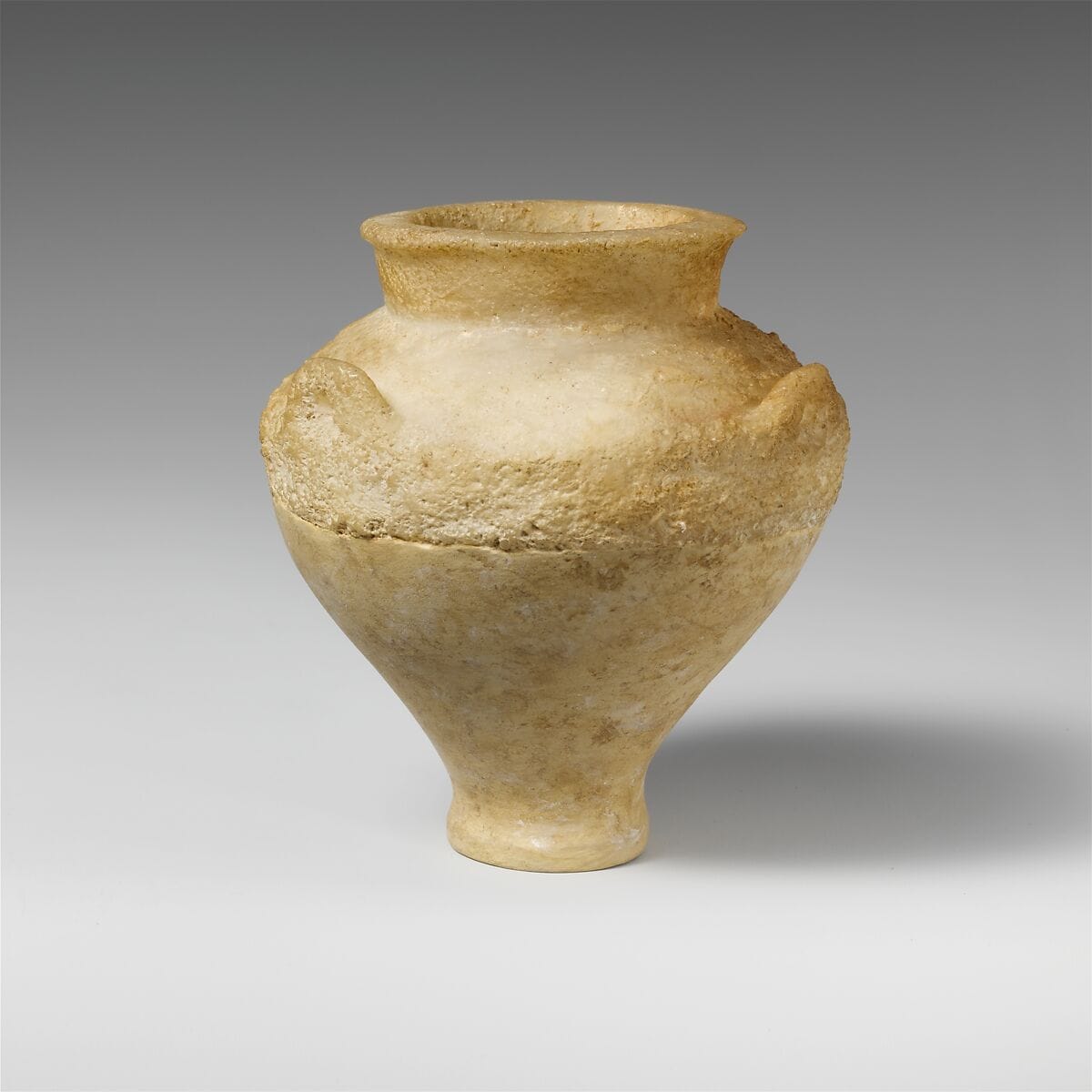
Late Bronze Age III
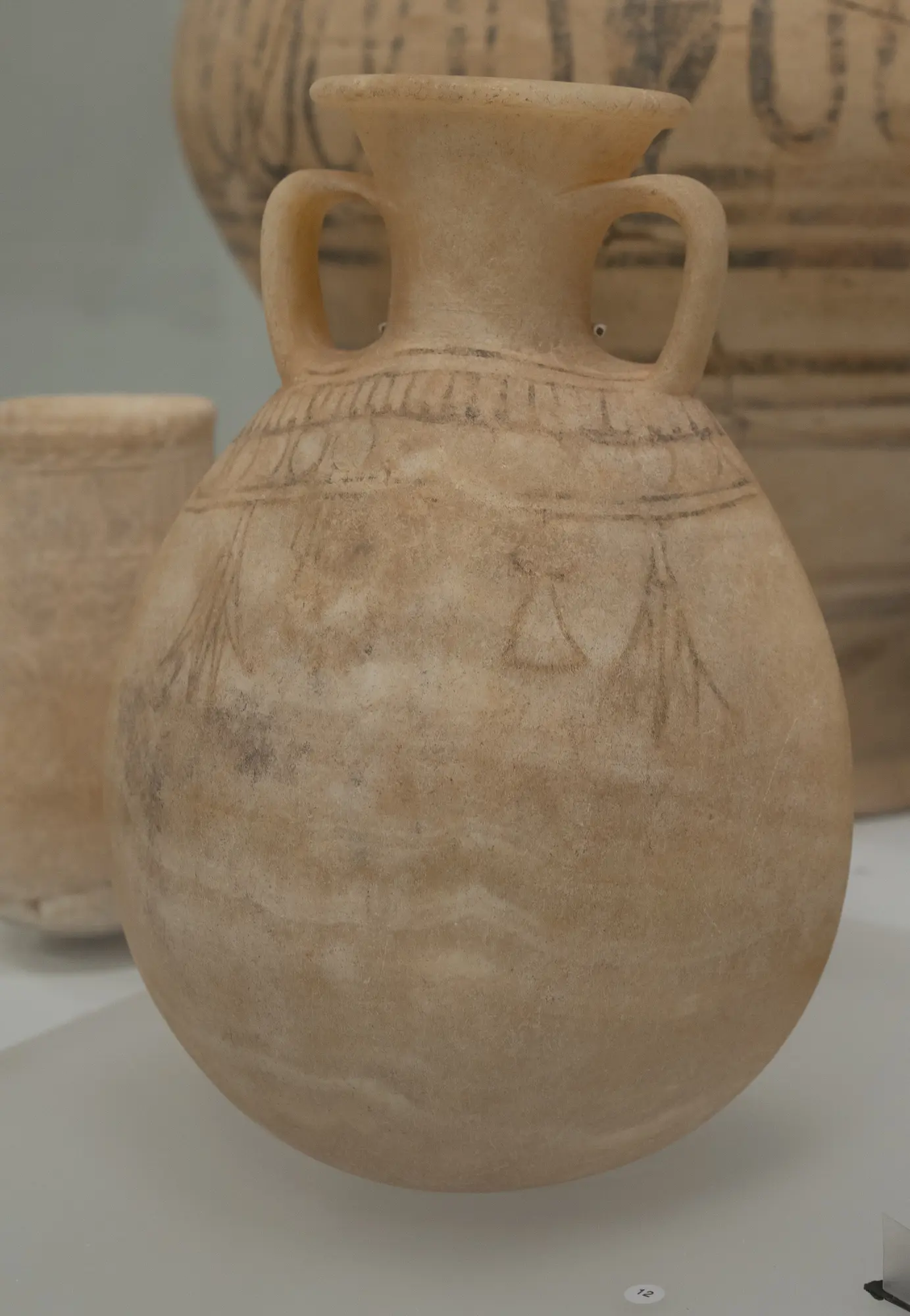
Miniature alabaster pithoid jar
Cypriot craftsmen of the Late Bronze Age often combined different influences into their own creations. The shape of this stone vase is purely Mycenaean Greek, but the use of alabaster likely reflects Egyptian influence. WebPub GR 2012 Cesnola: 3 7/8 in., 0.5 lb., 3 1/2 in. (9.8 cm, 0.2 kg, 8.9 cm)
Classification
- Object type
- Stone vessel
- Shape
- Jar
- Material
- StoneCalcite (alabaster)
- Date
- 1400 - 1050 BC
- Place of production
- Cyprus
Accession No.
74.51.5123
Collection
Provenance
- From Cyprus
References
- Cesnola, Luigi Palma di. 1877. Cyprus: Its Ancient Cities, Tombs, and Temples. A Narrative of Researches and Excavations During Ten Years' Residence in That Island. pl. XVIII, London: John Murray.Myres, John L. 1914. Handbook of the Cesnola Collection of Antiquities from Cyprus. no. 1630, New York: The Metropolitan Museum of Art.Hermary, Antoine and Joan R. Mertens. 2013. The Cesnola Collection of Cypriot Art : Stone Sculpture. no. 520, p. 387, Online Publication, New York: The Metropolitan Museum of Art.
Similar pieces
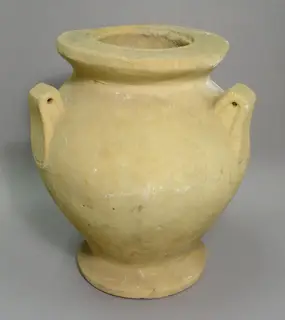 Large alabaster three-handled jarBritish Museum
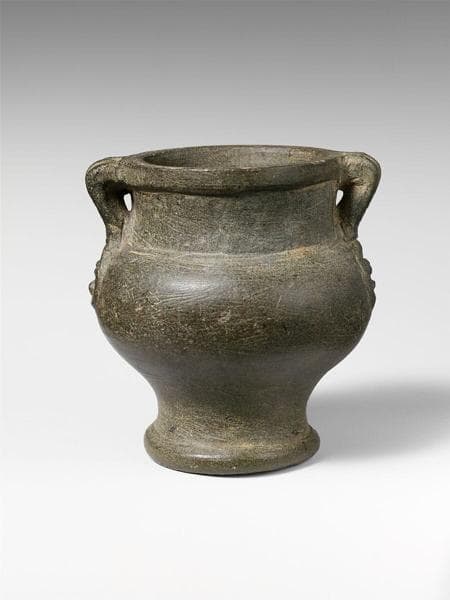 Chlorite amphoriskos (small jar)Metropolitan Museum of Art
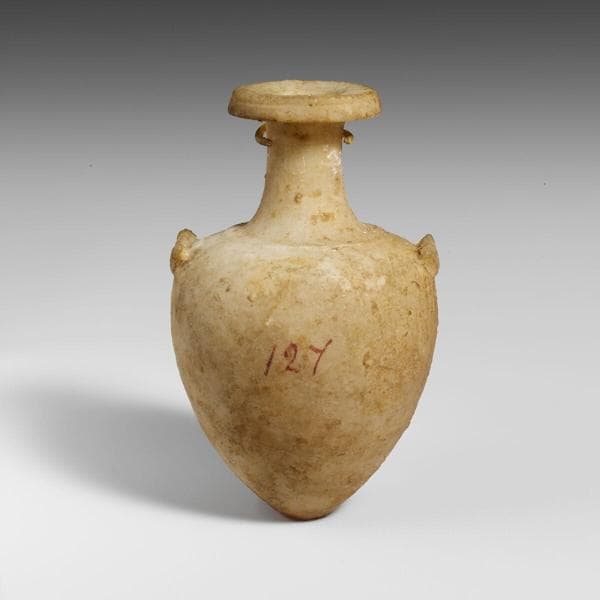 Miniature alabaster amphora (jar)Metropolitan Museum of Art
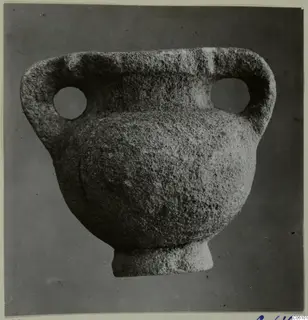 AmphoraMedelhavsmuseet (Museum of Mediterranean and Near Eastern Antiquities)
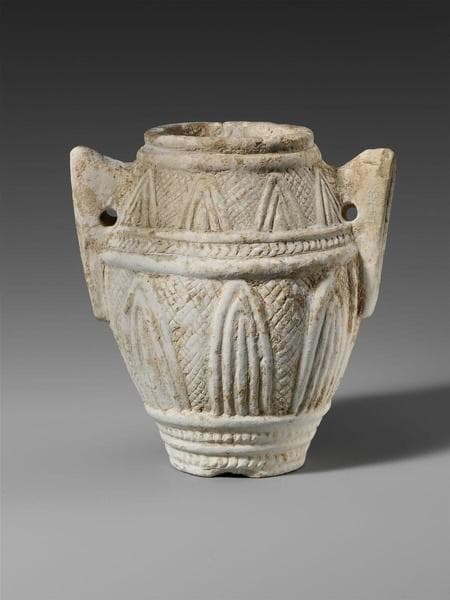 Miniature limestone amphora (jar)Metropolitan Museum of Art
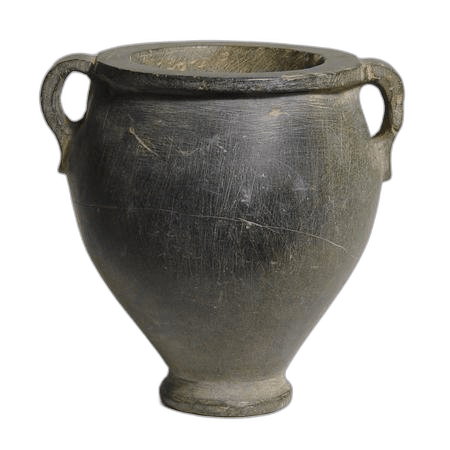 Green Chlorite KrateriskosBritish Museum
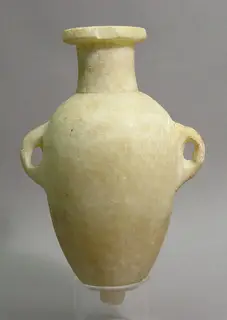 Alabaster vase, 8 in highBritish Museum
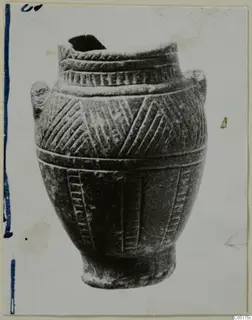 StoneSwedish Cyprus Expedition
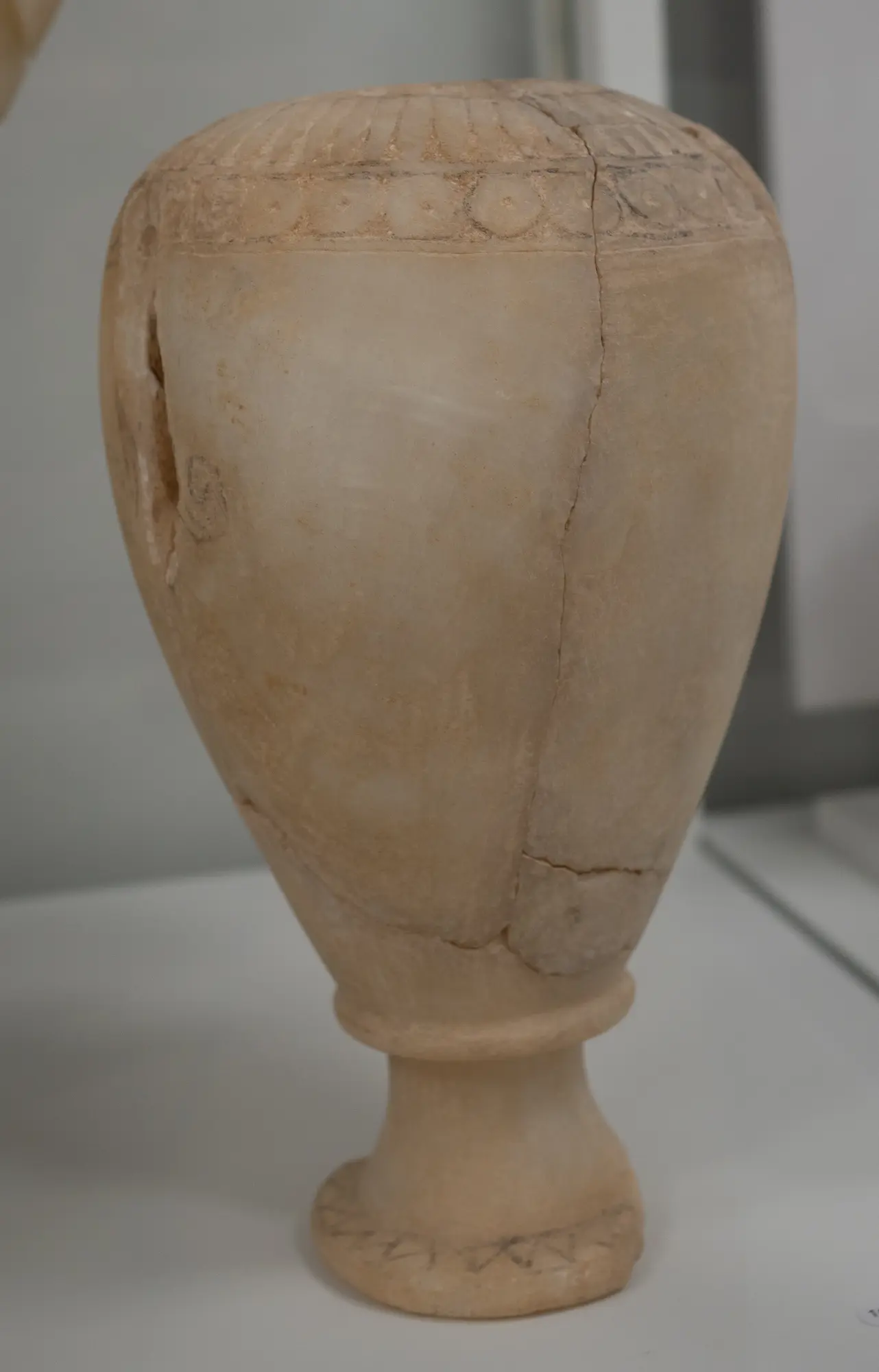 Alabaster JarLarnaca Museum
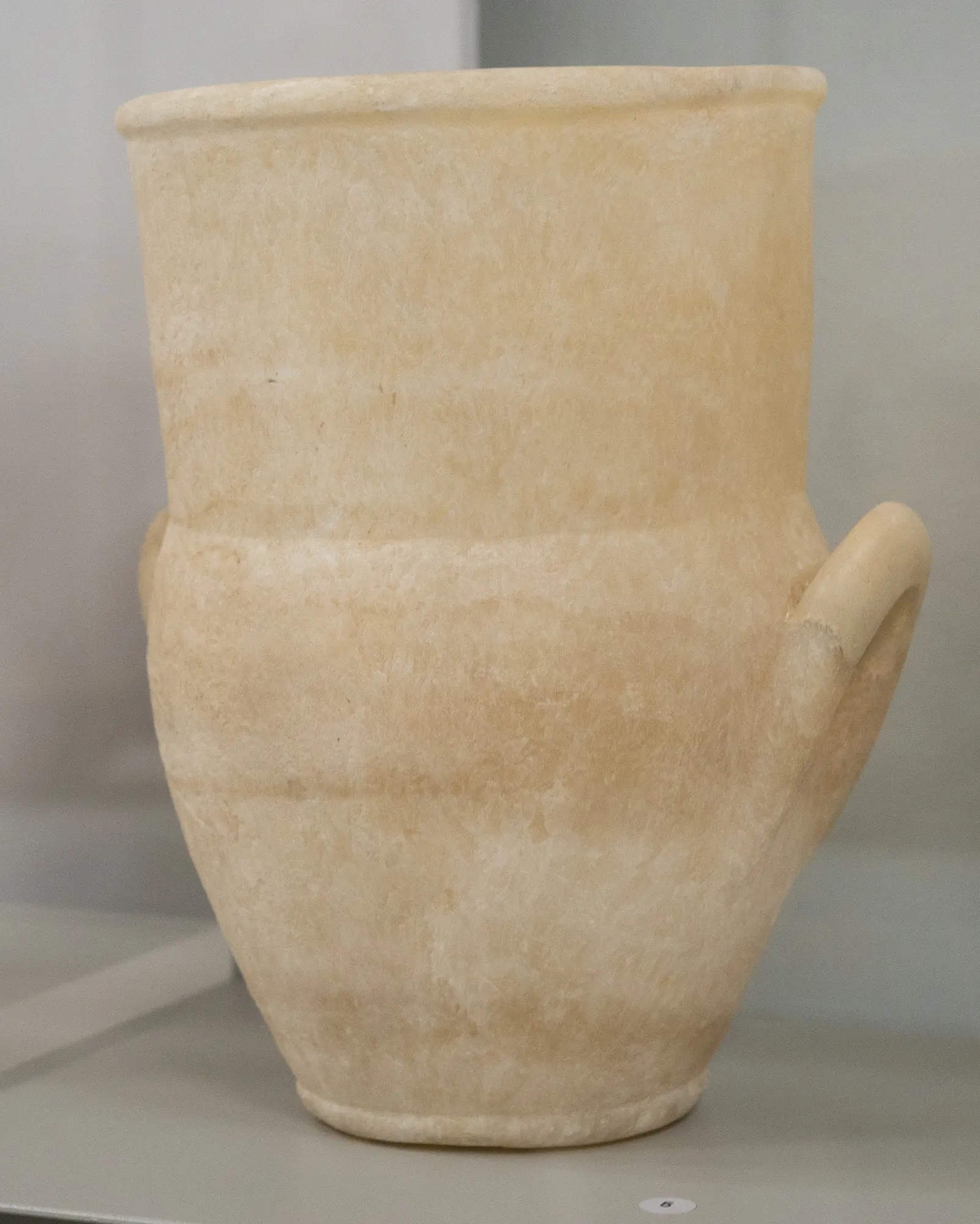 Alabaster JarLarnaca Museum
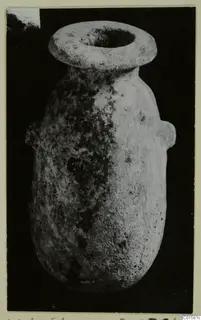 Alabastron with oval bodyMedelhavsmuseet (Museum of Mediterranean and Near Eastern Antiquities)
 Imported Alabaster FlaskLarnaca Museum