
Our Second Year in Review: AncientCyprus.com
Another year dedicated to the study, preservation, and celebration of Ancient Cyprus

Alexis Drakopoulos
January 1, 2026·News·10 min read


Alexis Drakopoulos is a Greek Cypriot Machine Learning Engineer working in Financial Crimes. He is passionate about Archeology and making it accessible to everyone. About Me.

As the new year begins, we find ourselves looking back at what has been, by every measure, our most ambitious and transformative year yet. What started as a passion project has grown into something far greater than we ever imagined. From the dusty display cases of Cypriot museums to the bustling floors of international art fairs, 2025 took us on a journey across continents and millennia. Here is our story.
Writing & The Compendium
In 2025, we published 23 new articles; a slight dip from our 2024 output. But raw numbers tell only part of the story. This year marked the beginning of something far more significant: our compendium.
The goal of the compendium is nothing less than to become the primary, most comprehensive, and rigorously cited source of information on Ancient Cyprus available to the public. Every entry is grounded in peer-reviewed research, respected academic publications, and authoritative books. We are not interested in speculation or sensationalism; we are interested in truth, meticulously documented and freely accessible.
This is a multi-year endeavour. When complete, the compendium will cover the full sweep of Ancient Cypriot history, material culture, and archaeology—from the earliest Neolithic settlers at Khirokitia to the twilight of the Archaic city-kingdoms. It is, we believe, a resource that has long been needed, and we are honoured to be building it.
Travel

The highlight of our year was undoubtedly our extended trip to Cyprus itself. There is no substitute for standing in the places where history happened, for feeling the limestone beneath your feet and the Mediterranean sun on your face.
We visited museums across the island, from the grand collections in Nicosia to the more intimate displays in regional centres. We walked through archaeological sites, some famous and some nearly forgotten, trying to imagine the lives of those who built them. We met with local archaeologists and collectors, learning from their expertise and passion. These conversations reminded us why we do this work: Cyprus's ancient heritage belongs to the world, but its heart remains firmly on the island.
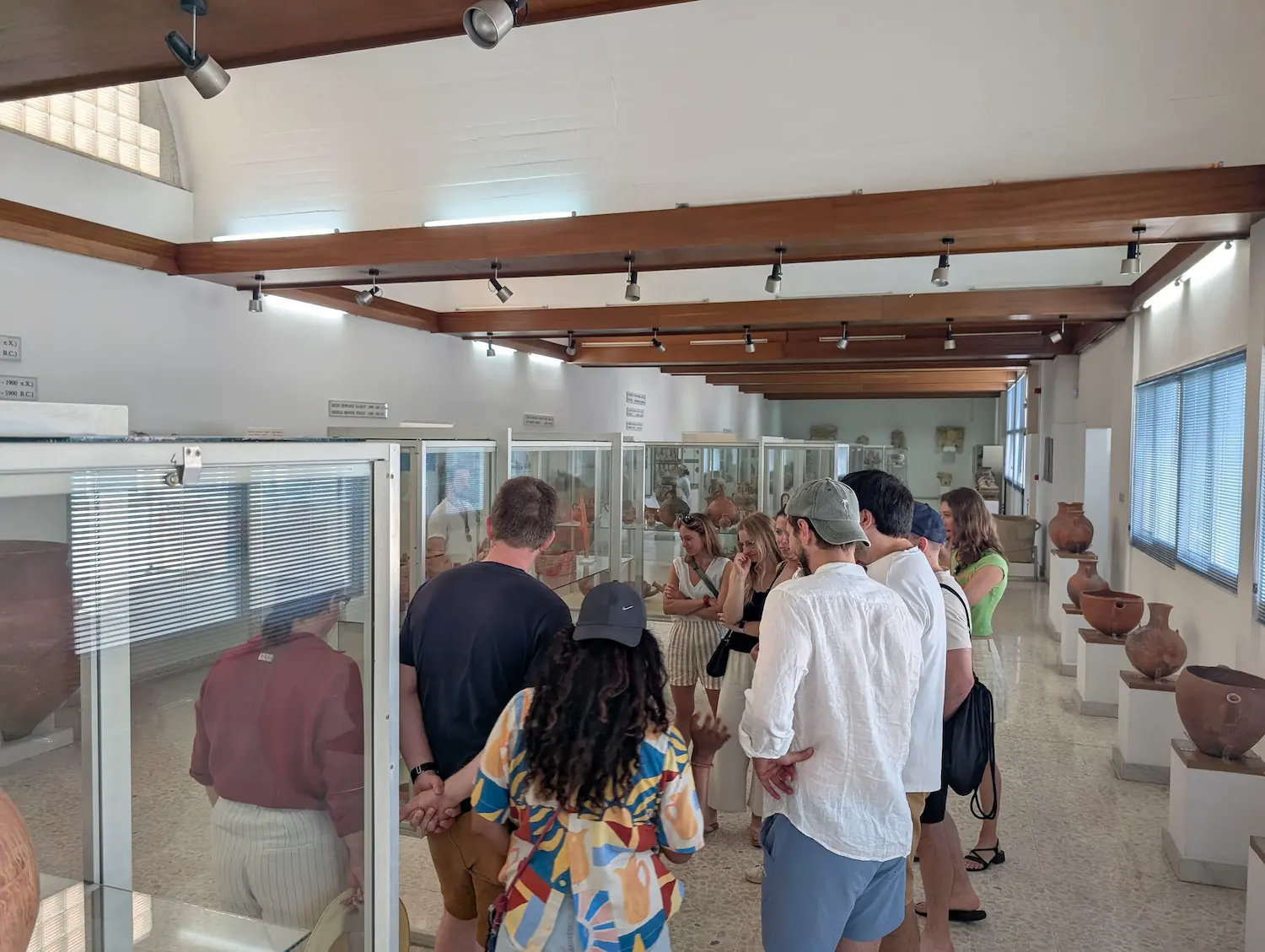
A personal highlight was the opportunity to give a 90-minute guided tour of the Limassol Archaeological Museum. Standing before cases filled with objects spanning three millennia, sharing stories of artisans, kings, and ordinary people with a curious audience—this is what makes the work worthwhile.
We hope 2026 will bring us back to Cyprus, perhaps to some of the more remote and exotic sites we have yet to explore.
Analytics & Outreach
By every metric, 2025 was a record year for growth.
We welcomed nearly 12,000 unique visitors to the site over the course of the year, with a marked acceleration in the second half following the launch of our compendium. For two months, we exceeded 2,000 visitors per month—a milestone that seemed impossibly distant just a few years ago.
Our visitors came from around the world, though three countries dominated: the United States led with approximately 4,400 visitors, followed by Cyprus itself with around 1,500, and the United Kingdom with roughly 1,300. It is gratifying to see such strong engagement from the Cypriot diaspora and from scholars and enthusiasts across the English speaking world.
This year also saw us venture into new territory: sponsorship. We began supporting a YouTuber who creates archaeological content, and we believe this partnership has yielded excellent results. Our goal with such sponsorships is twofold: to raise awareness of AncientCyprus.com, certainly, but more importantly, to spread knowledge of Ancient Cyprus to audiences who might never otherwise encounter it. If even a fraction of viewers become curious enough to dig deeper, pun intended, we will consider it a success.
A note on methodology: our site was visited over 20,000 times by bots originating from China and Singapore, but all bot traffic has been filtered out of the figures above. We are interested in real humans, not automated crawlers.
Cultural Heritage Protection
The protection of Cyprus's cultural heritage is not an academic concern for us: it is a moral imperative.
In 2025, we significantly expanded our monitoring of online antiquities sales. We reported over 100 listings to the Department of Antiquities in Cyprus, flagging objects that appeared suspicious, undocumented, or potentially looted. We also reported every single acquisition we made (both before and after purchase) to the Department, ensuring complete transparency and compliance with Cypriot law.
Each piece we consider acquiring is checked against databases of stolen objects. Where provenance is unclear or documentation is incomplete, we work closely with the Department of Antiquities to ensure we are not inadvertently acquiring problematic material. This process can be slow and sometimes frustrating, but it is essential. The alternative—contributing to the destruction of archaeological context and the erasure of historical knowledge—is unacceptable.
The diaspora of Cypriot artefacts is a deeply complex issue, one that touches on colonialism, nationalism, the art market, and the very nature of cultural ownership. We have written extensively on this subject, and we encourage anyone interested to read our article: How Many Cypriot Artefacts Exist Outside of Cyprus?
Curation & Provenance Research
As we have often stated, maintaining a collection of Cypriot antiquities is not our primary objective but rather a byproduct of our greater mission: to study, preserve, and share knowledge of Ancient Cyprus. Yet 2025 proved to be an unexpectedly demanding year on this front. An unusual number of pieces and entire collections appeared before us; opportunities we had neither anticipated nor sought out, but which demanded careful consideration nonetheless.
We adhere strictly to the 1970 UNESCO Convention. Every acquisition is reported to the Department of Antiquities. We do not deal in objects without clear, documented provenance.
Note that maintaining a collection of Cypriot antiquities is not our primary objective but a byproduct of our greater mission: to study, preserve, and share knowledge of Ancient Cyprus.
Regrettably, many cultural heritage objects were exported from Cyprus, both legally and illegally, from the early 19th century to the present day. When such objects cross our path, every effort is made to promote repatriation to Cyprus. However this is not always accepted by current owners and in such cases we make a judgement call whether or not to acquire the object ourselves. Our guiding principle is always the long-term preservation of Cypriot cultural heritage. We also avoid any activity within the art market that may incentivise looting or illicit trade.
Major Acquisitions
The UN Employee Collection
Our most significant acquisition of the year was an entire collection assembled by a former United Nations employee stationed in Cyprus during the 1960s. We purchased nearly the complete collection—91 objects in total, including some fragments, acquiring everything within our budget.
This collection now forms the backbone of our archaeological material, providing examples across numerous typologies and periods. Crucially, it includes three original export licences, which we now hold and which cover the entire collection. We also obtained multiple photographs from 1969 showing the objects, providing invaluable documentation of their early provenance.
The James Alfred Brew Plate
Early in the year, we acquired an extraordinarily rare 53-centimetre bichrome Archaic plate. This piece proved to be an adventure in itself. Initial examination raised questions about authenticity—was it a forgery? The investigation that followed was one of the most exciting provenance hunts we have undertaken, ultimately allowing us to definitively establish that the plate is fully UNESCO 1970 compliant.
We will publish a separate article diving into the details of how this plate was researched and acquired in the coming months.
TEFAF 2025: The Free-Field Bird Oinochoe
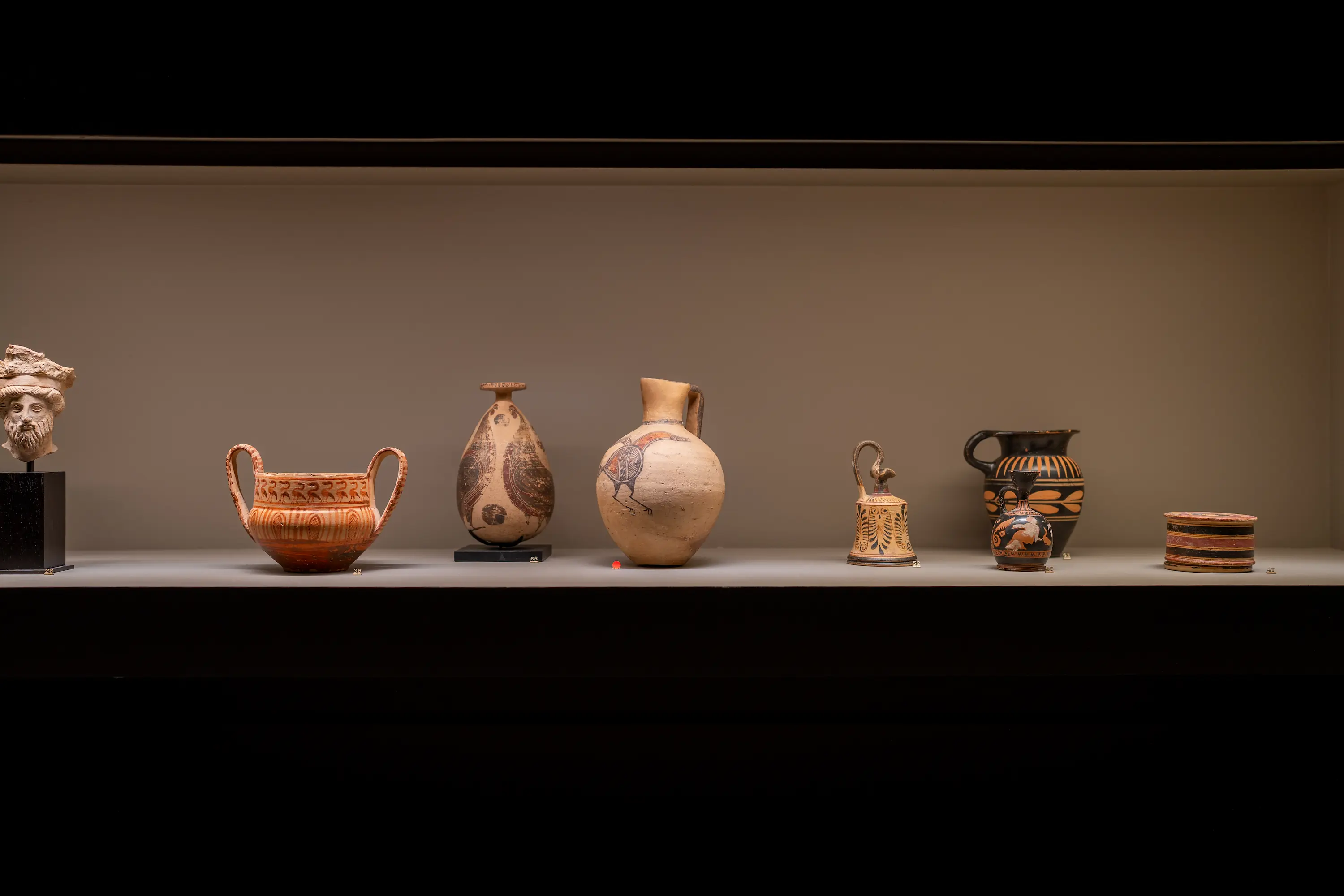
At the TEFAF art fair in Maastricht, we acquired what may be one of the crown jewel of our collection: a finely made bichrome free-field bird oinochoe of exceptional beauty and rarity.
What makes this piece truly extraordinary, beyond its aesthetic qualities, is its provenance. We can trace an unbroken chain of ownership from the moment it was excavated from Cypriot soil in the 1870s to the present day. Its journey reads like a novel: from the hands of the Cesnola brothers—the founding collectors of so much that now resides in museums abroad—through the collection of General Pitt-Rivers and onwards through the twentieth century.
We have written extensively about this remarkable object: The Journey of a Free-Field Bird
Frieze Masters: The Amphora
In late 2024, a spectacular amphora was displayed at Frieze Masters. We did not acquire it then—the decision required considerable deliberation, as it represented an extremely large proportion of our overall budget. In early 2025, we finally took the plunge.
This amphora was photographed in London in the early 1920s and remained in the UK for a century thereafter. We have since had it conserved and consolidated by one of London's top conservators. A full announcement will follow later this year—for now, consider this a sneak preview.
Other Acquisitions
Several smaller but significant pieces also joined the collection in 2025:
-
The Achna Astarte Figurine: A 40-centimetre Archaic Astarte figurine, previously owned by a Swedish gentleman who believed it to be Greek. Our research traced its likely findspot to Achna. Read the full article
-
Australian Terracotta Figurine: A small terracotta figurine owned by a man in Australia who did not know what it was. Publication forthcoming.
-
The Chevalier-Verel Head: A small limestone Archaic head from the historic Chevalier-Verel collection in France.
-
Small Head from Biddr: A small Cypriot head lacking detailed provenance, acquired from a German sale.
-
Mislabeled Juglet: A juglet listed for sale without being identified as ancient—we recognised it as Cypriot and acquired it.
-
Base Ring Jug: A large and typologically significant Base Ring jug.
Financial Report
2025 was a record year in financial terms—perhaps unsurprising given the scale of our acquisitions.
Total expenditure: approximately $57,700 (€49,170)
This figure encompasses acquisitions, conservation, website maintenance, outreach, technology research and development, hardware, and other operational costs.
Breakdown
- Acquisitions: $45,500
- Conservation: $5,400
- Shipping, Handling & Taxes: $4,200
- Technology R&D, Website & Outreach: $1,100
- Technological Hardware (primarily photography equipment): $1,500
2026 Commitments
We have already committed significant resources for the coming year:
- $28,000 for conservation of existing pieces
- $5,000* for digitization & technological projects
Part of the high price for conservation is due to using only the absolute best conservators, materials and processes. No short-cuts are allowed when dealing with irreplaceable cultural heritage.
This far exceeds our 2025 conservation & research budget, but it is necessary to ensure the long-term preservation of what we have assembled. Responsible stewardship requires investment.
Our budget for 2026 remains uncertain and therefore if 2025 repeats itself in terms of collections and pieces being presented to us which we cannot repatriate, we will regrettably have to let many pieces go unprotected.
We also hope to build towards increasing our digitization & technological projects for 2027.
Collection Strategy for 2026
Note again that we do not seek out to build a collection for the sake of collecting. Our strategy will remain unchanged and prioritizing the protection of Cypriot cultural heritage. We will continue to monitor online and offline activity of Cypriot Cultural Heritage objects, reporting all activity to the Department of Antiquities in Cyprus. If and when pieces present themselves which cannot be repatriated to Cyprus, we will consider acquiring them for long-term preservation.
Funding Note
As in 2024, our 2025 budget was entirely self-funded, without external sponsorship or donations. This will continue in 2026. Our independence is important to us.
Looking Ahead
As we close the books on 2025, we feel a profound sense of gratitude for the objects that have found their way into our care, for the stories we have been able to tell, for the community of scholars, enthusiasts, and fellow travellers who have joined us on this journey.
The year ahead promises to be equally exciting. The compendium will continue to grow. New acquisitions will be announced and studied. We hope to return to Cyprus, to walk once more through its ancient landscapes and modern museums. And we will continue our work protecting the island's cultural heritage, one reported listing at a time.
Ancient Cyprus deserves to be remembered. Its artisans, its kings, its farmers and sailors and priests—they deserve to have their stories told. That is what we are here to do.
Thank you for being part of it.
Here's to 2026.
Have questions or want to get involved? Contact us or follow our work on the site.