
Unnumbered pageScan 3 of 4
-2-
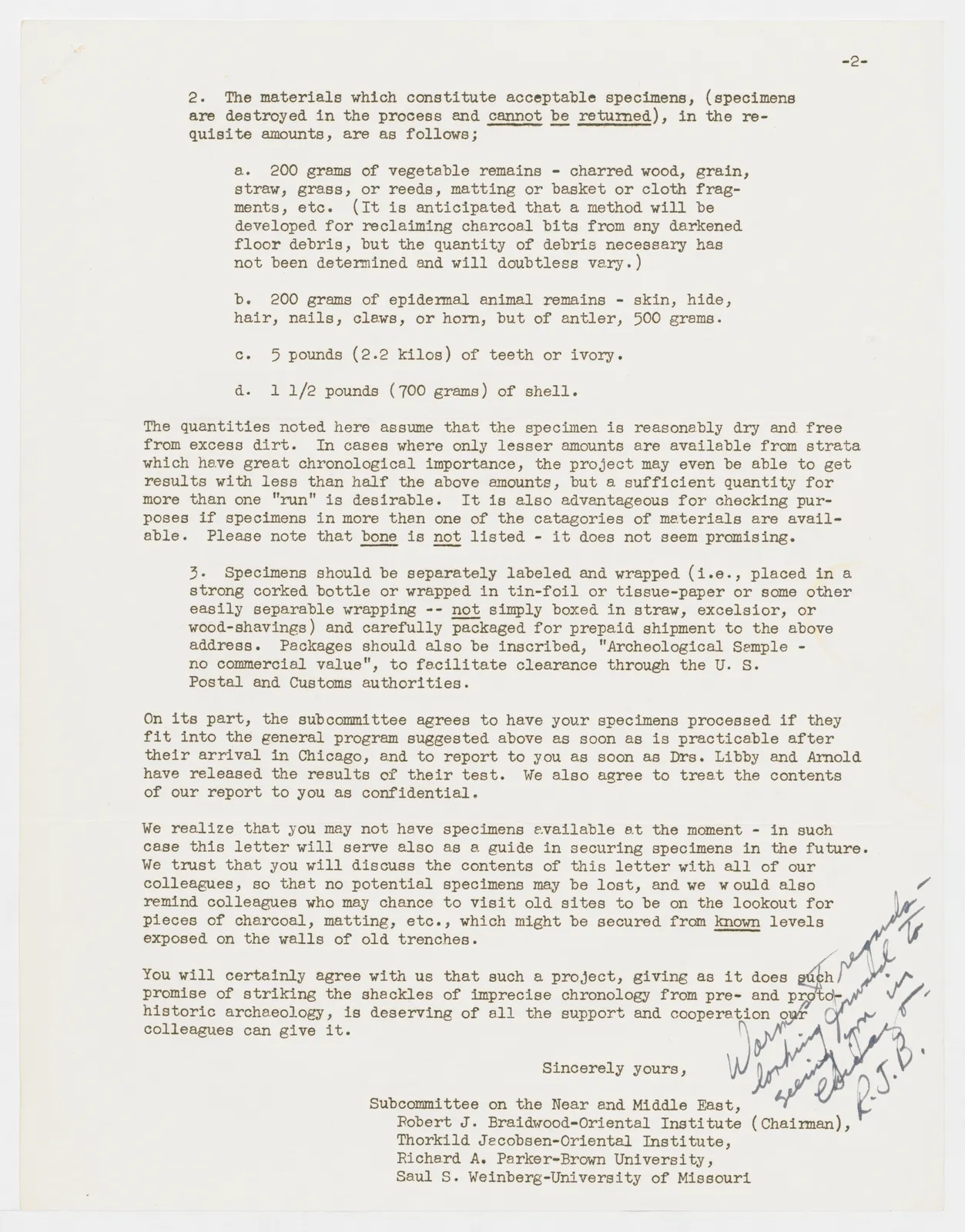
2. The materials which constitute acceptable specimens, (specimens are destroyed in the process and cannot be returned), in the requisite amounts, are as follows;
a. 200 grams of vegetable remains - charred wood, grain, straw, grass, or reeds, matting or basket or cloth fragments, etc. (It is anticipated that a method will be developed for reclaiming charcoal bits from any darkened floor debris, but the quantity of debris necessary has not been determined and will doubtless vary.)
b. 200 grams of epidermal animal remains - skin, hide, hair, nails, claws, or horn, but of antler, 500 grams.
c. 5 pounds (2.2 kilos) of teeth or ivory.
d. 1 1/2 pounds (700 grams) of shell.
The quantities noted here assume that the specimen is reasonably dry and free from excess dirt. In cases where only lesser amounts are available from strata which have great chronological importance, the project may even be able to get results with less than half the above amounts, but a sufficient quantity for more than one "run" is desirable. It is also advantageous for checking purposes if specimens in more than one of the catagories of materials are available. Please note that bone is not listed - it does not seem promising.
3. Specimens should be separately labeled and wrapped (i.e., placed in a strong corked bottle or wrapped in tin-foil or tissue-paper or some other easily separable wrapping -- not simply boxed in straw, excelsior, or wood-shavings) and carefully packaged for prepaid shipment to the above address. Packages should also be inscribed, "Archeological Sample - no commercial value", to facilitate clearance through the U. S. Postal and Customs authorities.
On its part, the subcommittee agrees to have your specimens processed if they fit into the general program suggested above as soon as is practicable after their arrival in Chicago, and to report to you as soon as Drs. Libby and Arnold have released the results of their test. We also agree to treat the contents of our report to you as confidential.
We realize that you may not have specimens available at the moment - in such case this letter will serve also as a guide in securing specimens in the future. We trust that you will discuss the contents of this letter with all of our colleagues, so that no potential specimens may be lost, and we would also remind colleagues who may chance to visit old sites to be on the lookout for pieces of charcoal, matting, etc., which might be secured from known levels exposed on the walls of old trenches.
You will certainly agree with us that such a project, giving as it does such promise of striking the shackles of imprecise chronology from pre- and protohistoric archaeology, is deserving of all the support and cooperation our colleagues can give it.
Sincerely yours,
Subcommittee on the Near and Middle East, Robert J. Braidwood-Oriental Institute (Chairman), Thorkild Jacobsen-Oriental Institute, Richard A. Parker-Brown University, Saul S. Weinberg-University of Missouri
Handwritten: Warm regards / looking forward to seeing you in Chicago / Edward? R.J.B.
65 figures hard to readstruck struck outadded written in above” jug ditto, and what it repeatsword reading not certain