
Unnumbered pageScan 5 of 20
3.
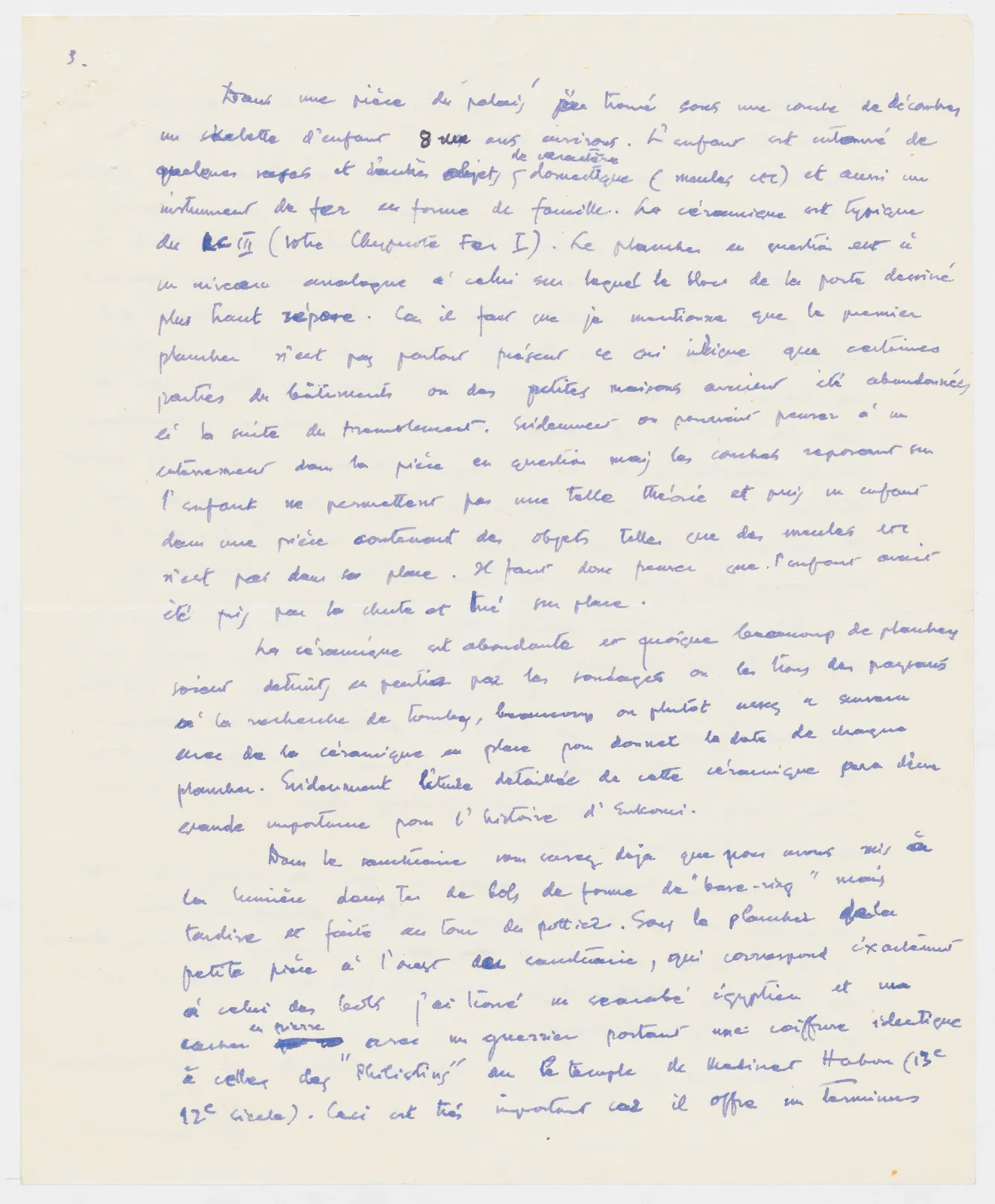
In a room of the palace, was found under a layer of rubble a child's skeleton of about 8 years. The child is surrounded by some vessels and other [handwritten: of a] domestic objects (querns etc) and also an iron instrument in the form of a sickle. The pottery is typical of L.C. III (your Cypriot Iron I). The floor in question is at a level similar to that on which the block of the door drawn above rests. This I must mention that the first floor is not present everywhere, which indicates that certain parts of buildings or small houses had been abandoned following the earthquake. Obviously one could think of a burial in the room in question but the layers resting on the child do not allow such a theory and then a child in a room containing objects such as querns etc is not in its place. One must therefore think that the child had been caught by the fall and killed on the spot.
The pottery is abundant although many floors are destroyed, partly by the soundings or the holes of the peasants searching for tombs, many or rather enough has survived with pottery in place to give the date of each floor. Obviously the detailed study of this pottery will be of a great importance for the history of Enkomi.
In the pottery you will already see that we have brought to light in a heap of bowls of "bowl-ring" form but late and made on the potter's wheel. Under the floor of the small room to the west of the sanctuary, which corresponds exactly to that of the tests I found an Egyptian scarab and a [handwritten: in stone] statuette with a warrior wearing a headdress identical to that of the "Philistines" on the temple of Medinet Habu (13th - 12th century). This is very important because it offers a terminus … continues
65 figures hard to readstruck struck outadded written in above” jug ditto, and what it repeatsword reading not certain