
Unnumbered pageScan 31 of 42
-17-
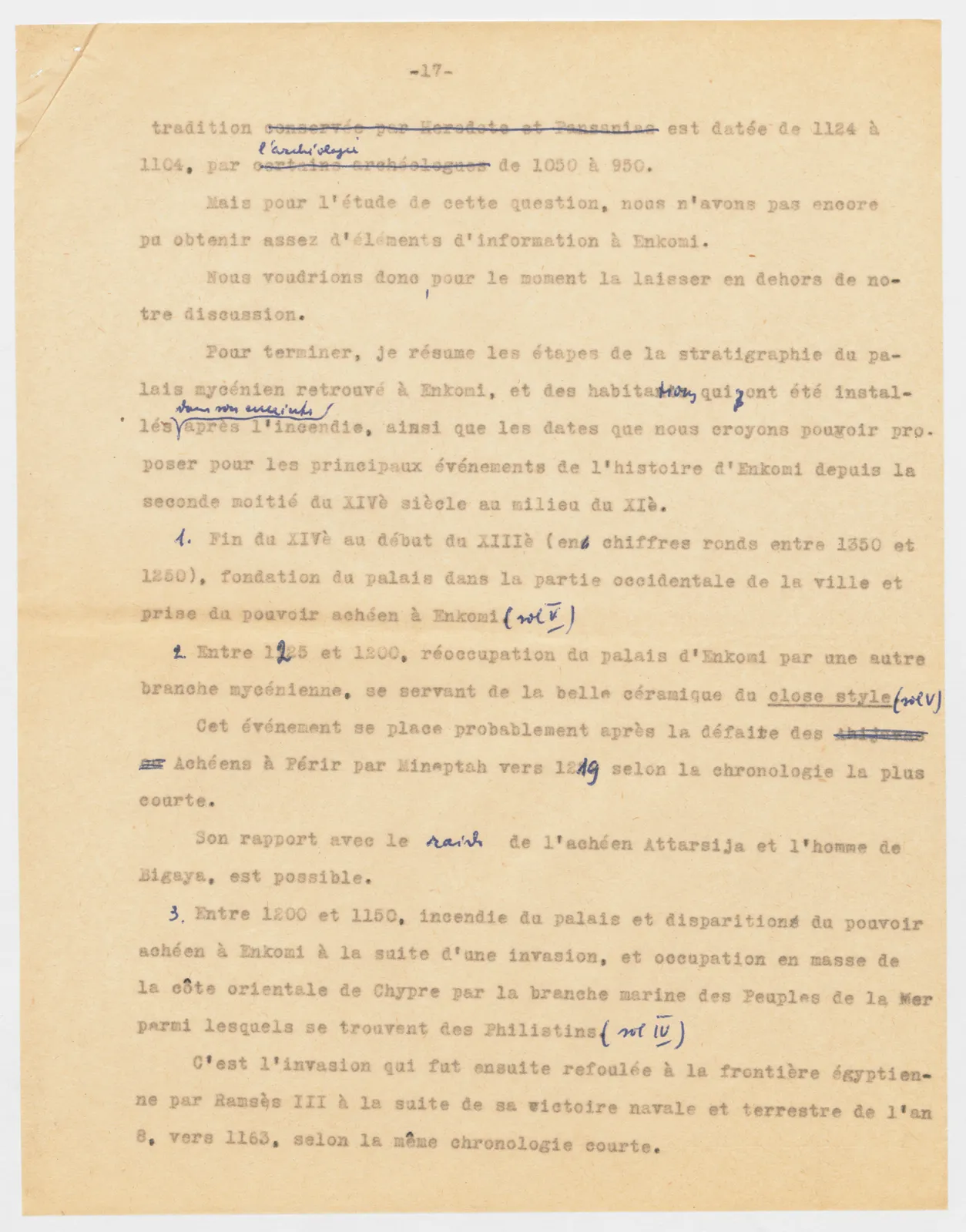
tradition preserved by Herodotus and Pausanias is dated from 1124 to [handwritten: archaeology] 1104, by certain archaeologists from 1050 to 950.
But for the study of this question, we have not yet been able to obtain enough information at Enkomi.
We would therefore like, for the moment, to leave it outside our discussion.
To conclude, I summarise the stages of the stratigraphy of the Mycenaean palace found at Enkomi, and of the habitat[handwritten: ions] installed [handwritten: as a whole] after the fire, as well as the dates we believe we can propose for the main events in the history of Enkomi from the second half of the XIVè century to the middle of the XIè.
1. End of the XIVè to the beginning of the XIIIè (in round figures between 1350 and 1250), foundation of the palace in the western part of the town and seizure of Achaean power at Enkomi [handwritten: (vol V)]
2. Between 1[handwritten: 2]25 and 1200, reoccupation of the palace at Enkomi by another Mycenaean branch, making use of the fine pottery of the close style[handwritten: (vol V)]
This event probably falls after the defeat of the Hittites Achaeans at Périr by Mineptah around 12[handwritten: 19] according to the shortest chronology.
Its connection with the [handwritten: raid] of the Achaean Attarsija and the man of Bigaya is possible.
3. Between 1200 and 1150, fire of the palace and disappearance of Achaean power at Enkomi following an invasion, and mass occupation of the east coast of Cyprus by the naval branch of the Sea Peoples, among whom are Philistines[handwritten: (vol IV)]
It was this invasion which was then repulsed at the Egyptian frontier by Ramesses III following his naval and land victory of year 8, around 1163, according to the same short chronology.
65 figures hard to readstruck struck outadded written in above” jug ditto, and what it repeatsword reading not certain