
Page -14-Scan 30 of 42
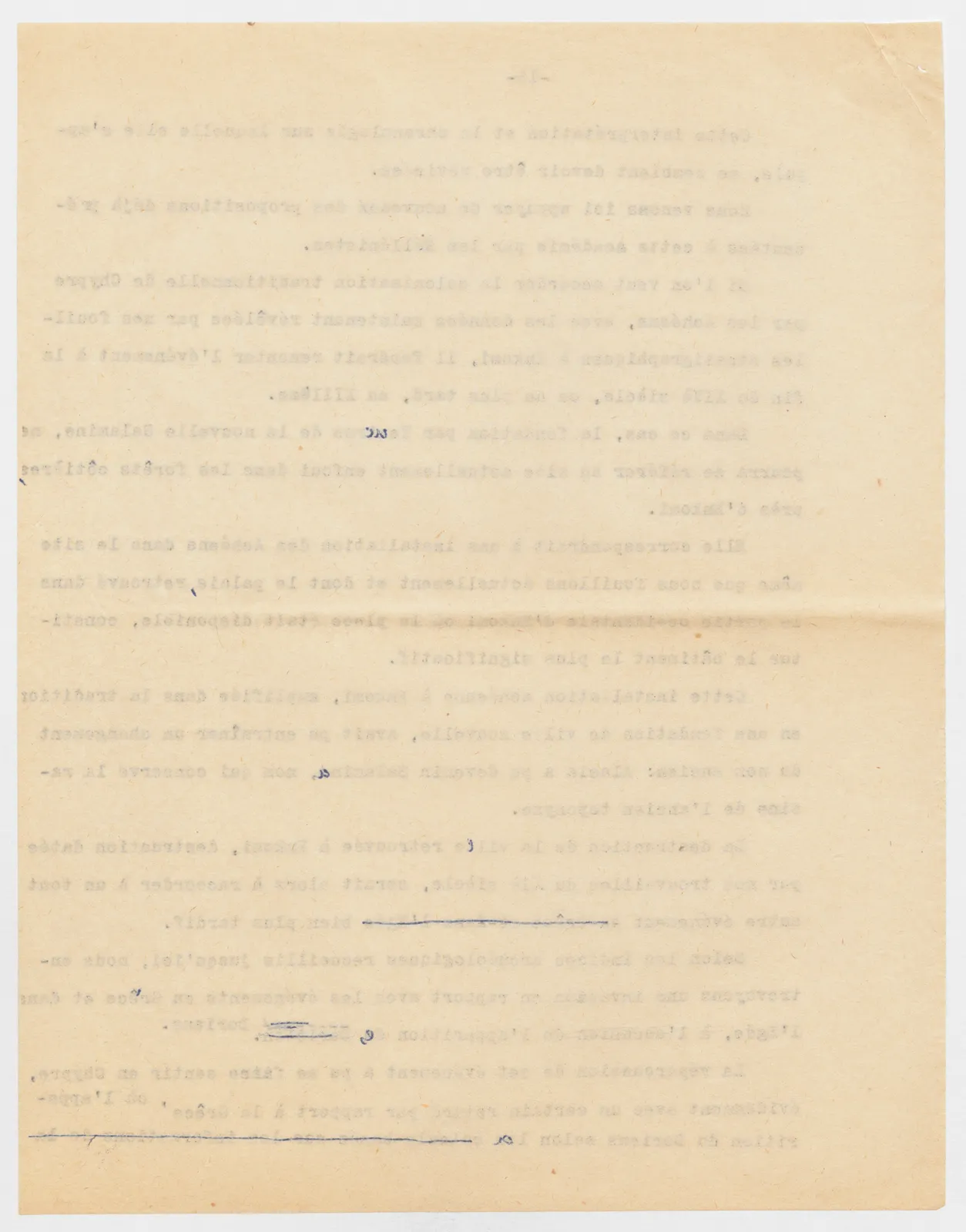
This interpretation and the chronology that it seems to apply do not seem to need to be revised.
We here wish to present new proposals already submitted to this Academy by the Ministries.
If one wishes to associate the traditional colonisation of Cyprus by the Achaeans, with the data recently revealed by its excavations stratigraphic work at Enkomi, one would have to date the event back to the end of the 13th century, or at the latest, to the 13th c.
In this case, the foundation by Teucros of the new Salamis, cannot currently be easily referred to in the Gothic strongholds near Amsoul.
It would correspond to an Achaean settlement in the town that we are currently excavating and whose palace found in the western part of the plain was available, constitutes the most significant.
This new settlement at Enkomi encroaches upon tradition in a new town foundation, could have led to a change of the ancient name: Alasia could have become Salamis, not one that preserves the root of the ancient toponym.
The destruction of the town found at Enkomi, destruction dated by its finds to this century, would then have to be pushed back to an entirely other event [handwritten: underline] it is much later.
According to the recognisable stratigraphic indications (unfit), we posit an invasion related to the events in Greece and in the Aegean, at the completion of the appearance of [handwritten: underline] Peoples.
The regrouping of this event would make itself felt in Cyprus, obviously with a certain delay compared to Greece [handwritten: underline], one relies on the appearance of certain according to the chronology of Egypt of
65 figures hard to readstruck struck outadded written in above” jug ditto, and what it repeatsword reading not certain