
Unnumbered pageScan 149 of 164
Continued from scan 148
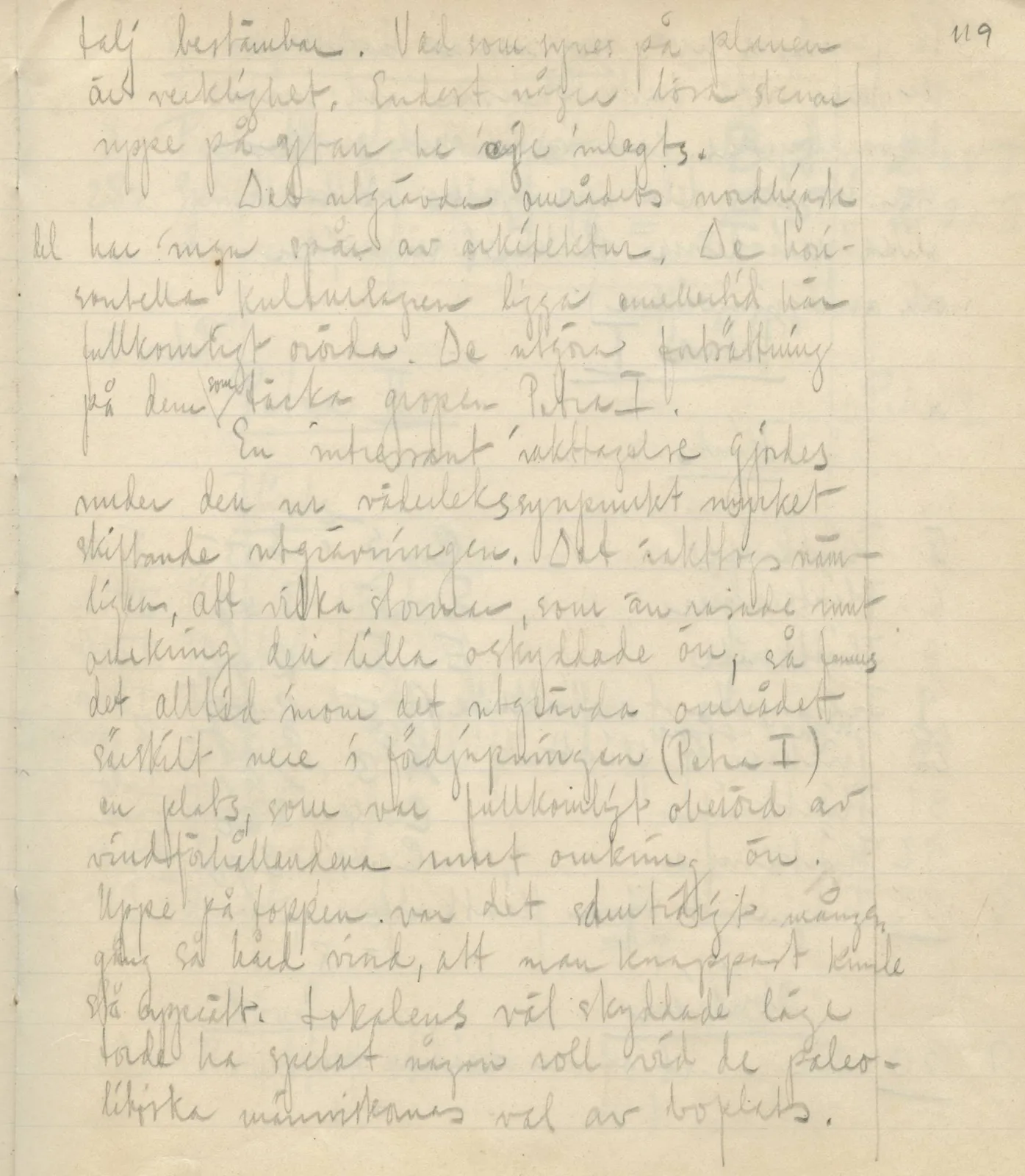
… determinable. What appears on the plan [page number: 119] is real. Only a few loose stones on the surface have not been included.
The northernmost part of the excavated area has no traces of architecture. The horizontal cultural layers, however, lie here completely undisturbed. They form a continuation of those that cover the pit Petra I.
An interesting observation was made during the excavation, which from the weather point of view was very variable. It was observed, namely, that whatever storms raged round about the small unprotected island, there was always within the excavated area, especially down in the hollow (Petra I), a spot which was completely untouched by the wind conditions round about the island. Up on the top at the same time there was often such strong wind that one could hardly stand upright. The locality's well-sheltered position may have played some role in the choice of site by the paleolithic people's choice of camp site.
65 figures hard to readstruck struck outadded written in above” jug ditto, and what it repeatsword reading not certain