
Unnumbered pageScan 103 of 164
Continued from p. 75
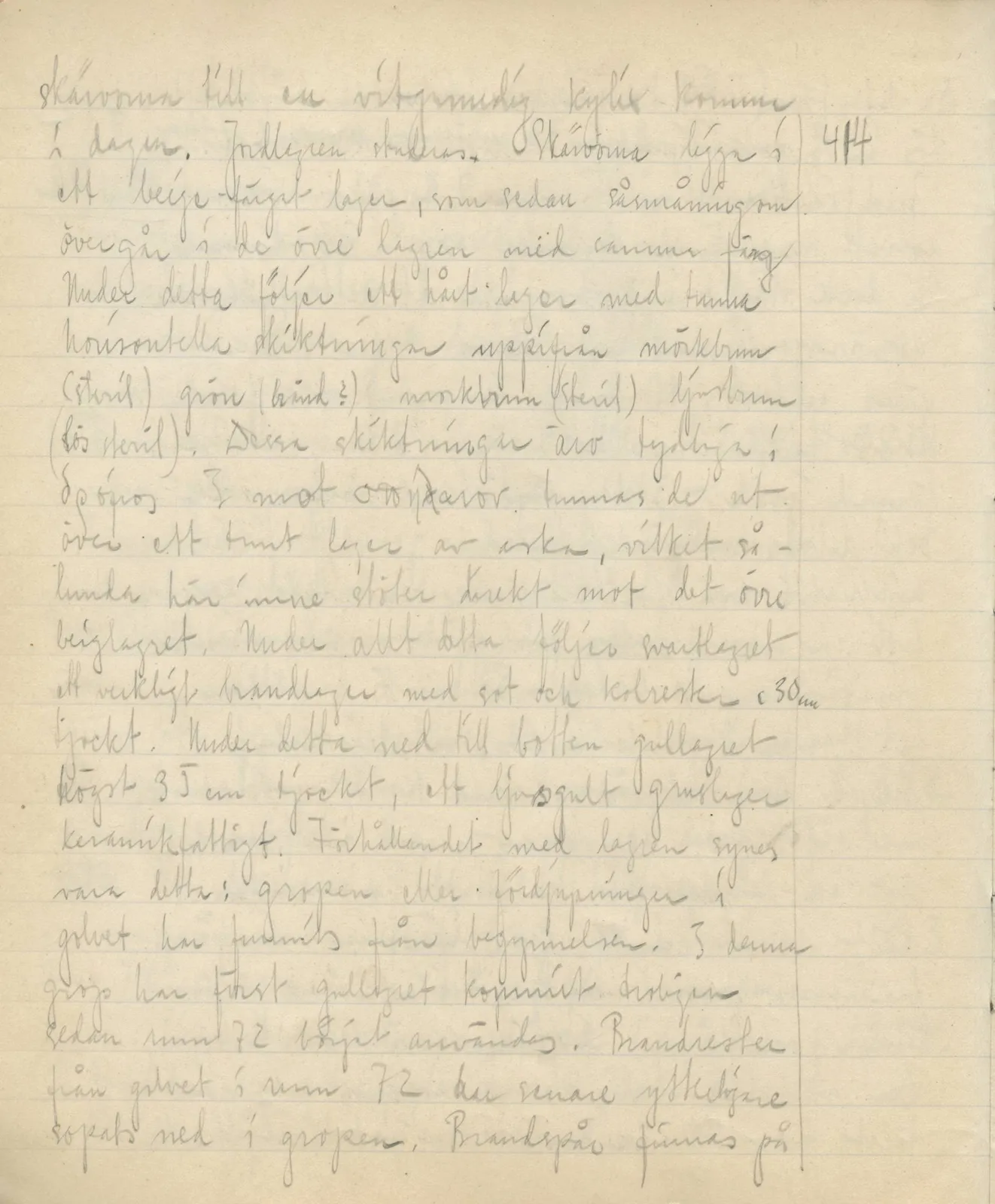
4/4… the sherds of a white-ground kylix came to light. The earth layers are being studied. The sherds lie in a beige-coloured layer, which then gradually passes into the upper layers of the same colour. Below this follows a hard layer with thin horizontal stratifications, from above dark brown (sterile) green (burnt ?) dark brown (sterile) light brown (loose sterile). These stratifications are clear in dromos I towards the οπτάνιον; they thin out over a thin layer of ash, which thus here inside abuts directly on the upper beige layer. Below all this follows the black layer, a real burnt layer with soot and charcoal remains, c. 30 cm thick. Below this, down to the bottom, the yellow layer at most 35 cm thick, a light yellow gravel layer poor in pottery. The relationship of the layers seems to be this: the pit or depression in the floor has existed from the beginning. In this pit the yellow layer has come first, probably after room 72 began to be used. Burnt remains from the floor of room 72 have later been swept further down into the pit. Traces of burning are found on … continues
65 figures hard to readstruck struck outadded written in above” jug ditto, and what it repeatsword reading not certain