
Unnumbered pageScan 156 of 165
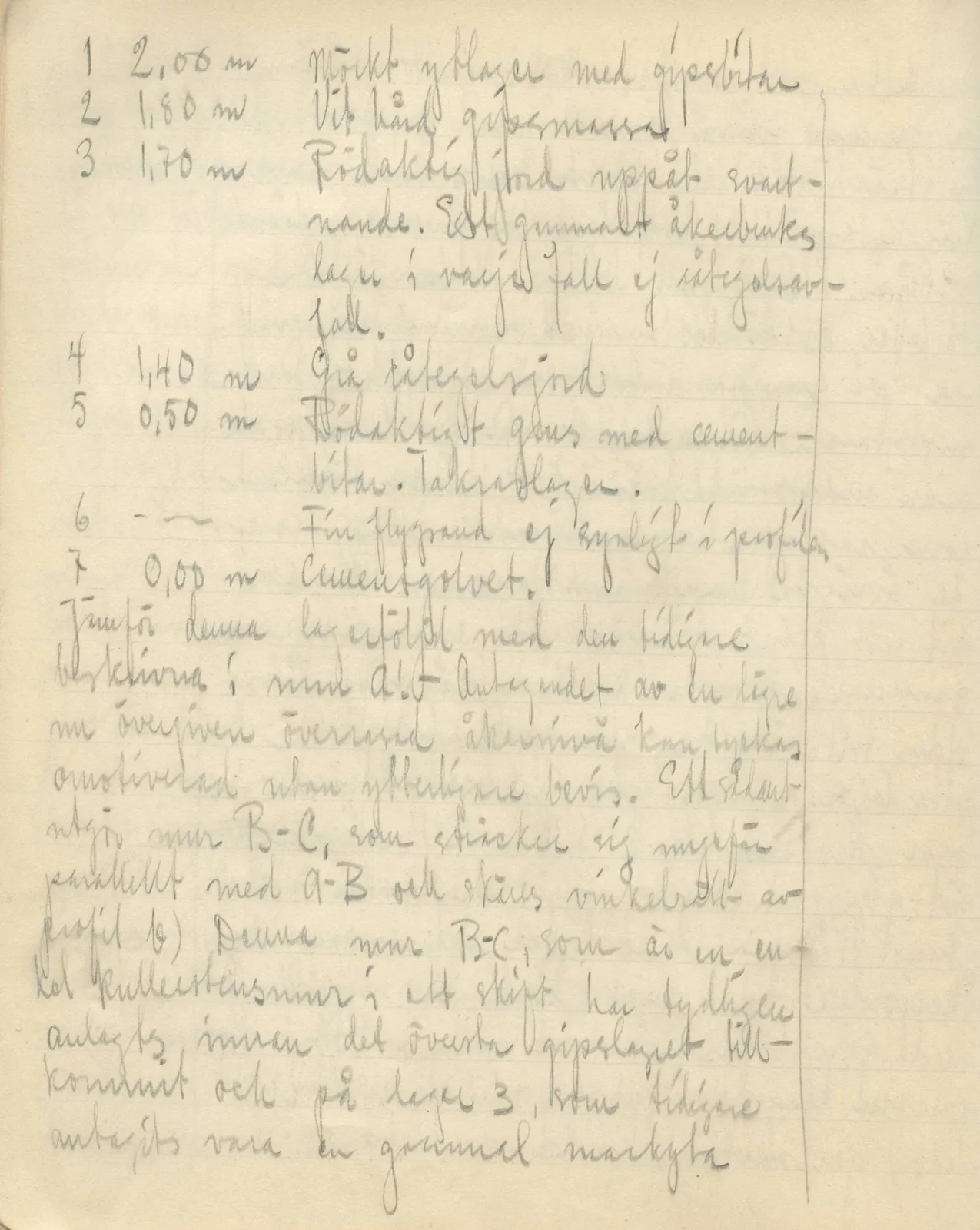
| 1 | 2,00 m | Dark surface layer with gypsum pieces |
| 2 | 1,80 m | White hard gypsum mass |
| 3 | 1,70 m | Reddish earth upward blackish- |
| ish. An old agricultural- | ||
| layer in any case not of unbaked brick de- | ||
| bris. | ||
| 4 | 1,40 m | Grey unbaked brick earth |
| 5 | 0,50 m | Reddish gravel with cement- |
| pieces. Roof collapse layer. | ||
| 6 | — — | Fine blown sand not visible in the section |
| 7 | 0,00 m | The cement floor. |
Compare this layer sequence with the one described earlier in room A! — The assumption of a lower now abandoned overlying cultivation level may seem unjustified without further evidence. Such evidence is provided by wall B-C, which runs roughly parallel to A-B and is cut at right angles by section b). This wall B-C, which is a single rubble wall one stone thick, has evidently been built before the uppermost gypsum layer came about, and on layer 3, which was previously assumed to be an old ground surface
65 figures hard to readstruck struck outadded written in above” jug ditto, and what it repeatsword reading not certain