
Unnumbered pageScan 142 of 165
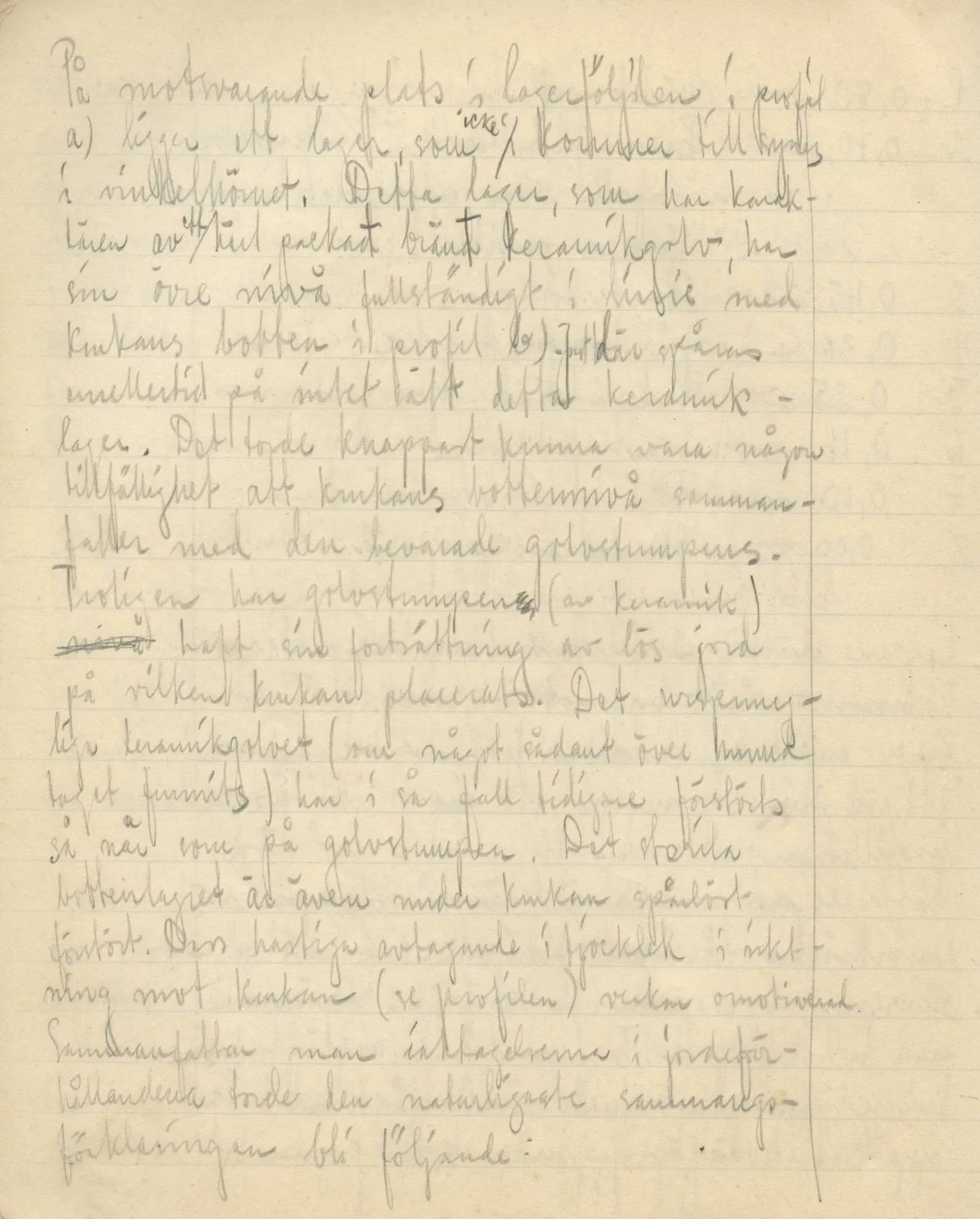
At the corresponding place in the layer sequence in section a) lies a layer, which not comes into view in the corner. This layer, which has the character of a tightly packed burnt pottery floor, has its upper level completely in line with the base of the pot in section b). Not There is traced however in no way this pottery-layer. It can hardly be any coincidence that the base level of the pot coincides with that of the preserved floor fragment. Probably the floor fragment's (of pottery) level had its continuation of loose earth on which the pot was placed. The original pottery floor (if any such at all existed) has in that case previously been destroyed except for the floor fragment. The sterile bottom layer is also under the pot without trace destroyed. Its rapid thinning in thickness in direction towards the pot (see the section) seems unmotivated. If one sums up the observations in the soil conditions the most natural expert explanation will be the following:
65 figures hard to readstruck struck outadded written in above” jug ditto, and what it repeatsword reading not certain