
Unnumbered pageScan 123 of 165
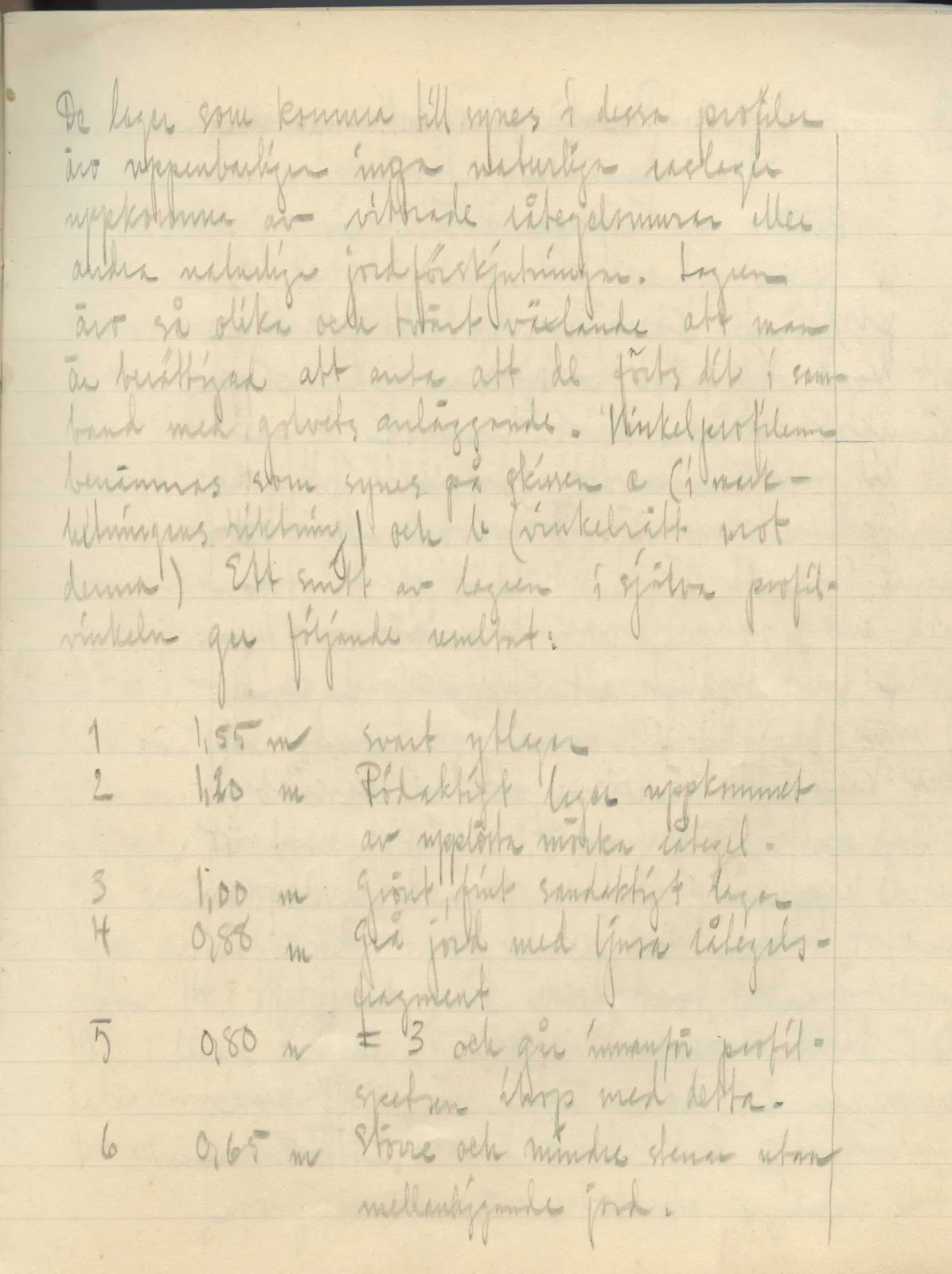
The layers that appear in these sections are obviously not natural collapse layers formed from weathered mud-brick walls or other natural displacements of earth. The layers are so varied and abruptly alternating that one is justified in assuming that they were brought there in connection with the laying of the floor. The corner sections are designated, as shown in the sketch, a (in the direction of the wall slope) and b (at right angles to this). A cut of the layers in the corner section itself gives the following result:
| 1 | 1,55 m | Black surface layer |
| 2 | 1,20 m | Reddish layer resulting |
| from dissolved dark mudbrick. | ||
| 3 | 1,00 m | Green, fine sandy layer |
| 4 | 0,88 m | Grey earth with light mudbrick- |
| fragments | ||
| 5 | 0,80 m | = 3 and runs inside the section- |
| corner together with this. | ||
| 6 | 0,65 m | Larger and smaller stones without |
| intervening earth. |
65 figures hard to readstruck struck outadded written in above” jug ditto, and what it repeatsword reading not certain