
Unnumbered pageScan 103 of 165
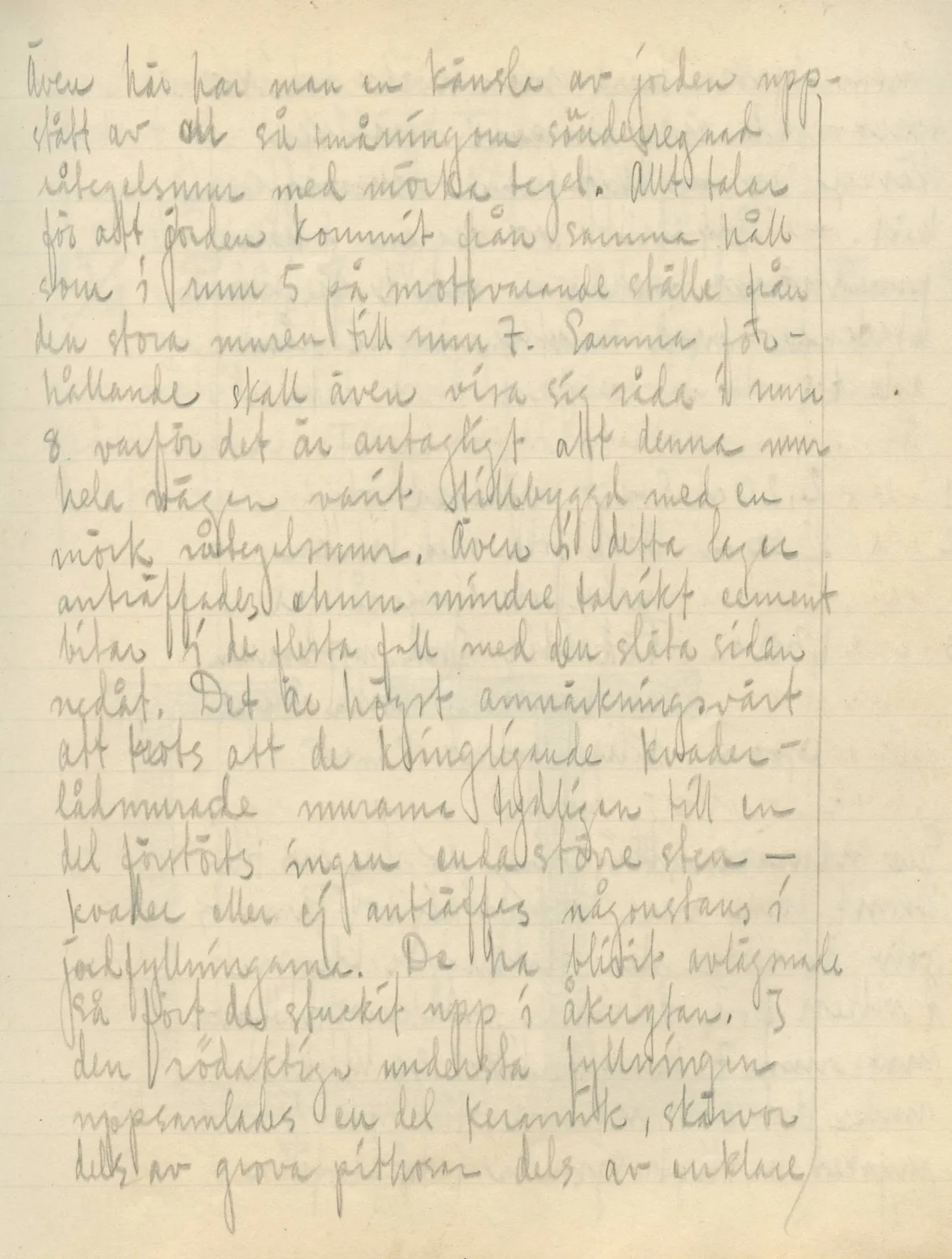
Here too one has a feeling that the earth uprose from gradually rain-eroded mudbrick wall with dark bricks. Everything speaks for the earth having come from the same direction as in room 5 at the corresponding place from the large wall to room 7. The same condition should also be found to prevail in room 8. so it is likely that this wall has been built up along its whole length with a dark mudbrick wall. Also in this layer were found, though less numerous, cement pieces, in most cases with the smooth side downward. It is most remarkable that although the surrounding ashlar-built walls have evidently been in part destroyed, not a single larger stone – ashlar or not is found anywhere in the earth fills. They have been removed as soon as they stuck up in the field surface. In the reddish lowest fill some pottery was collected, sherds partly of coarse pithoi, partly of simpler … continues
65 figures hard to readstruck struck outadded written in above” jug ditto, and what it repeatsword reading not certain