
Page 898Scan 51 of 98
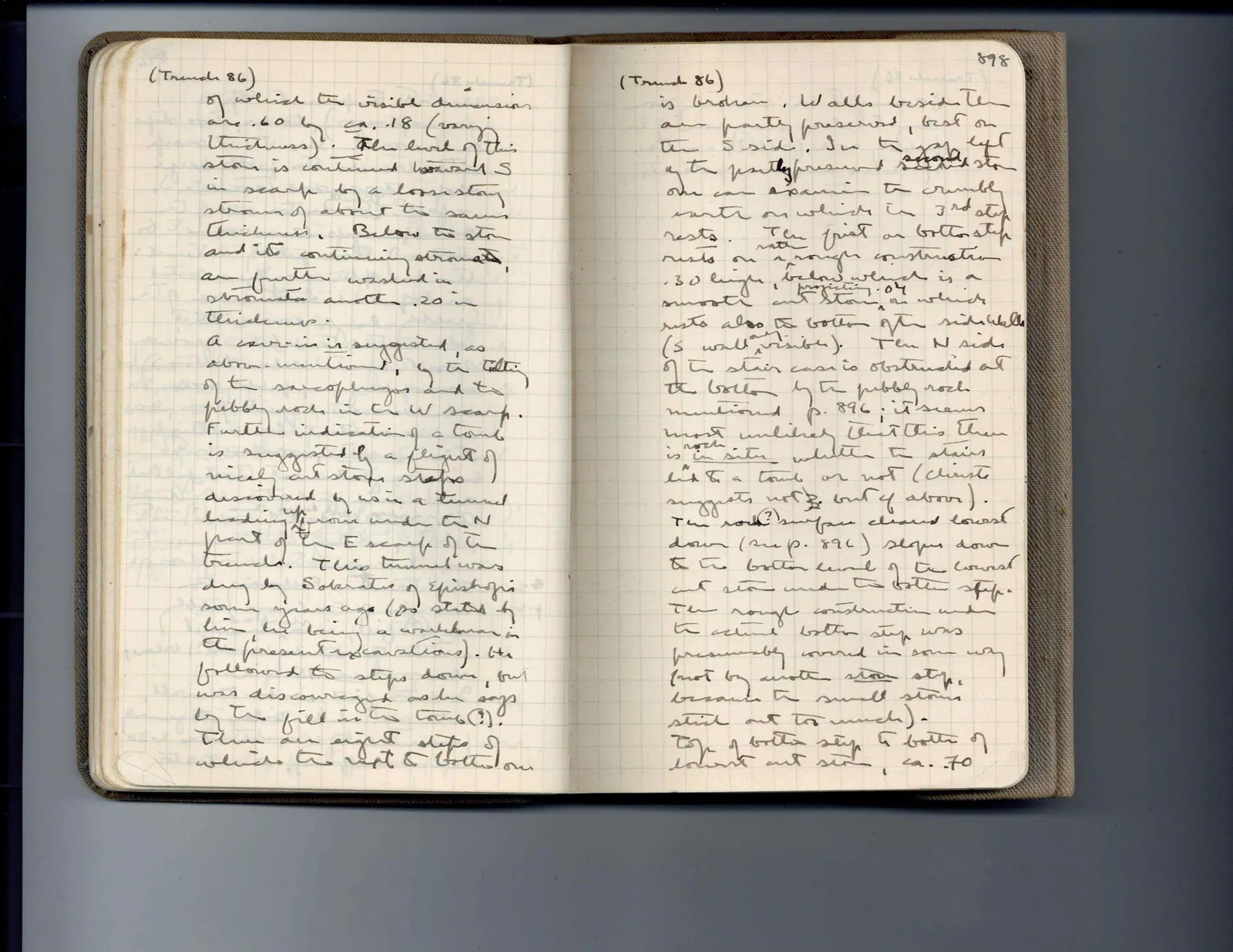
(Trench 86) of which the visible dimensions are .60 by ca. .18 (varying thickness). The level of this stone is continued toward S in scarp by a loose stony stratum of about the same thickness. Below the stone and its continuing stratum, are further washed in strata another .20 in thickness. A cave-in is suggested, as above mentioned, by the tilting of the sarcophagus and the pebbly rock in the W scarp. Further indication of a tomb is suggested by a flight of nicely cut stone steps discovered by us in a tunnel leading up from under the N part of the E scarp of the trench. This tunnel was dug by Sokrates of Episkopi some years ago (so stated by him, he being a workman in the present excavations). He followed the steps down, but was discouraged as he says by the fill in the tomb(?). There are eight steps of which the next to bottom one
Right page
(Trench 86) is broken. Walls beside them are partly preserved, best on the S side. In the gap left by the partly preserved second 3d step one can examine the crumbly earth on which the 3rd step rests. The first or bottom step rests on a rough construction .30 high, below which is a smooth cut stone, projecting .04 on which rests also the bottom of the sidewall (S wall only visible). The N side of the stair case is obstructed at the bottom by the pebbly rock mentioned p. 896: it seems most unlikely that this then is in situ, rock whether the stairs lead to a tomb or not (climatic suggests not; see out of above). The rock? surface cleared lowest down (see p. 896) slopes down to the bottom level of the lowest cut stone under the bottom steps. The rough construction under the actual bottom step was presumably covered in some way (not by another stone step, because the small stones stick out too much). - Top of bottom step to bottom of lowest cut stone, ca. .70
65 figures hard to readstruck struck outadded written in above” jug ditto, and what it repeatsword reading not certain