
Page 146Scan 74 of 103
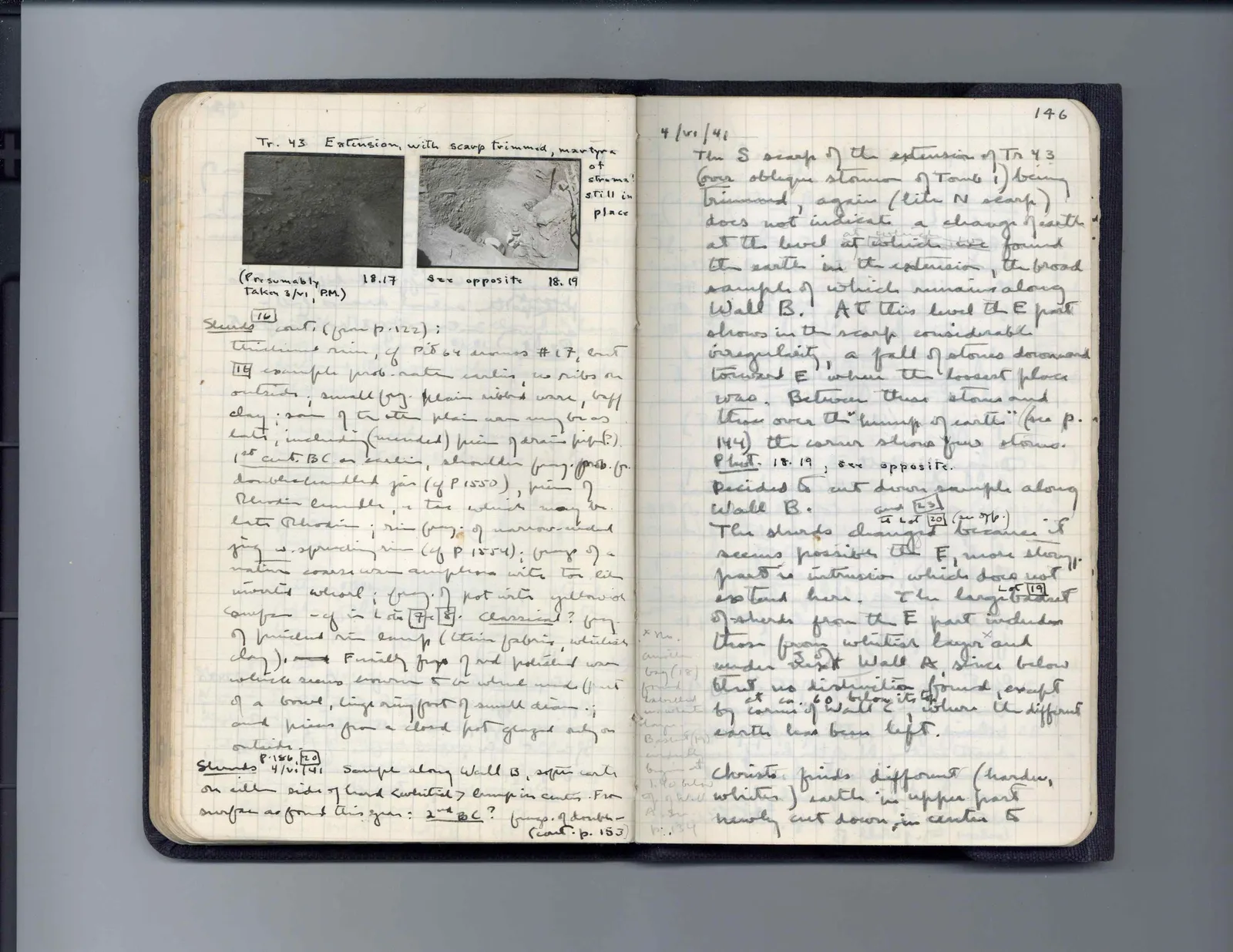
Tr. 43 Extension, with scarp trimmed, martyra of strama still in place
[photograph] 18.17 (Presumably taken 3/VI, P.M.)
[photograph] 18.19 See opposite
Sherds 16 cont. (from p. 122) : thicken rim, of P 1564 or Dromos # 17, but 16 sample prob. rather earlier, no ribs on outside; small frag. plain ribbed ware, buff clay; some of the other plain ware may be as late, including (mended) piece of strain -pipe (?). 1st cent. BC or earlier, shoulder frag. prob. of. double-handled jar (cf P 1550), piece of Rhodian handle, & toe which may be late Rhodian; rim frag. of narrow-necked jug w. spreading rim (cf P 1554); frags of a native coarse-ware amphora with toe like inverted whorl; frag. of pot with yellowish semigloss - cf in Lots 7 & 8. Classical? Frag. of pinched rim lamp (thin fabric, whitish clay). [deletion] Fairly frags of red polished ware which seems known to a wheel made flat of a bowl, linger ring foot of small diam.; and pieces from a closed pot glazed only on outside.
Sherds p. 186 20^ 4/VI/41 Sample along Wall B, softish earth on either side of hard <whitish> lump in center. From surface as found this year: 2nd BC? Frags. of double- (cont. p. 153)
Right page
4/VI/41 The S scarp of the extension of Tr 43 (over oblique stomon of Tomb 1) being trimmed, again (like N scarp) does not indicate a change of earth at the level at which we at which found the earth in the extension, the broad sample of which remains along Wall B. At this level the E part shows in the scarp considerable irregularity, a fall of stones downward toward E where the loosest place was. Between these stones and those over the "hump of earth" (see p. 144) the corner shows few stones. Phot. 18.19, see opposite.
Decided to cut down sample along Wall B.
and 23 to Lot 20 (see opp.)
The sherds changed Lot 19 because it seems possible the E, more stony, part is intrusion which does not extend here. The largest cut of sherds from the E part includes those from whitish layer and under west Wall A, since below [deletion] no distinction found, except by corner at ca. .60 below its top of Wall C where the different earth has been left.
[margin left: * no. another bag (18) label lost unimportant Basement (19) as well begun at 1.90 below top of Wall A. See p. 139] Christo finds different (harder, whitish) earth in upper part newly cut down, in center to
65 figures hard to readstruck struck outadded written in above” jug ditto, and what it repeatsword reading not certain