
Unnumbered pageScan 69 of 103
135
also this black glazed ware
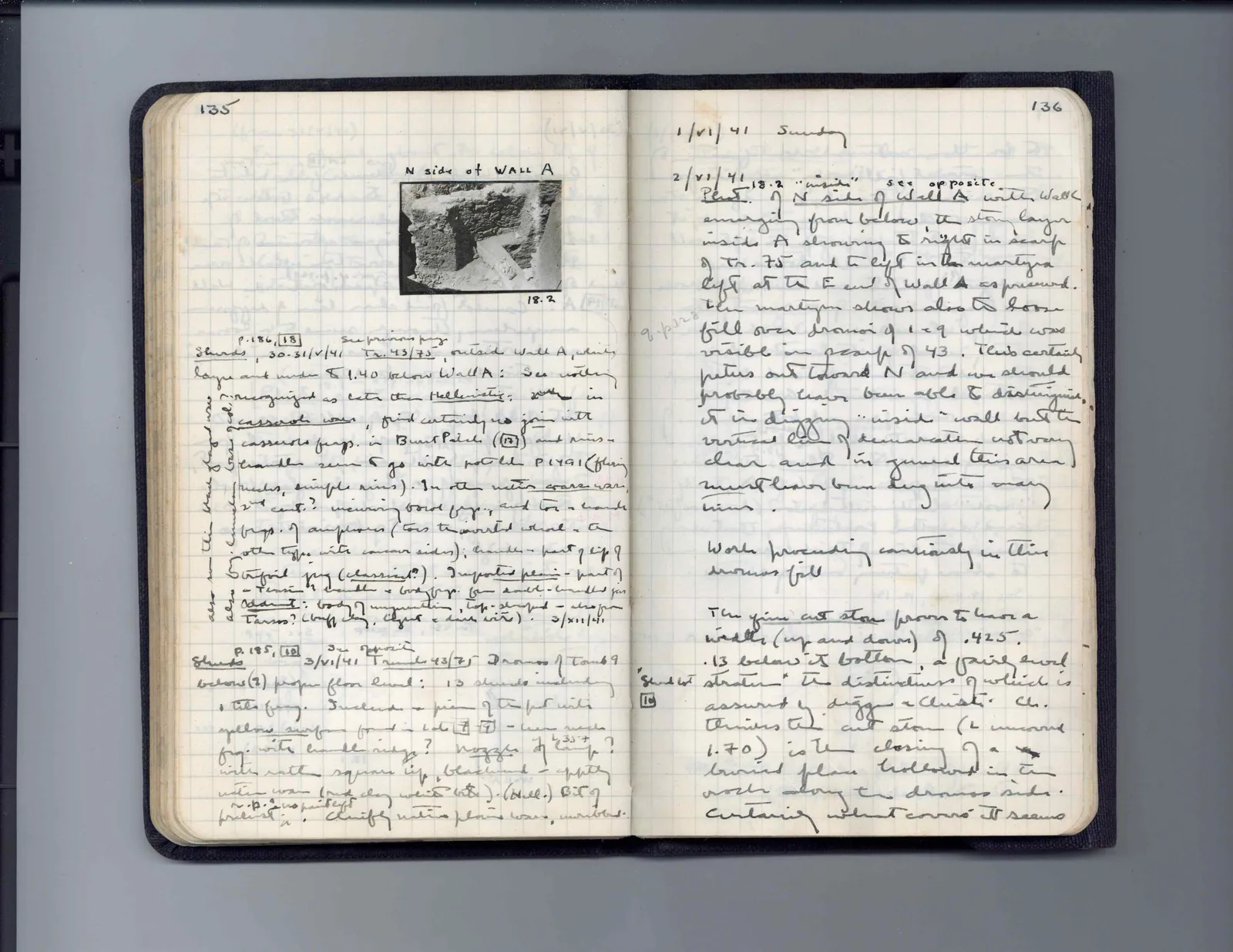
N side of Wall A [photograph 18.2]
P. 186, [boxed: 18Sherds] 30-31/V/41 see previous page Tr. 43/75 outside Wall A, white layer and under to 1.40 below Wall A: See nothing recognized as later than Hellenistic; both in casserole wares, find certainly no join with casserole frags. in Burnt Patch ([boxed: 17]) and rims - (handle seems to go with rottler P1491 (flaring neck, simple rims). In other native coarse ware, 2nd cent.? measuring bowl frags.; and tor-x-handle frags. of amphoras (tors the curved wheel - the other types with concave sides); handle - part of lip of trefoil jug (classical?). Imported plain - part of a Thasian? handle + body frags. from small-handled jar like I: body of unguentina, top-shaped - also from Tarsos? (buff clay, claret to dark cir.) · 3/XII/41
P. 185, [boxed: 16Sherds] 3/VI/41 see opposite Trench 43/75 Dromos of Tomb 9 below (2) proper floor level: 13 sherds including 1 tile frag. Include a piece of tile? pot with yellow surface foot in lote [boxed: 7] [boxed: 7] - rim needs frag. with handle rings? nozzle of L357 lamp? with rather square lip, blackened - gritty native ware (red clay with white). (Hell.) Bit of w-p. jar inscribed? foot [illegible]? Chiefly native plain ware, unribbed.
Right page
136
1/VI/41 Sunday
cf. p. 1282/VI/41 Phot. 18.2 "inside" see opposite. N side of Wall A with Wall C emerging from below, the stony layer inside A showing to right in scarp of Tr. 75 and to left in the martyra left at the E end of Wall A as preserved. The martyra shows also the loose fill over dromoi of 1 & 9 which was visible in scarp of 43. This certainly peters out toward N and we should probably have been able to distinguish it in digging "inside" wall but the vertical line of demarcation not very clear and in general this area must have been dug into many times.
Work proceeding cautiously in this dromos fill
The fine cut stone proves to have a width (up and down) of .425. .13 below its bottom, a fairly level "sandst stratum" the distinctness of which is assured by digger & Christí. Ch. thinks the cut stone (L uncoved 1.70) is the closing of a burial place hollowed in the rock along the dromos side. Certainly what covers it seems
[boxed: 16]
65 figures hard to readstruck struck outadded written in above” jug ditto, and what it repeatsword reading not certain