
Unnumbered pageScan 32 of 79
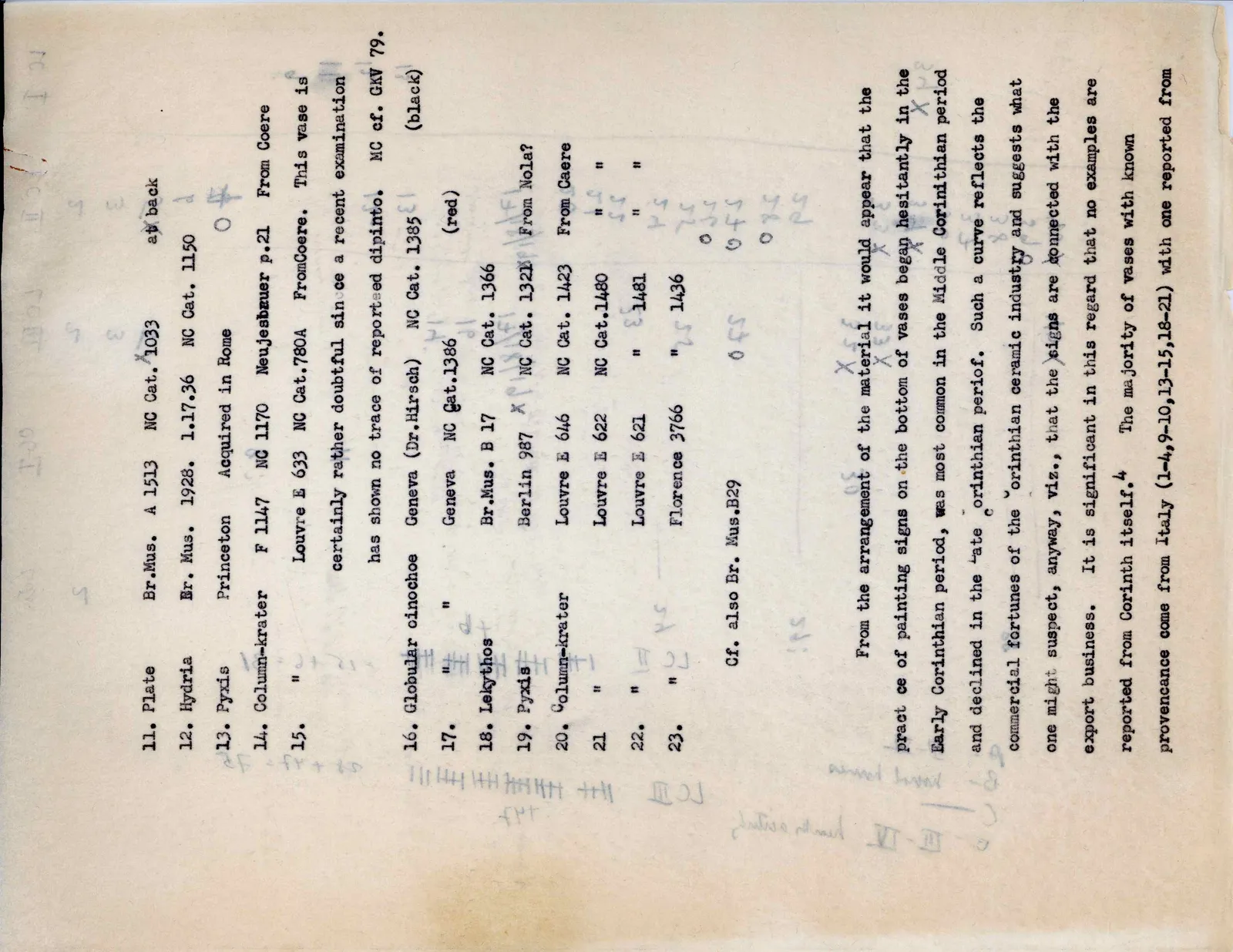
11.Plate Br.Mus. A 1513 NC Cat. 1033 at back
12.Hydria Br. Mus. 1928. 1.17.36 NC Cat. 1150
13.Pyxis Princeton Acquired in Rome
14.Column-krater F 1147 NC 1170 Neujeahzuer p.21 From Coere
15." Louvre E 633 NC Cat.780A FromCoere. This vase is certainly rather doubtful since a recent examination has shown no trace of reported dipinto. MC cf. GKV 79. (black)
16.Globular oinochoe Geneva (Dr.Hirsch) NC Cat. 1385 [handwritten: 13]
17." Geneva NC Cat.1386 (red)
18.Lekythos Br.Mus. B 17 NC Cat. 1366
19.Pyxis Berlin 987 NC Cat. 1321 From Nola?
20.Column-krater Louvre E 646 NC Cat. 1423 From Caere
21." Louvre E 622 NC Cat.1480 " "
22." Louvre E 621 " 1481 " "
23." Florence 3766 " 1436
Cf. also Br. Mus.B29
From the arrangement of the material it would appear that the practice of painting signs on the bottom of vases began hesitantly in the Early Corinthian period, was most common in the Middle Corinthian period and declined in the late Corinthian period. Such a curve reflects the commercial fortunes of the Corinthian ceramic industry and suggests what one might suspect, anyway, viz., that the signs are connected with the export business. It is significant in this regard that no examples are reported from Corinth itself.4 The majority of vases with known provencance come from Italy (1-4,9-10,13-15,18-21) with one reported from
65 figures hard to readstruck struck outadded written in above” jug ditto, and what it repeatsword reading not certain