
Unnumbered pageScan 86 of 97
85
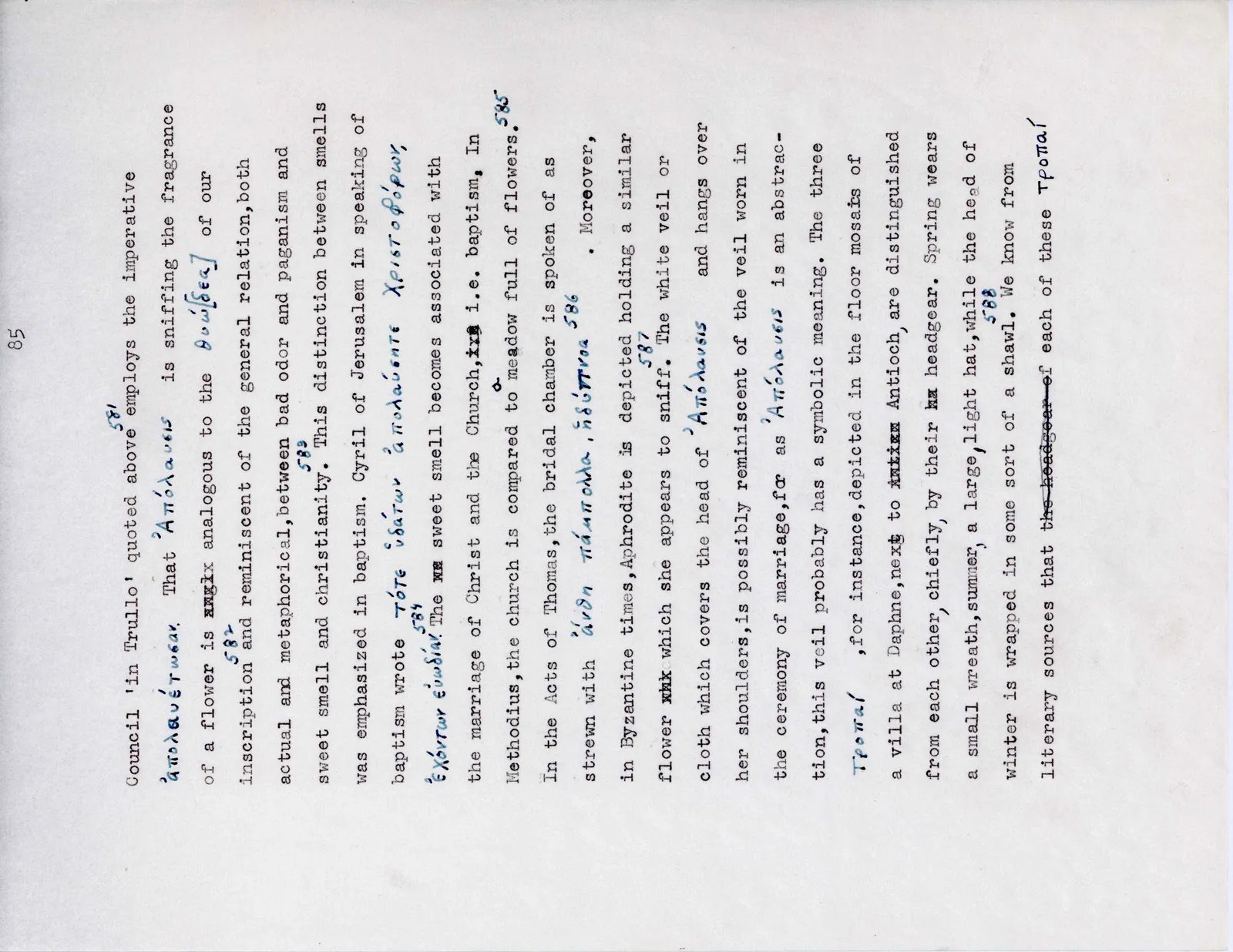
Council 'in Trullo' quoted above employs the imperative [handwritten: ἀπολαύετωσαν] is sniffing the fragrance [handwritten: 581] of a flower is [handwritten: ἀπολαύσεις]... That [handwritten: ἀπολαύσεις] is analogous to the [handwritten: ὀσμήσεας] of our inscription and reminiscent of the general relation, both [handwritten: 582] actual and metaphorical, between bad odor and paganism and [handwritten: 583] sweet smell and christianity. This distinction between smells was emphasized in baptism. Cyril of Jerusalem in speaking of baptism wrote [handwritten: τότε ὑδάτων ἀπολαύοντες Χριστοφόρων] [handwritten: 584] [handwritten: ἐκόντων εὐωδίαν]. The sweet smell becomes associated with the marriage of Christ and the Church, [handwritten: ἐκ] i.e. baptism. In [handwritten: 585] Methodius, the church is compared to meadow full of flowers. In the Acts of Thomas, the bridal chamber is spoken of as strewn with [handwritten: ἀνθῶν πάσαμα, ἡδύτητα] [handwritten: 586] flower which she appears to sniff. The white veil or in Byzantine times, Aphrodite is depicted holding a similar [handwritten: 587] cloth which covers the head of [handwritten: Ἀπόλλωνις] and hangs over her shoulders, is possibly reminiscent of the veil worn in the ceremony of marriage, for as [handwritten: Ἀπόλλωνις] is an abstraction, this veil probably has a symbolic meaning. The three [handwritten: τροπαί] , for instance, depicted in the floor mosaics of a villa at Daphne, next to [handwritten: Antioch] are distinguished [handwritten: 588] from each other, chiefly by their headgear. Spring wears a small wreath, summer, a large, light hat, while the head of winter is wrapped in some sort of a shawl. We know from literary sources that the headgear of each of these [handwritten: τροπαί]
65 figures hard to readstruck struck outadded written in above” jug ditto, and what it repeatsword reading not certain