
Unnumbered pageScan 52 of 97
48 [handwritten: 51]
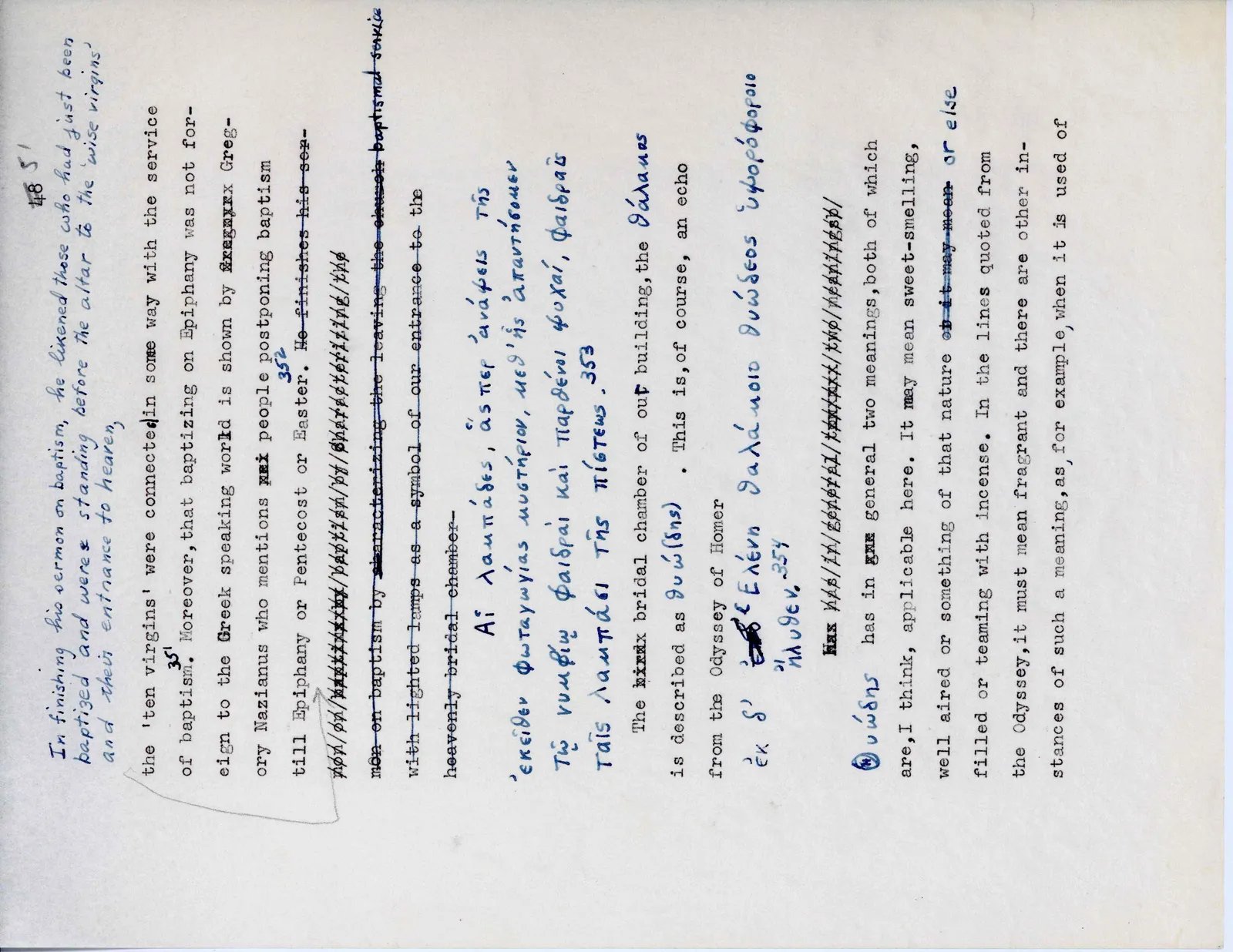
In finishing his sermon on baptism, he likened those who had just been baptized and were standing before the altar to the 'ten virgins' were connected in some way with the service of baptism. Moreover, that baptizing on Epiphany was not forgotten to the Greek speaking world is shown by [handwritten: 351] Gregory Nazianus who mentions people postponing baptism till Epiphany or Pentecost or Easter. [handwritten: 352] He finishes his sermon on baptism by characterizing the leaving the baptismal service with lighted lamps as a symbol of our entrance to the heavenly bridal chamber.
Ai λαμπάδες, ἀστὲρ ἀναφέις τῆς ἐκείθεν φωταγωγίας μυστήριον, μεθ' ἧς ἀπαντήσομεν φαίδρας καὶ παρθένοι φυχαί, φαίδρας τῆ νυμφίῳ ταῖς λαμπάδες τῆς πίστεως. [handwritten: 353]
The bridal chamber of our building, the θάλαμος is described as θωΐ(δης) . This is, of course, an echo from the Odyssey of Homer ἐκ δ' ἐλένη θαλάμοιο θωΐδεος ὑψορόφοιο [handwritten: 354]
[handwritten: Θωΐδης] has in general two meanings, both of which are, I think, applicable here. It may mean sweet-smelling, well aired or something of that nature or it may mean fragrant and teaming with incense. In the lines quoted from the Odyssey, it must mean fragrant and there are other instances of such a meaning, as for example, when it is used of stances of such a meaning, as for example, when it is used of
65 figures hard to readstruck struck outadded written in above” jug ditto, and what it repeatsword reading not certain