
Unnumbered pageScan 12 of 97
11
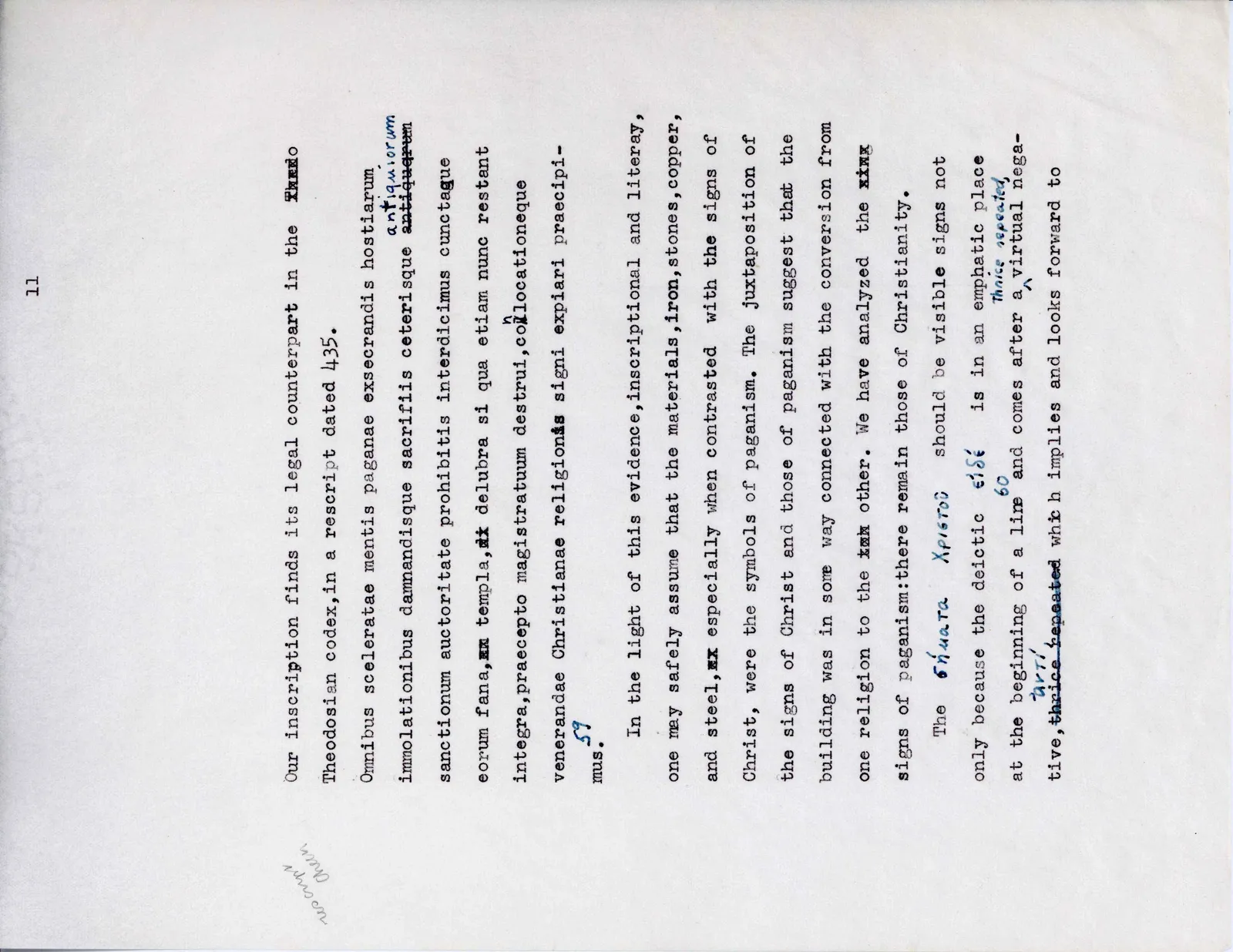
Our inscription finds its legal counterpart in the [handwritten: Theodo] Theodosian codex, in a rescript dated 435.
Omnibus sceleratae mentis paganae exsecrandis hostiarum [handwritten: antiquorum] immolationibus dammandisque sacrifiis ceterisque [handwritten: antiquum] sanctionum auctoritate prohibitis interdicimus cunctague eorum fana, [handwritten: ex] delubra si qua etiam nunc restant integra, praecepto magistratuum destrui, [handwritten: ^]colocationeque venerandae Christianae religionis signi expiari praecipimus.
Handwritten: 57
In the light of this evidence, inscriptional and literay, one may safely assume that the materials, iron, stones, copper, and steel, [handwritten: ex] especially when contrasted with the signs of Christ, were the symbols of paganism. The juxtaposition of the signs of Christ and those of paganism suggest that the building was in some way connected with the conversion from one religion to the [handwritten: xxx] other. We have analyzed the [handwritten: xixx] signs of paganism: there remain those of Christianity.
The [handwritten: Χριστοῦ] [handwritten: σήμαται] should be visible signs not only because the deictic [handwritten: εἰσὶ] is in an emphatic place [handwritten: 60] [handwritten: thrice repeated] at the beginning of a line and comes after a virtual negative, [handwritten: thrice repeated] which implies and looks forward to [handwritten: ἀντί]
65 figures hard to readstruck struck outadded written in above” jug ditto, and what it repeatsword reading not certain