
Unnumbered pageScan 15 of 56
4
computer-assisted spatial analyses can be performed on the observed distribution of sites in order to determine the settlement systems during different chronological periods. The second goal was to resurvey selected areas surveyed in 1979 and 1980 in order to check on the validity of the original archaeological assessments in terms of the periods of occupation, range of artifact classes and extent of the site and to obtain more information concerning the site's function(s). Selective resurveying is now recognized as necessary so that one can accurately gage the various factors that affect artifact and site visibility.13 Data was also collected to assess the recovery rates at different levels of intensity: five crew members walking 1 km2 versus 1/2 km2 in 6 hours. To increase the accuracy of our identifications of sites and their dates and functions which are based primarily on ceramic material a team of ceramic experts examined the sherds that were collected. Ms. Lone W. Sørensen,14 head ceramic analyst, was responsible for the Ceramic Neolithic through earlier Hellenistic period material, Dr. John Hayes15 examined and identified the later Hellenistic through Middle Byzantine material and Professor Timothy Gregory16 the Late Byzantine and Mediaeval material. Assisting in this work were Ms. Pia Guldager-Jensen, Ms. Mette Korsholm and Ms. Margaret Morden.17
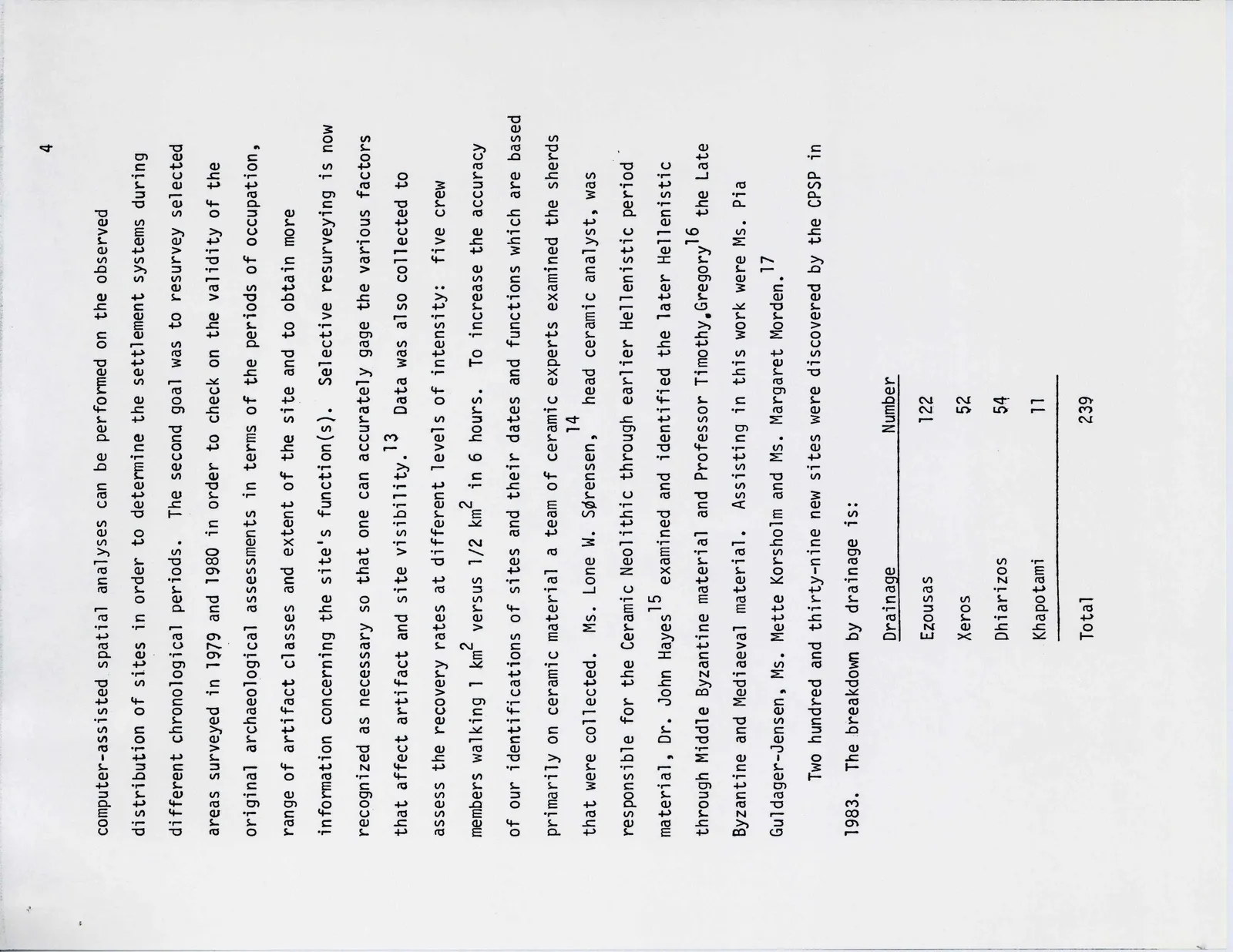
Two hundred and thirty-nine new sites were discovered by the CPSP in 1983. The breakdown by drainage is:
| Drainage | Number |
| Ezousas | 122 |
| Xeros | 52 |
| Dhiarizos | 54 |
| Khapotami | 11 |
| Total | 239 |
65 figures hard to readstruck struck outadded written in above” jug ditto, and what it repeatsword reading not certain