
Unnumbered pageScan 59 of 79
2
J.F.Daniel [handwritten: Revised]
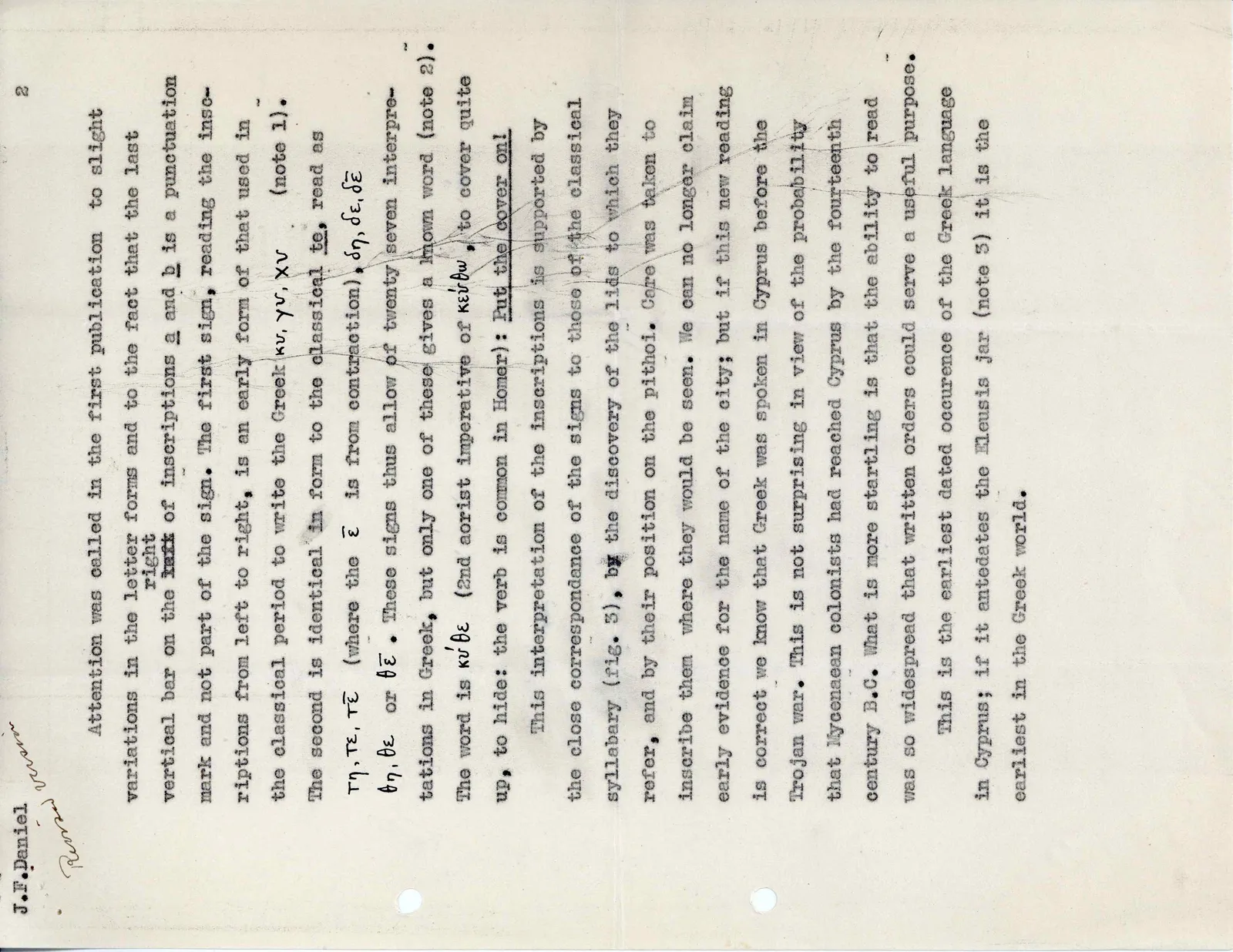
Attention was called in the first publication to slight variations in the letter forms and to the fact that the last right vertical bar on the [handwritten: left] of inscriptions a and b is a punctuation mark and not part of the sign. The first sign, reading the inscriptions from left to right, is an early form of that used in the classical period to write the Greek [handwritten: κν, γν, χν] (note 1). The second is identical in form to the classical te, read as [handwritten: τη, τ̄ε, τ̄ε] (where the ε̄ is from contraction) [handwritten: ρη, ρε, ξε] or [handwritten: θη, θε] . These signs thus allow of twenty seven interpretations in Greek, but only one of these gives a known word (note 2). The word is [handwritten: κεὐθω] (2nd aorist imperative of [handwritten: κεύθω]) to cover quite up, to hide: the verb is common in Homer): Put the cover on!
This interpretation of the inscriptions is supported by the close correspondance of the signs to those of the classical syllabary (fig. 5), by the discovery of the lids to which they refer, and by their position on the pithoi. Core was taken to inscribe them where they would be seen. We can no longer claim early evidence for the name of the city; but if this new reading is correct we know that Greek was spoken in Cyprus before the Trojan war. This is not surprising in view of the probability that Mycenaean colonists had reached Cyprus by the fourteenth century B.C. What is more startling is that the ability to read was so widespread that written orders could serve a useful purpose. This is the earliest dated occurence of the Greek language in Cyprus; if it antedates the Eleusis jar (note 3) it is the earliest in the Greek world.
65 figures hard to readstruck struck outadded written in above” jug ditto, and what it repeatsword reading not certain