
Unnumbered pageScan 47 of 85
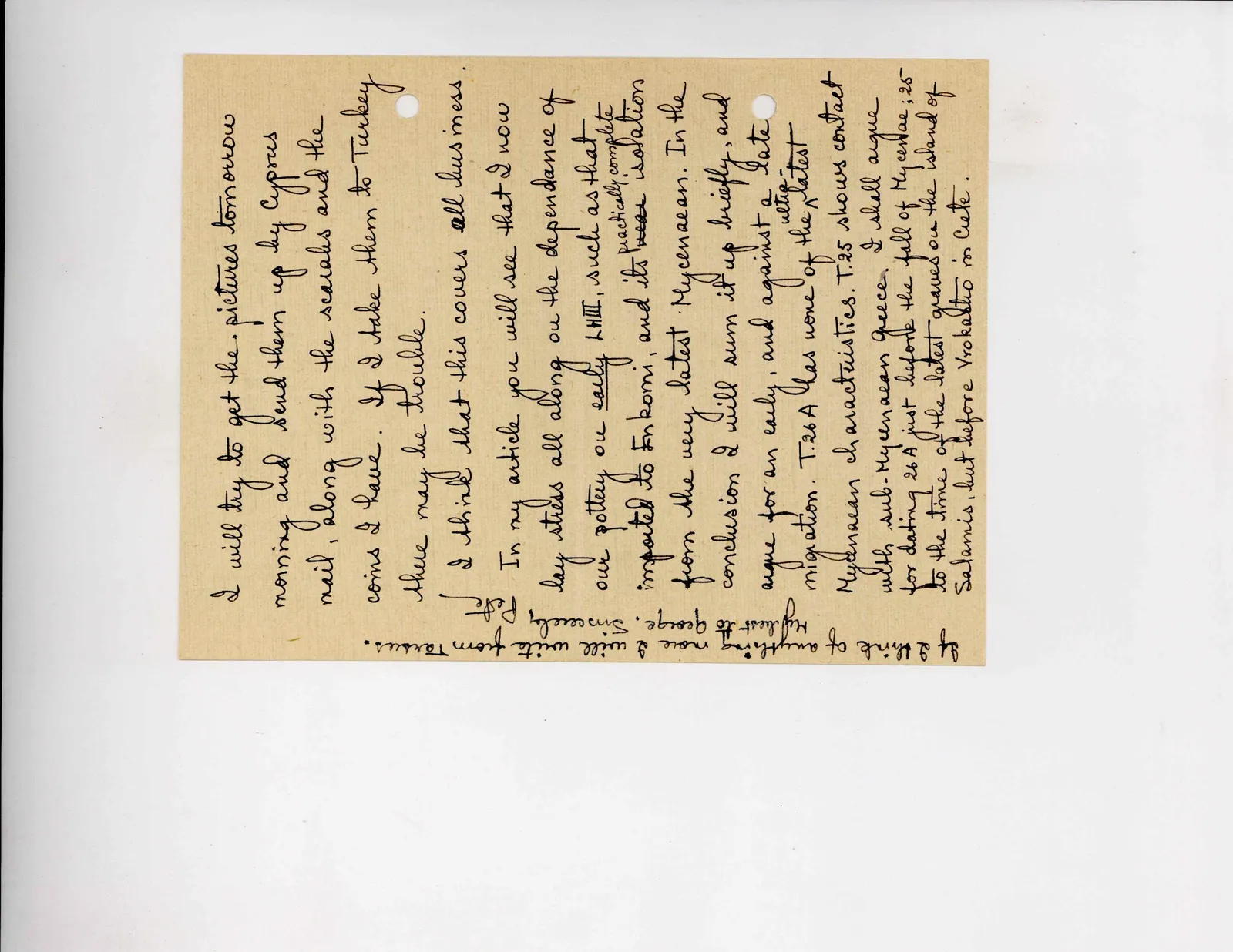
I will try to get the pictures tomorrow morning and send them up by Cyprus mail, along with the scarabs and the coins I have. If I take them to Turkey there may be trouble.
I think that this covers all business.
In my article you will see that I now lay stress all along on the dependance of our pottery on early LHIII, such as that imported to Enkomi, and its practically complete near isolation from the very latest Mycenaean. In the conclusion I will sum it up briefly, and argue for an early, and against a late migration. T.26A has none of the ultiq-latest Mycenaean characteristics. T.25 shows contact with sub-Mycenaean Greece. I shall argue for dating 26A just before the fall of Mycenae; 25 to the time of the latest graves on the island of Salamis, but before Vrokastro in Crete.
If I think of anything more I will write from Tarsus. My best to George. Sincerely Pete
65 figures hard to readstruck struck outadded written in above” jug ditto, and what it repeatsword reading not certain