
Unnumbered pageScan 1 of 2
THE BRITISH MUSEUM, LONDON, W.C.1
Department of Research Laboratory
TELEPHONE : Museum 8621
2nd April, 1952
Dear Dr. Schaeffer,
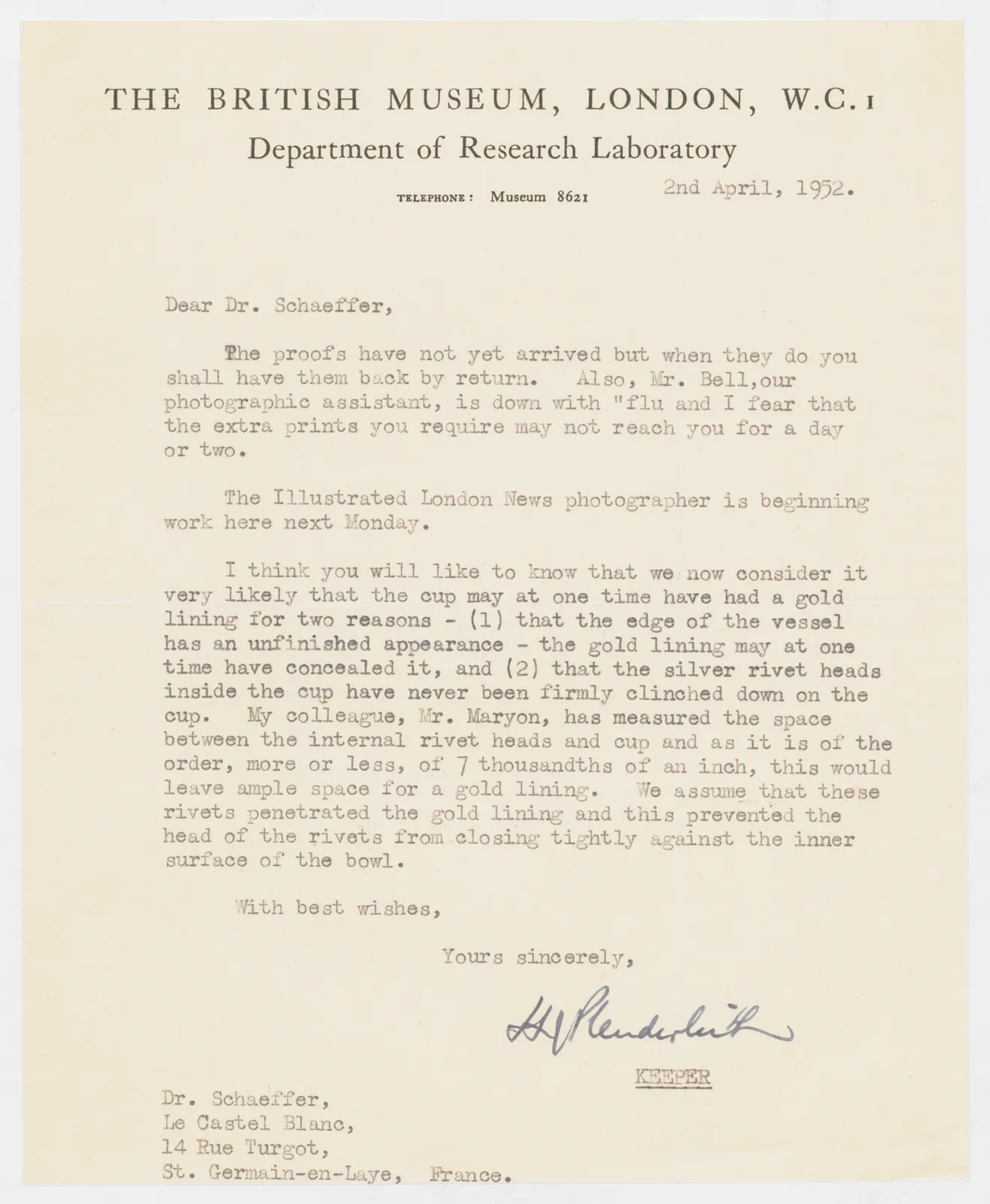
The proofs have not yet arrived but when they do you shall have them back by return. Also, Mr. Bell,our photographic assistant, is down with "flu and I fear that the extra prints you require may not reach you for a day or two.
The Illustrated London News photographer is beginning work here next Monday.
I think you will like to know that we now consider it very likely that the cup may at one time have had a gold lining for two reasons - (1) that the edge of the vessel has an unfinished appearance - the gold lining may at one time have concealed it, and (2) that the silver rivet heads inside the cup have never been firmly clinched down on the cup. My colleague, Mr. Maryon, has measured the space between the internal rivet heads and cup and as it is of the order, more or less, of 7 thousandths of an inch, this would leave ample space for a gold lining. We assume that these rivets penetrated the gold lining and this prevented the head of the rivets from closing tightly against the inner surface of the bowl.
With best wishes,
Yours sincerely,
Handwritten: signature
KEEPER
Dr. Schaeffer, Le Castel Blanc, 14 Rue Turgot, St. Germain-en-Laye, France.
65 figures hard to readstruck struck outadded written in above” jug ditto, and what it repeatsword reading not certain