
Page 69Scan 23 of 50
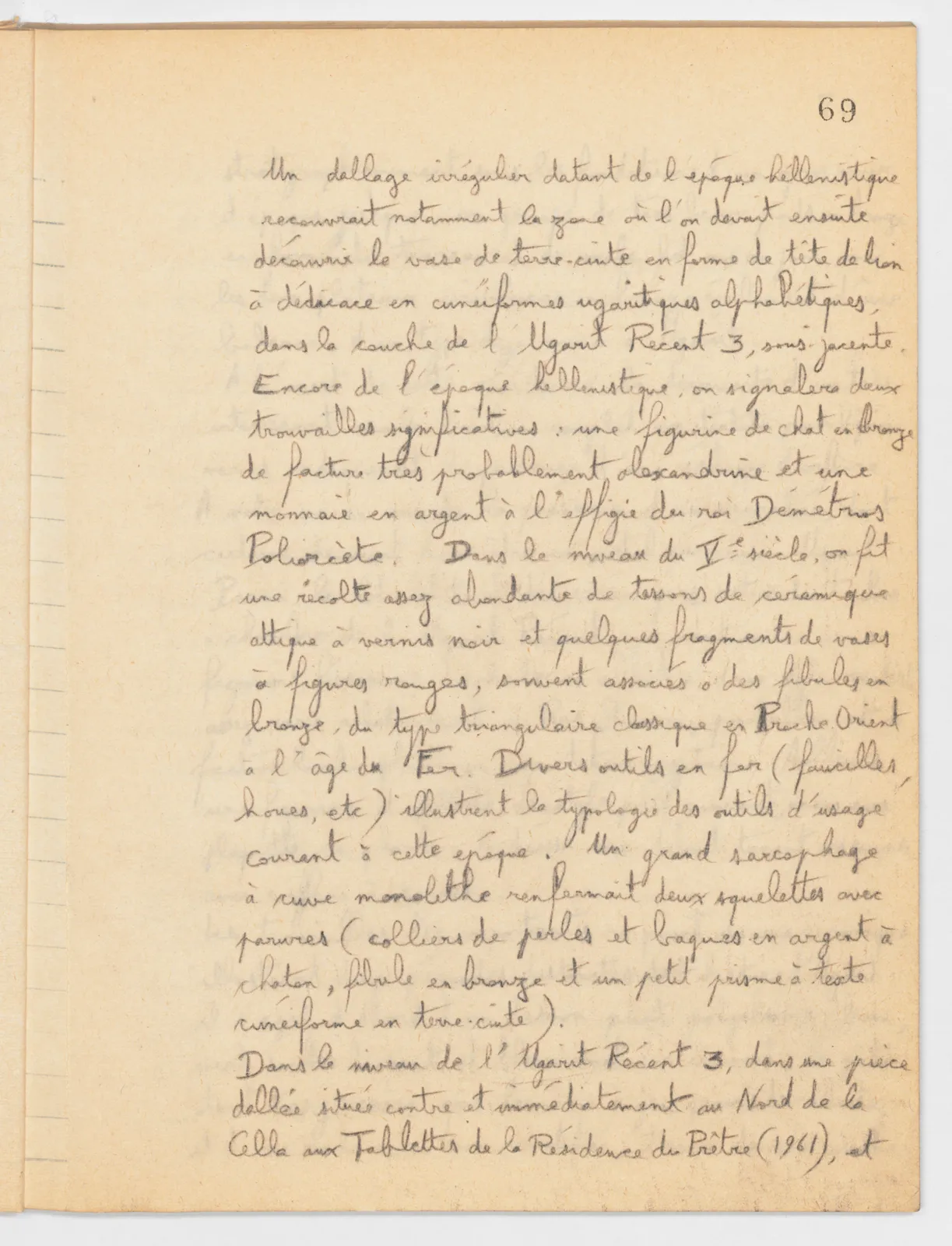
An irregular paving dating from the Hellenistic period covered in particular the area where one was subsequently to find the terracotta vase in the form of a lion's head with dedication in alphabetic Ugaritic cuneiform, in the underlying layer of Late Ugarit 3. Also from the Hellenistic period, two significant finds should be noted: a bronze cat figurine very probably of Alexandrian workmanship, and a silver coin bearing the effigy of King Demetrios Poliorcetes. In the level of the 5th century, one made a fairly abundant collection of sherds of pottery Attic black-glazed and a few fragments of vessels with red figures, often associated with fibulae in bronze, of the classic triangular type in the Near East in the Iron Age. Various iron tools (sickles, hoes, etc.) illustrate the typology of tools in common use at that time. A large sarcophagus with a monolithic trough contained two skeletons with ornaments (necklaces of beads and silver rings with bezel, bronze fibula and a small prism with text in cuneiform, in terracotta). In the level of Late Ugarit 3, in a room paved, situated against and immediately north of the Cella of the Tablets of the Priest's Residence (1961), and
65 figures hard to readstruck struck outadded written in above” jug ditto, and what it repeatsword reading not certain