
Unnumbered pageScan 1 of 2
30 septembre 1970
Remarque sur l'article de M. K. HADJIOANNOU
"On the Identification of the Horned God of Engomi-Alasia".
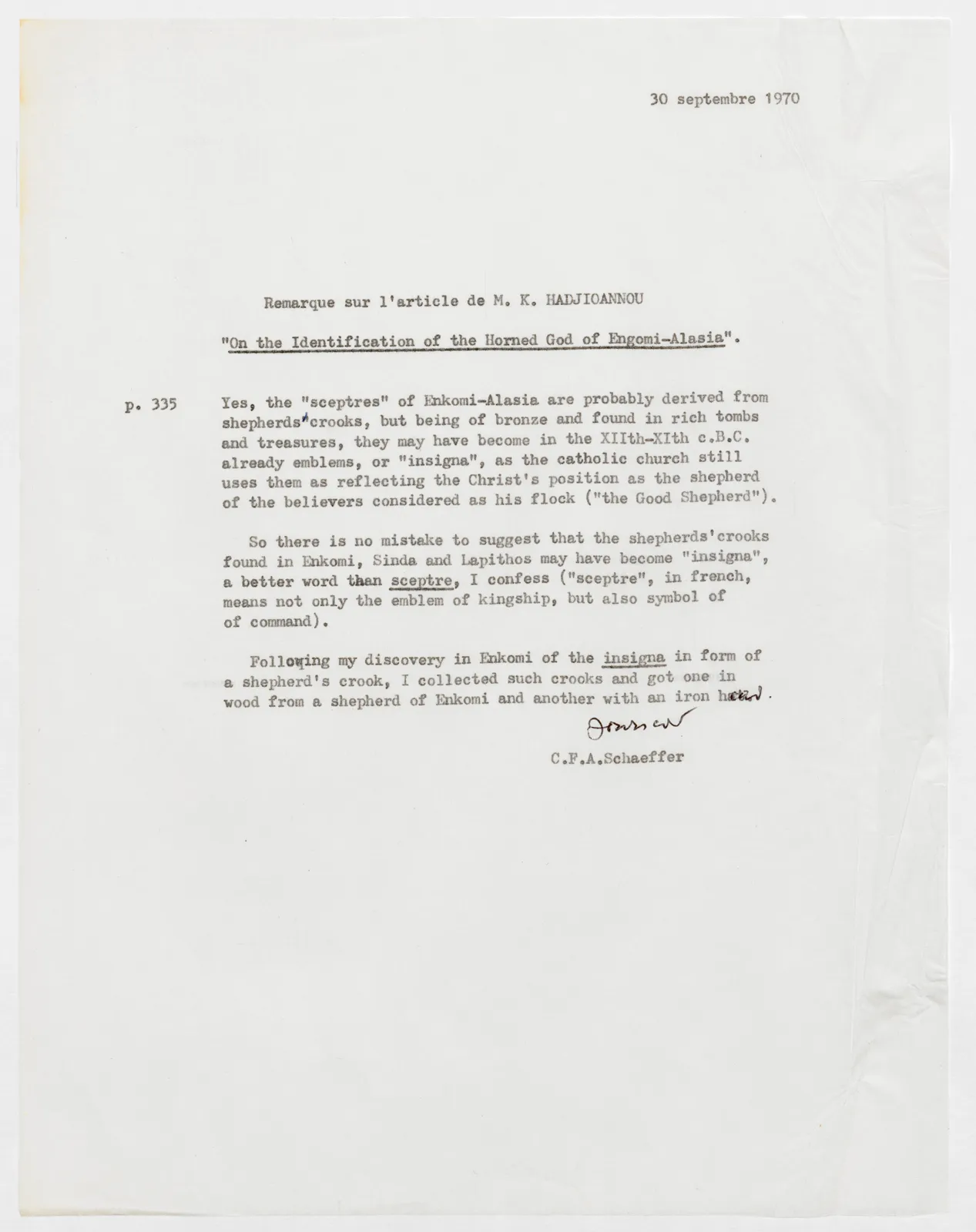
p. 335 Yes, the "sceptres" of Enkomi-Alasia are probably derived from shepherds'[handwritten: ' ?] crooks, but being of bronze and found in rich tombs and treasures, they may have become in the XIIth-XIth c.B.C. already emblems, or "insigna", as the catholic church still uses them as reflecting the Christ's position as the shepherd of the believers considered as his flock ("the Good Shepherd").
So there is no mistake to suggest that the shepherds'crooks found in Enkomi, Sinda and Lapithos may have become "insigna", a better word than sceptre, I confess ("sceptre", in french, means not only the emblem of kingship, but also symbol of of command).
Following my discovery in Enkomi of the insigna in form of a shepherd's crook, I collected such crooks and got one in wood from a shepherd of Enkomi and another with an iron hand.[handwritten: signature-like marking]
Handwritten: signature
C.F.A.Schaeffer
65 figures hard to readstruck struck outadded written in above” jug ditto, and what it repeatsword reading not certain