
Page T 19Scan 1 of 2
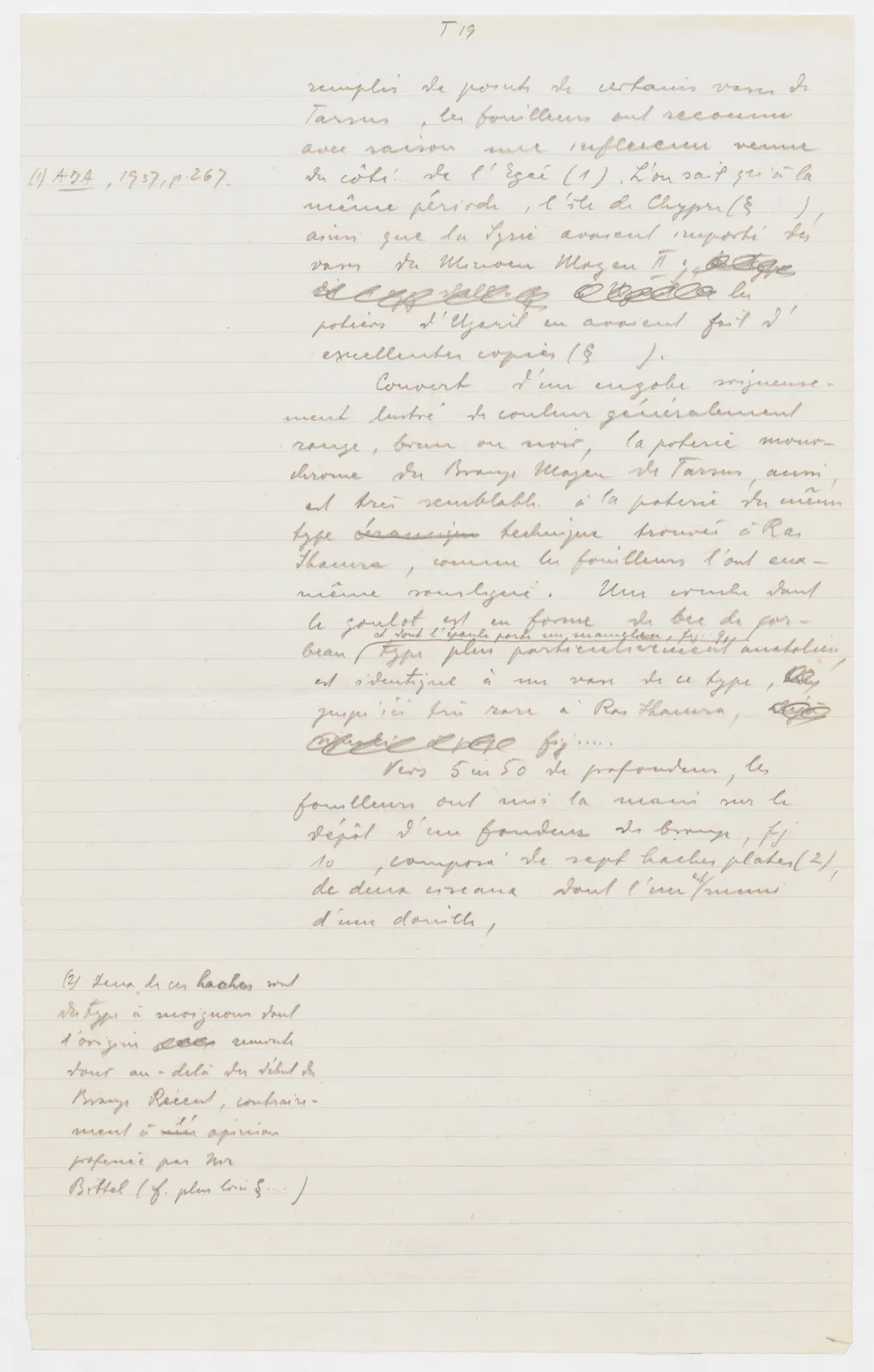
(1) AJA, 1937, p. 267.filled with dots, on certain vessels from Tarsus, the excavators recognised rightly an influence coming from the Aegean side (1). It is known that at the same period, the island of Cyprus (§ ), as well as Syria had imported vessels of Middle Minoan II; and that of these vessels and according to the the potters of Ugarit had made from them excellent copies (§ ). Covered with a carefully lustrous slip, generally of a red, brown or black colour, the monochrome pottery of the Middle Bronze of Tarsus, also, is very similar to the pottery of the same type pottery technique found at Ras Shamra, as the excavators themselves have underlined. A jug whose neck is shaped like a crow's beak and whose shoulder bears a nipple, fig. 9, a type particularly Anatolian, is identical to a vessel of this type, very so far very rare at Ras Shamra, fig. published in fig ..... At about 5 m 50 depth, the excavators came upon the hoard of a bronze founder, fig 10 , consisting of seven flat axes (2), of two chisels, one of which is fitted with a socket,
[margin left: (2) Two of these axes are of the stub-lug type whose origin must goes back therefore beyond the beginning of the Late Bronze, contraryly to the the opinion held by Mr Bittel (cf. further on § ...)]
65 figures hard to readstruck struck outadded written in above” jug ditto, and what it repeatsword reading not certain