
Page none visibleScan 7 of 20
Continued from scan 6
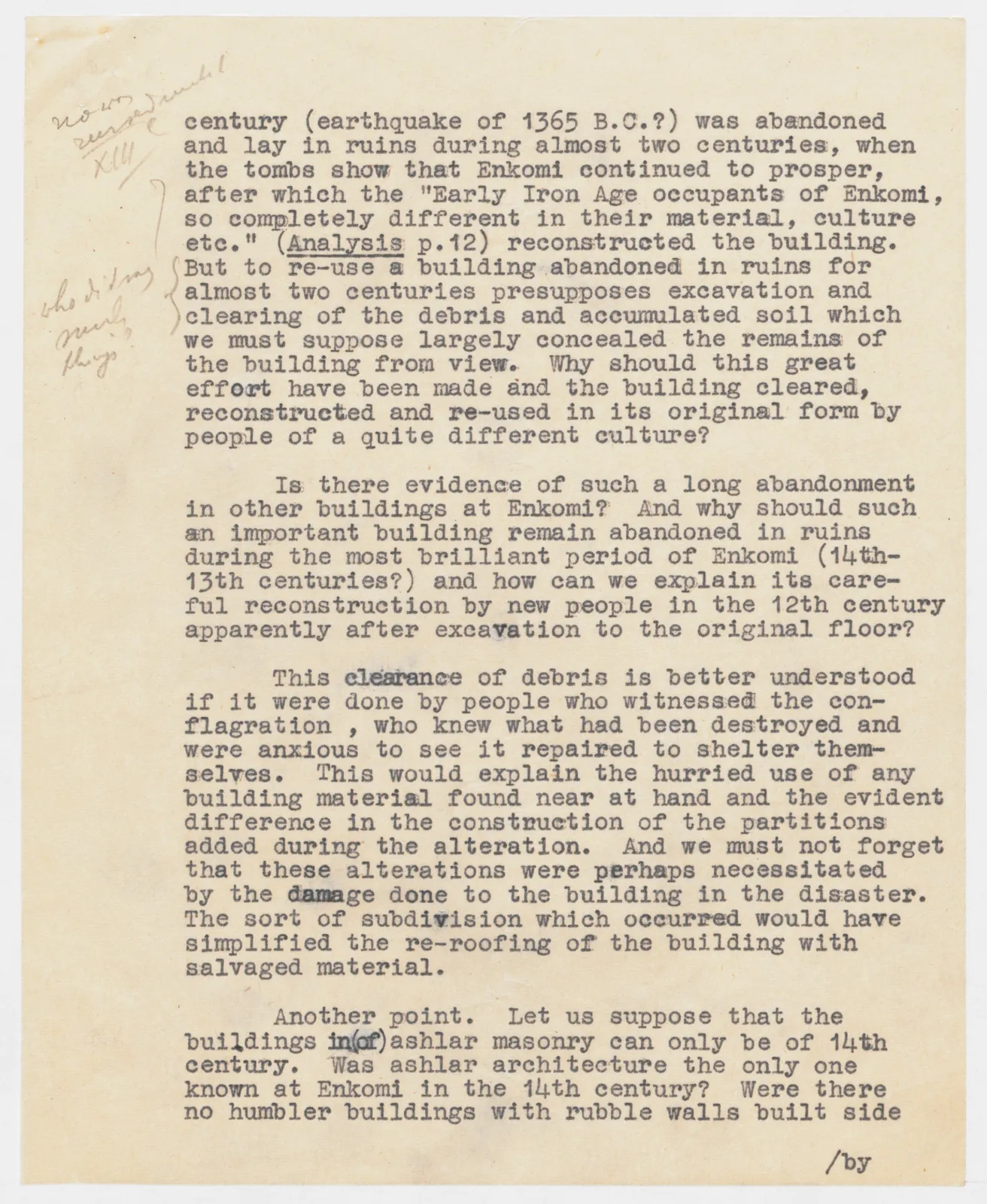
… century (earthquake of 1365 B.C.?) was abandoned and lay in ruins during almost two centuries, when the tombs show that Enkomi continued to prosper, after which the "Early Iron Age occupants of Enkomi, so completely different in their material, culture etc." (Analysis p.12) reconstructed the building. But to re-use a building abandoned in ruins for almost two centuries presupposes excavation and clearing of the debris and accumulated soil which we must suppose largely concealed the remains of the building from view. Why should this great effort have been made and the building cleared, reconstructed and re-used in its original form by people of a quite different culture?
Is there evidence of such a long abandonment in other buildings at Enkomi? And why should such an important building remain abandoned in ruins during the most brilliant period of Enkomi (14th- 13th centuries?) and how can we explain its careful reconstruction by new people in the 12th century apparently after excavation to the original floor?
This clearance of debris is better understood if it were done by people who witnessed the conflagration , who knew what had been destroyed and were anxious to see it repaired to shelter themselves. This would explain the hurried use of any building material found near at hand and the evident difference in the construction of the partitions added during the alteration. And we must not forget that these alterations were perhaps necessitated by the damage done to the building in the disaster. The sort of subdivision which occurred would have simplified the re-roofing of the building with salvaged material.
Another point. Let us suppose that the buildings in(or)ashlar masonry can only be of 14th century. Was ashlar architecture the only one known at Enkomi in the 14th century? Were there no humbler buildings with rubble walls built side
/by
Handwritten marginalia at top left: "no w. ... cursed ... XIII" ; "should ... much ... thus" — illegible
65 figures hard to readstruck struck outadded written in above” jug ditto, and what it repeatsword reading not certain