
Page 214Scan 434 of 438
Continued from p. 214
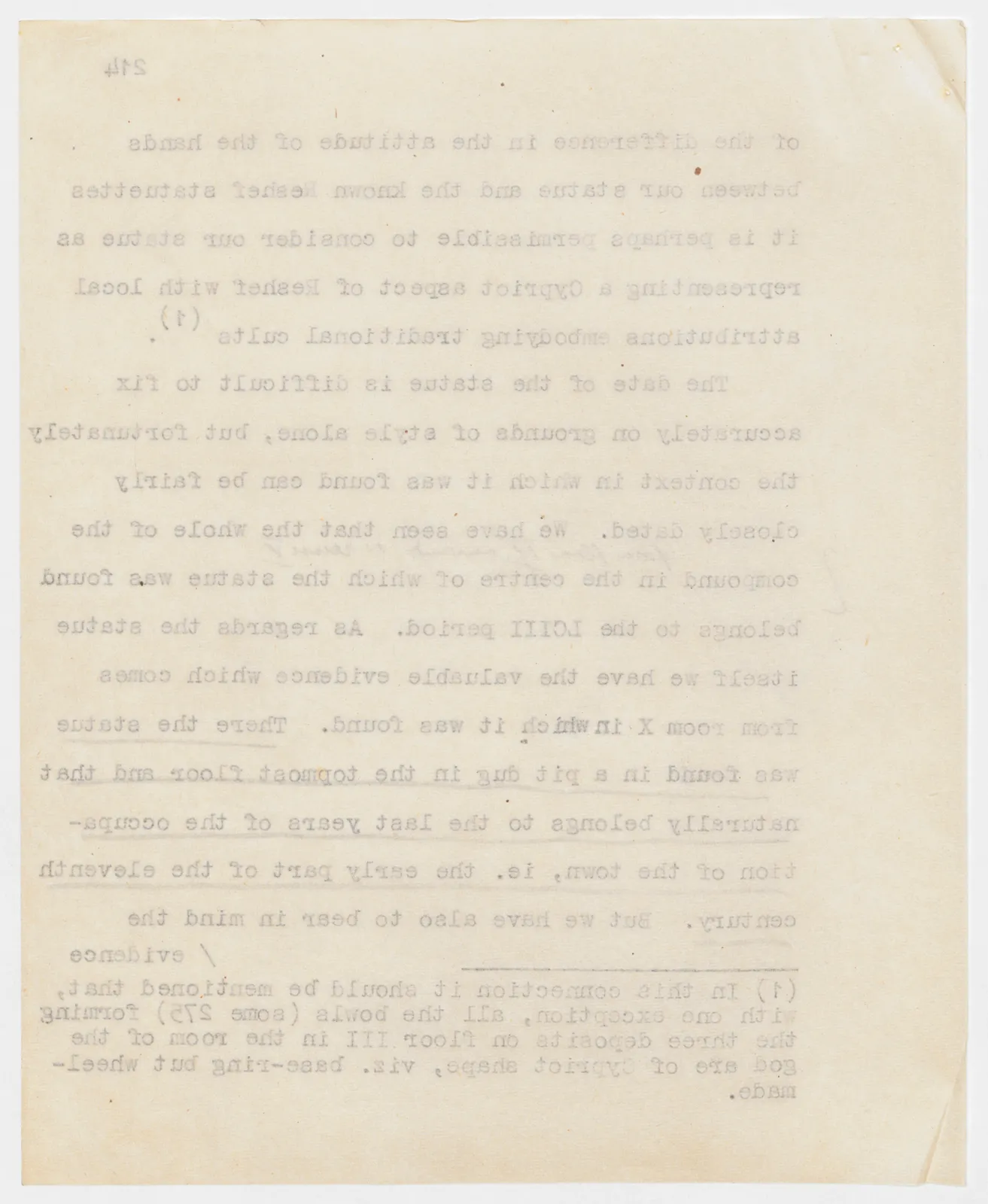
… of the difference in the attitude of the Handa between our statue and the known Hesket statuettes it is perhaps permissable to consider our statue as representing a Cypriot aspect of Hesket with local (1) attributions embodying traditional cults The date of the statue is difficult to fix accurately on grounds of style alone, but fortunately the context in which it was found can be fairly closely dated. We have seen that the whole of the compound in the centre of which the statue was found belongs to the LCIII period. As regards the statue itself we have the valuable evidence which comes from room X in which it was found. There the statue was found in a pit dug in the topmost floor and that naturally belongs to the last years of the occupa- tion of the town, i.e. the early part of the eleventh century. But we have also to bear in mind the / evidence (1) In this connection it should be mentioned that, with one exception, all the bowls (some 275) forming the three deposits on floor III in the room of the god are of Cypriot shape, viz. base-ring but wheelmade.
Handwritten: illegible annotation
65 figures hard to readstruck struck outadded written in above” jug ditto, and what it repeatsword reading not certain