
Page 4Scan 7 of 22
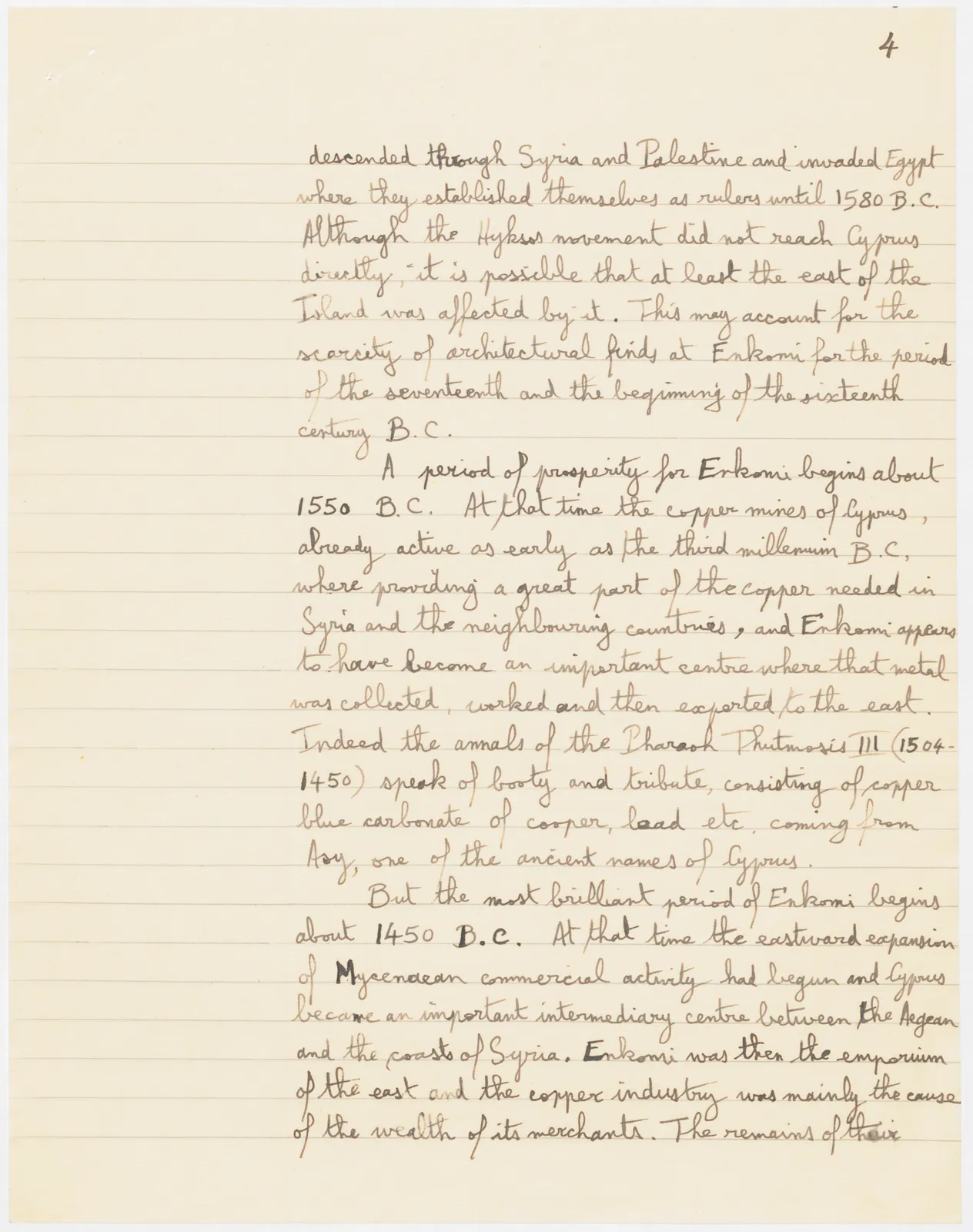
descended through Syria and Palestine and invaded Egypt where they established themselves as rulers until 1580 B.C. Although the Hyksos movement did not reach Cyprus directly, it is possible that at least the east of the Island was affected by it. This may account for the scarcity of architectural finds at Enkomi for the period of the seventeenth and the beginning of the sixteenth century B.C.
A period of prosperity for Enkomi begins about 1550 B.C. At that time the copper mines of Cyprus, already active as early as the third millenium B.C, where providing a great part of the copper needed in Syria and the neighbouring countries, and Enkomi appears to have become an important centre where that metal was collected, worked and then exported to the east. Indeed the annals of the Pharaoh Thutmosis III (1504- 1450) speak of booty and tribute, consisting of copper blue carbonate of cooper, lead etc, coming from Asy, one of the ancient names of Cyprus.
But the most brilliant period of Enkomi begins about 1450 B.C. At that time the eastward expansion of Mycenaean commercial activity had begun and Cyprus became an important intermediary centre between the Aegean and the coasts of Syria. Enkomi was then the emporium of the east and the copper industry was mainly the cause of the wealth of its merchants. The remains of their
65 figures hard to readstruck struck outadded written in above” jug ditto, and what it repeatsword reading not certain