
Page 3Scan 5 of 22
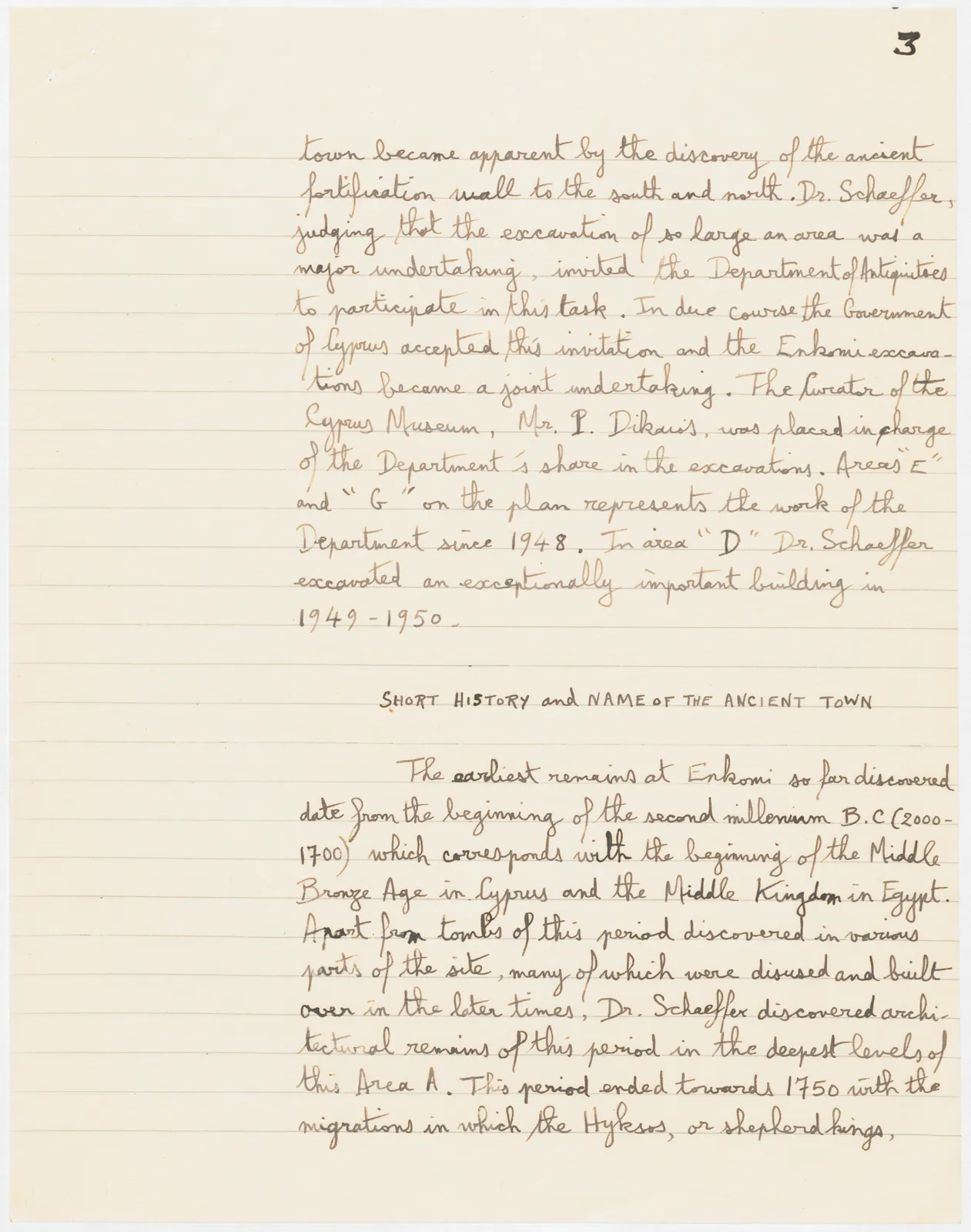
town became apparent by the discovery of the ancient fortification wall to the south and north. Dr. Schaeffer, judging that the excavation of so large an area was a major undertaking, invited the Department of Antiquities to participate in this task. In due course the Government of Cyprus accepted this invitation and the Enkomi excavations became a joint undertaking. The Curator of the Cyprus Museum, Mr. P. Dikaios, was placed in charge of the Department's share in the excavations. Areas "E" and "G" on the plan represents the work of the Department since 1948. In area "D" Dr. Schaeffer excavated an exceptionally important building in 1949 - 1950.
SHORT HISTORY and NAME OF THE ANCIENT TOWN
The earliest remains at Enkomi so far discovered date from the beginning of the second millenium B. C (2000 - 1700) which corresponds with the beginning of the Middle Bronze Age in Cyprus and the Middle Kingdom in Egypt. Apart from tombs of this period discovered in various parts of the site, many of which were disused and built over in the later times, Dr. Schaeffer discovered architectural remains of this period in the deepest levels of this Area A. This period ended towards 1750 with the migrations in which the Hyksos, or shepherd kings,
65 figures hard to readstruck struck outadded written in above” jug ditto, and what it repeatsword reading not certain