
Unnumbered pageScan 14 of 18
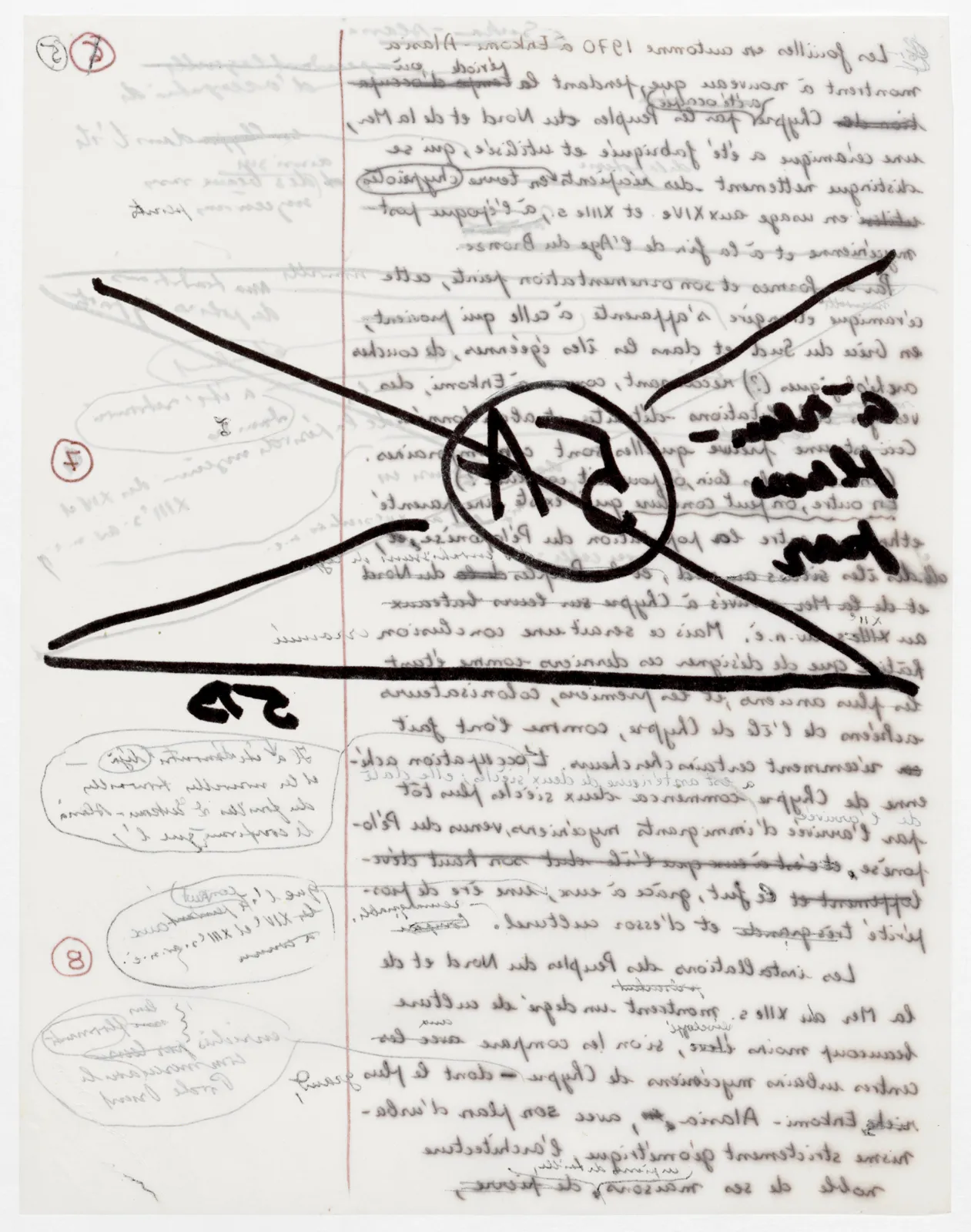
Note: This page is scanned horizontally flipped (mirror-image), showing the bleed-through of the recto text in reverse, along with faint pencil text written on this side which is also mirrored in the scan. The transcription below reads the main text as intended.
7 6The excavations in autumn 1970 at Enkomi-Alasia show again that during the period which followed the time of the occupa- tion of the attack on Cyprus by the Peoples of the North and of the Sea and its devastation, a pottery was made and used, which is clearly distinguished from clay (fired) vessels from that used in use in the 14th and 13th c. of the Mycenaean period and at the end of the Bronze Age. and at the end of the Bronze Age.
725It is obvious already that the new find from the excavations at Enkomi-Alasia confirms itwho settled there in the 14th and 13th c. B.C.8By its shapes and its painted decoration, this pottery is is similar to that which comes from, in southern Greece and in the Aegean islands, from layers archaeological (?) recently, com- at Enkomi, of remains of houses built on the ruins of Those [illegible] that [illegible] were destroyed. Furthermore, one can con- [illegible] that there exists a kinship close between the [illegible] of the Peloponnese, those of the Aegean islands and those of the Peoples of the North and of the Sea settled in Cyprus in the in the 12th in the 13th c. B.C. But this would be a hasty conclusion to designate the latter as being the oldest, and the first, colonisers Achaeans of the island of Cyprus, as has been done recently by certain researchers. The Achaean occupation of Cyprus began in reality at least two centuries earlier; it is due to began two centuries earlier by the arrival of Mycenaean immigrants, coming from the Peloponnese, and it is to them that the island owes its high devel- opment and it was, thanks to them, an era of great- ness of prosperity and cultural growth.
(settled) in the midst of the ruins of the old townThe installations of the Peoples of the North and of the Sea of the 12th c. show a degree of culture much lower, if one compares them with to those of the Mycenaean urban centres of Cyprus - the largest of which, is Enkomi - Alasia, , with its urban plan- ning strictly geometric, the architecture noble of its stone houses … continues
65 figures hard to readstruck struck outadded written in above” jug ditto, and what it repeatsword reading not certain