
Page 5AScan 11 of 18
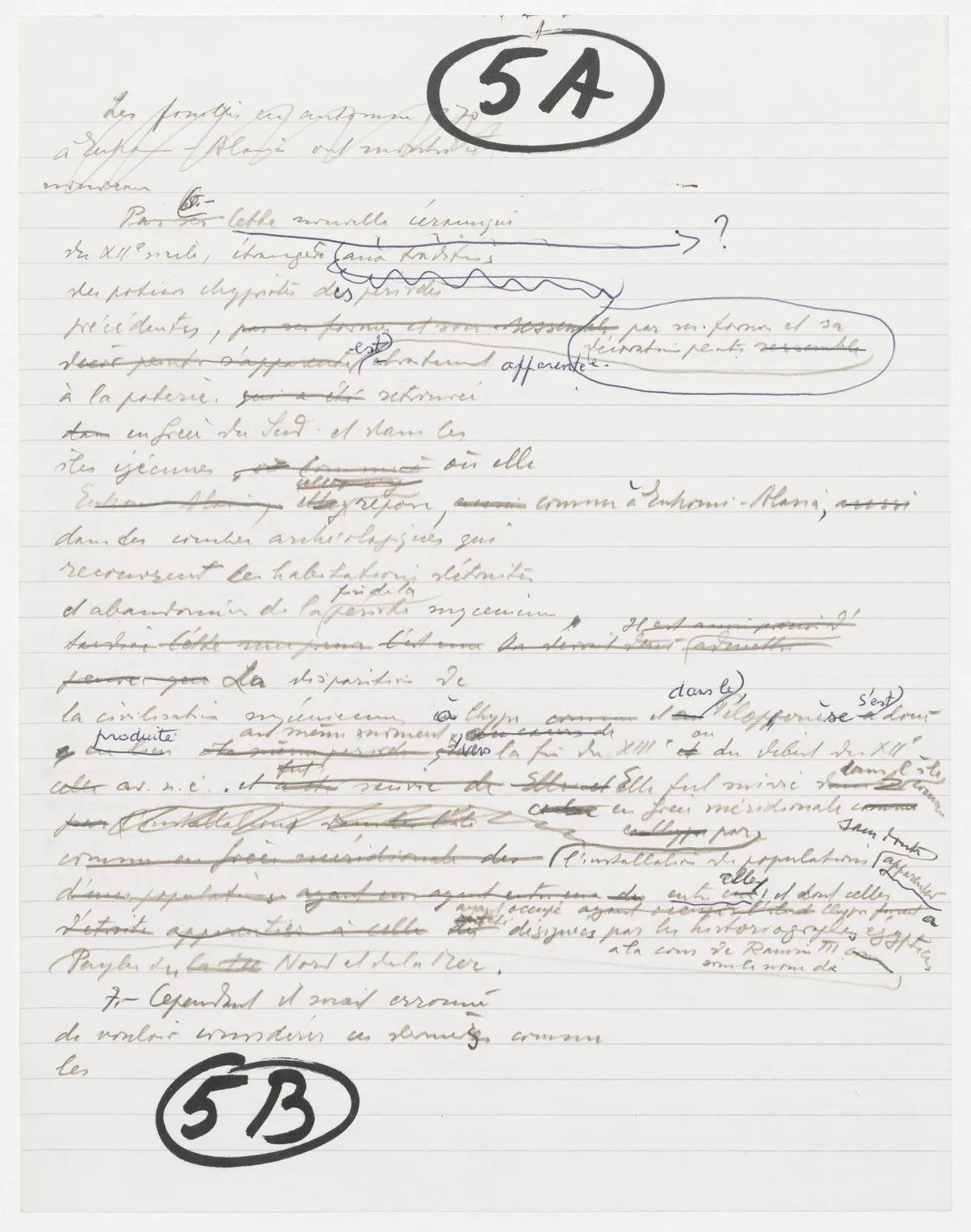
The excavations in autumn 1970 at Enkomi - Alasia have shown the new By its 6.- This new pottery of the 12th century, foreign to the traditions -> ? of Cypriot potters of the periods preceding, by its forms and its resembles by its forms and its painted decoration is related is closely related. painted decoration resembles<s>/ to the pottery, which has been found in in Southern Greece. and in the Aegean islands or as where it Enkomi - Alasia, it lies there lies, also as at Enkomi - Alasia, also in archaeological layers which cover the destroyed houses and abandoned of the end of the Mycenaean period. whereas this [illegible] One should therefore admit It is thus proved that<s>/ think that The disappearance of the Mycenaean civilisation in Cyprus as of the in the Peloponnese therefore has took place took place occurred at the same period at the same moment, during towards the end of the 13th and or of the beginning of the 12th century B.C. and was was followed by It and It was followed in the island in the island as by the settlement in the island as<s> in Southern Greece as/ in Cyprus<s> by/ no doubt as in Southern Greece of the settlement of related populations of a population having among themselves between them them and of which those of close kinship to that having occupied having occupied the island of<s> Cyprus were a/ des designated by the Egyptian historiographers at the court of Ramesses III com<s>/ Peoples of the the of North and of the Sea. under the name of
7.- However it would be erroneous to wish to consider these latter as the
65 figures hard to readstruck struck outadded written in above” jug ditto, and what it repeatsword reading not certain