
Page 22Scan 43 of 104
Handwritten: 109
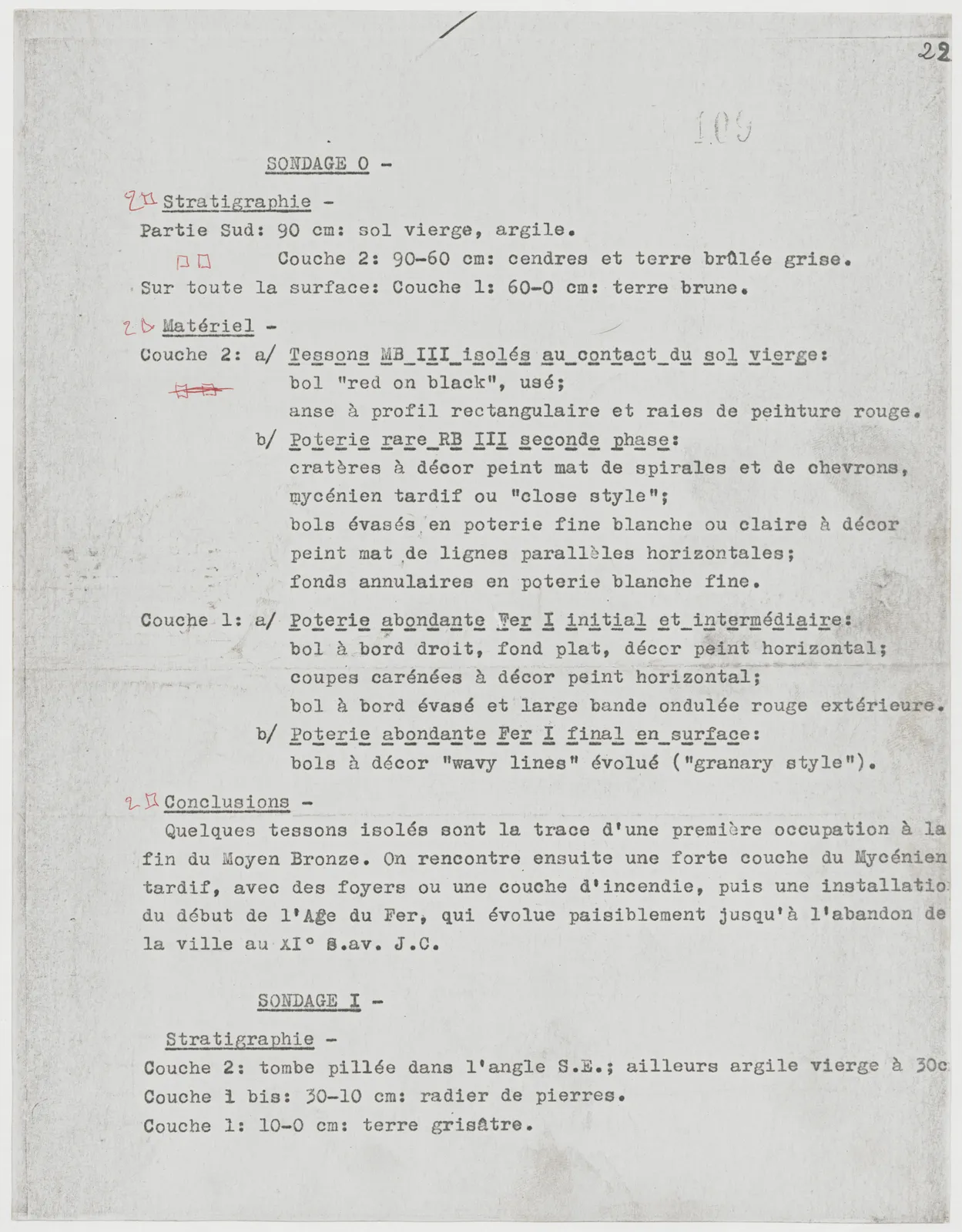
SOUNDING O -
Handwritten: ✓ or red marks in margin: illegible
Stratigraphy -
South part: 90 cm: virgin soil, clay. [handwritten: red marks: illegible] Layer 2: 90-60 cm: grey ash and burnt earth. Over the whole surface: Layer 1: 60-0 cm: brown earth.
Handwritten: red marks: illegible
Finds - Layer 2: a/ isolated MB_III sherds at contact with virgin soil: [handwritten: struck red mark] bowl "red on black", worn; handle with rectangular profile and stripes of red paint. b/ Rare pottery LB III second phase: kraters with matt painted decoration of spirals and chevrons, Late Mycenaean or "close style"; flared bowls in fine white or pale pottery with decoration in matt paint of horizontal parallel lines; ring bases in fine white pottery.
Layer 1: a/ Abundant pottery, early and intermediate Iron I: bowl with straight rim, flat base, horizontal painted decoration; carinated cups with horizontal painted decoration; bowl with flaring rim and broad red wavy band on the exterior. b/ Abundant surface pottery of late Iron I: bowls with evolved "wavy lines" decoration ("granary style").
Handwritten: red marks: illegible
Conclusions - A few isolated sherds are the trace of a first occupation at the end of the Middle Bronze. There follows a thick layer of Mycenaean Late, with hearths or a burnt layer, then an installation from the beginning of the Iron Age, which develops peacefully until the abandonment of the town in the XIº S. B.C.
SOUNDING I -
Stratigraphy - Layer 2: tomb looted in the S.E. corner; elsewhere virgin clay at 30c Layer 1 bis: 30-10 cm: stone paving. Layer 1: 10-0 cm: greyish earth.
65 figures hard to readstruck struck outadded written in above” jug ditto, and what it repeatsword reading not certain