
Page -12-Scan 23 of 42
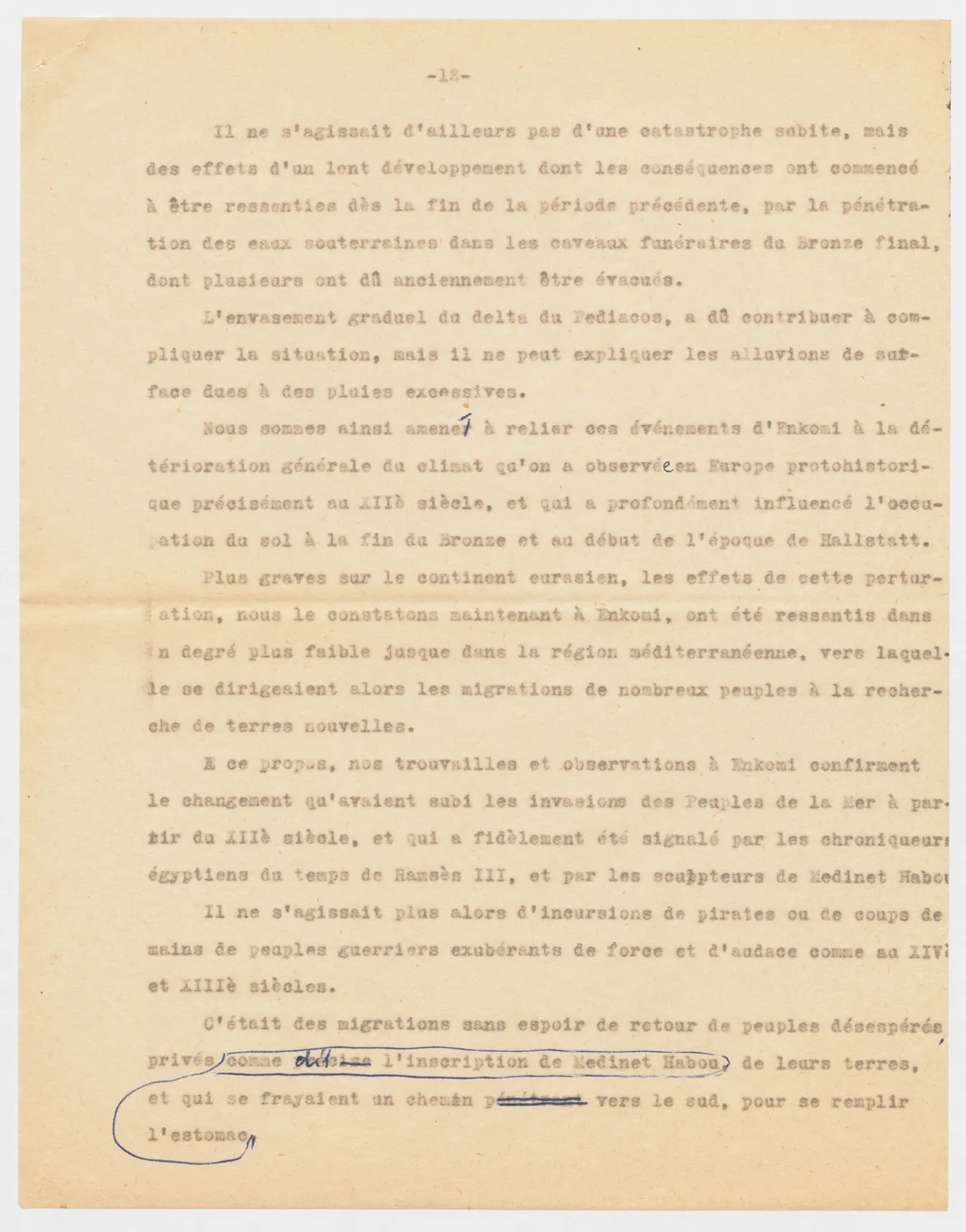
Moreover, it was not a sudden catastrophe, but the effects of a slow development whose consequences began to be felt from the end of the preceding period, through the penetration of groundwater into the burial chambers of the Final Bronze, several of which must formerly have been evacuated.
The gradual silting of the Pediaeos delta must have contributed to complicating the situation, but it cannot explain the surface alluvium of surface due to excessive rains.
We are thus led [handwritten: ǰ] to relate these events at Enkomi to the dégeneral deterioration of climate observed in proto-historic Europe precisely in the 12th century, which profoundly influenced the occupation of the land at the end of the Bronze and the beginning of the Hallstatt period.
More severe on the Eurasian continent, the effects of this disturbance, we now observe at Enkomi, were felt in a lesser degree even in the Mediterranean region, towards which the migrations of many peoples in search of new lands were then heading.
In this connection, our finds and observations at Enkomi confirm the change undergone by the invasions of the Sea Peoples from the 13th century, which was faithfully recorded by the chroniclers Egyptian of the time of Ramesses III, and by the sculptors of Medinet Habu.
It was no longer then a matter of pirate raids or hit-and-run attacks by warrior peoples overflowing with strength and daring as in the 14th and 13th centuries.
These were migrations without hope of return by desperate peoples deprived [handwritten: bracket around] as dîtes the Medinet Habu inscription of their lands, and who were forging a path pénibles towards the south, to fill their stomachs.
65 figures hard to readstruck struck outadded written in above” jug ditto, and what it repeatsword reading not certain