
Page 27Scan 7 of 80
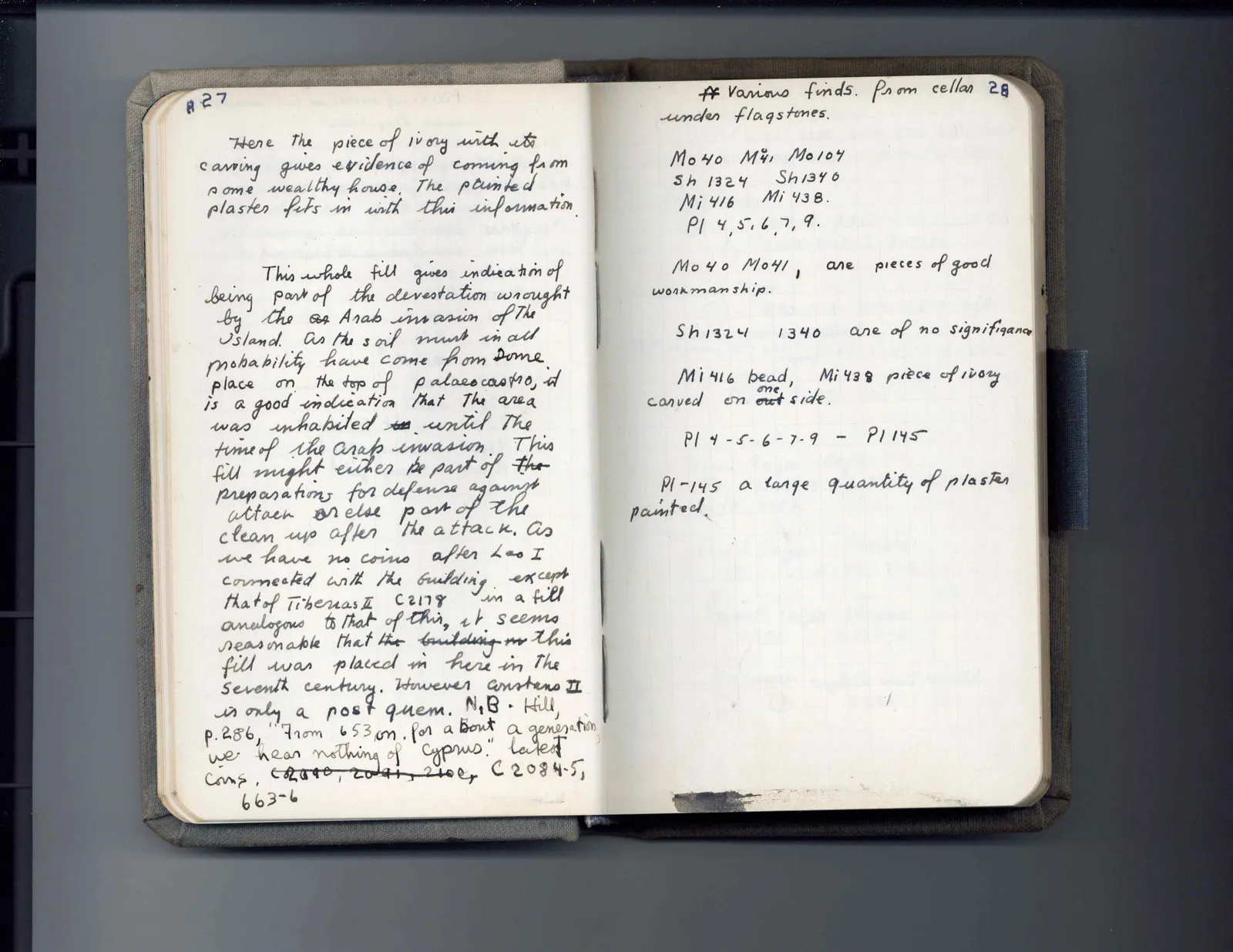
Here the piece of ivory with its carving gives evidence of coming from some wealthy house. The painted plaster fits in with this information.
This whole fill gives indication of being part of the devestation wrought by the as Arab invasion of the island. As the soil must in all probability have come from some place on the top of palaeocastro, it is a good indication that the area was inhabited in until the time of the arab invasion. This fill might either be part of the preparations for defense against attack or else part of the clean up after the attack. As we have no coins after Leo I connected with the building, except that of Tiberias II C2178 in a fill analogous to that of this, it seems reasonable that the building n this fill was placed in here in the seventh century. However Constans II is only a post quem. N.B. Hill, p. 286, "From 653 on, for about a generation, we hear nothing of Cyprus." latest coins, C 2090, 2091, 2100, C 2084-5, 663-6
Right page
A Various finds. from cellar 28 under flagstones.
Mo 40 M41 Mo 104 Sh 1324 Sh 1340 Mi 416 Mi 438. Pl 4, 5, 6, 7, 9.
Mo 40 Mo 41, are pieces of good workmanship.
Sh 1324 1340 are of no significance
Mi 416 bead, Mi 438 piece of ivory carved on one outside.
Pl 4 - 5 - 6 - 7 - 9 - Pl 145
Pl-145 a large quantity of plaster painted.
65 figures hard to readstruck struck outadded written in above” jug ditto, and what it repeatsword reading not certain