
Unnumbered pageScan 85 of 101
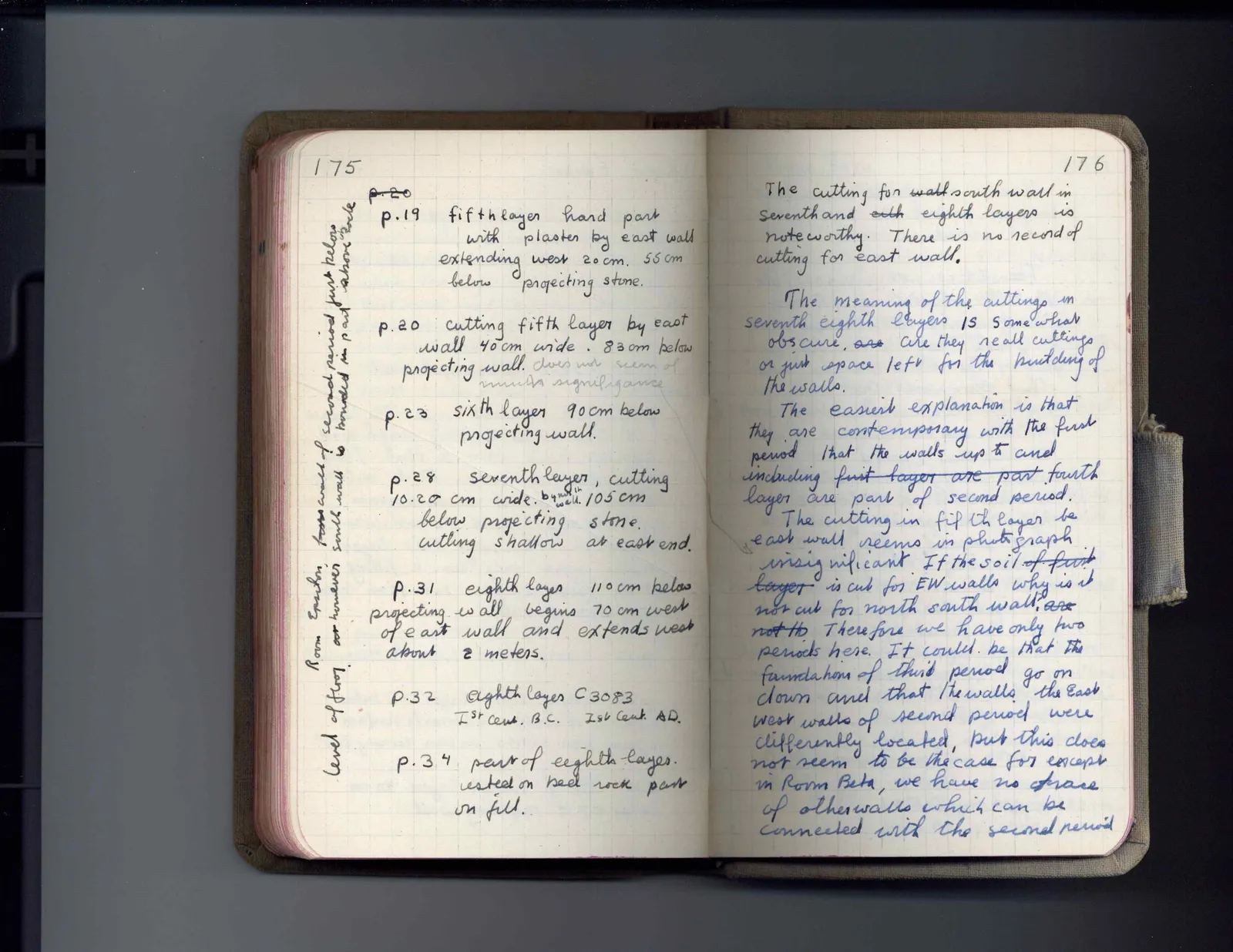
175 [margin left: Room Epsilon, first wall of second period just below level of floor. Not however south wall is bounded in part above rock]
p.20 p. 19 fifth layer hard part with plaster by east wall extending west 20 cm. 55 cm below projecting stone.
p. 20 cutting fifth layer by east wall 40 cm wide. 83 cm below projecting wall. does not seem of much significance
p. 23 sixth layer 90 cm below projecting wall.
p. 28 seventh layer, cutting 10-20 cm wide. by [th/wall.] 105 cm below projecting stone. cutting shallow at east end.
p. 31 eighth layer 110 cm below projecting wall begins 70 cm west of east wall and extends west about 2 meters.
p. 32 eighth layer C 3083 1st cent. B.C. 1st Cent. A.D.
p. 34 part of eighth layer. rested on bed rock part on fill.
Right page
176 The cutting for wall south wall in seventh and eith eighth layers is noteworthy. There is no record of cutting for east wall.
The meaning of the cuttings in seventh eighth layers is somewhat obscure. are are they real cuttings or just space left for the building of the walls.
The easiest explanation is that they are contemporary with the first period that the walls up to and including first layer are part fourth layer are part of second period.
The cutting in fifth layer by east wall seems in photograph insignificant If the soil of first layer is cut for EW walls why is it not cut for north south wall, are not to Therefore we have only two periods here. It could be that the foundations of third period go on down and that the walls the East west walls of second period were differently located, but this does not seem to be the case for except in Room Beta, we have no trace of other walls which can be connected with the second period
65 figures hard to readstruck struck outadded written in above” jug ditto, and what it repeatsword reading not certain