
Unnumbered pageScan 11 of 34
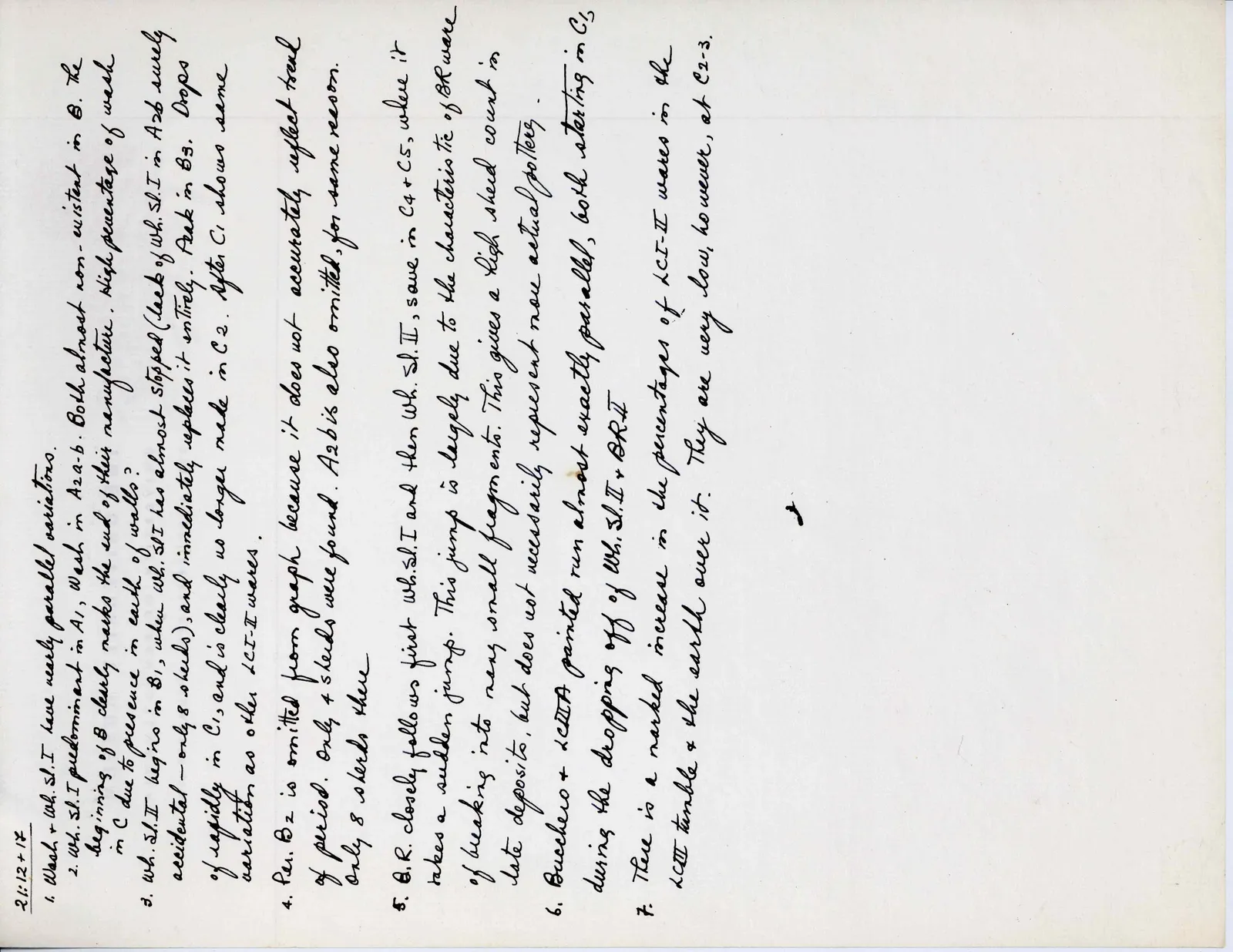
21:12+17 1. Wash + Wh. Sl. I have nearly parallel variations. 2. Wh. Sl. I predominant in A1, Wash in A2a-b. Both almost non-existent in B. The beginning of B clearly marks the end of their manufacture. High percentage of Wash in C due to presence in earth of walls. 3. Wh. Sl. II begins in B1, when Wh. Sl. I has almost stopped (lack of Wh. Sl. I in A2b surely accidental — only 8 sherds), and immediately replaces it entirely. Peak in B3. Drops off rapidly in C1, and is clearly no longer made in C2. After C1 shows same variation as other LCI-II wares.
4. Per. B2 is omitted from graph because it does not accurately reflect trend of period. Only 4 sherds were found. A2b is also omitted, for same reason. Only 8 sherds there
5. B. R. closely follows first Wh. Sl. I and then Wh. Sl. II, save in C4 + C5, where it takes a sudden jump. This jump is largely due to the characteristic of BR ware of breaking into many small fragments. This gives a high sherd count in late deposits, but does not necessarily represent more actual pottery.
6. Bucchero + LCIIIA painted run almost exactly parallel, both starting in C1, during the dropping off of Wh. Sl. II + BR II
7. There is a marked increase in the percentages of LCI-II wares in the LCIII tumble & the earth over it. They are very low, however, at C2-3.
65 figures hard to readstruck struck outadded written in above” jug ditto, and what it repeatsword reading not certain