
Unnumbered pageScan 23 of 54
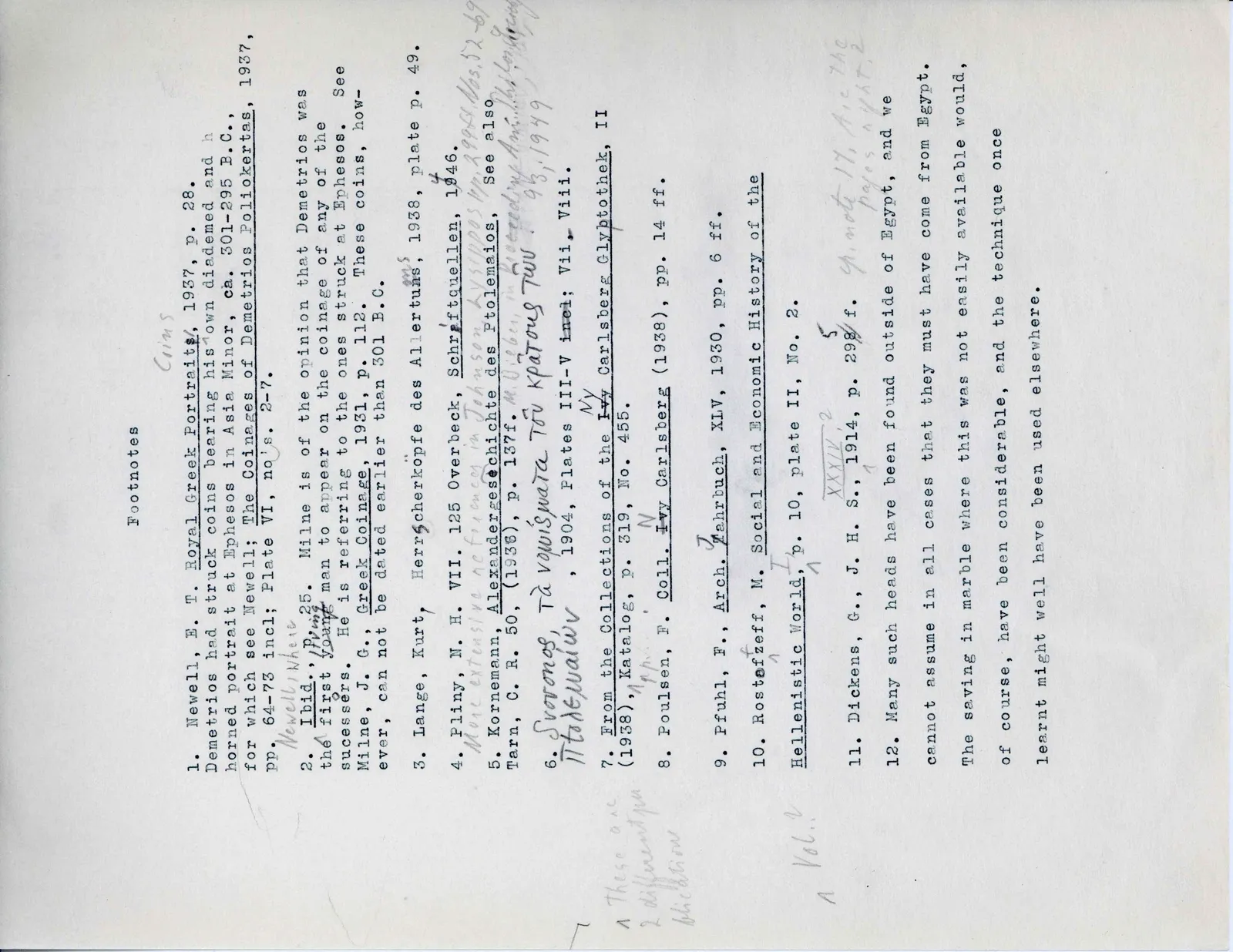
Footnotes
1.Newell, E. T. Royal Greek Portraits, 1937, p. 28. Demetrios had struck coins bearing his own diademed and horned portrait at Ephesos in Asia Minor, ca. 301-295 B.C., for which see Newell; The Coinages of Demetrios Poliorkertas, 1937, pp. 64-73 incl; Plate VI, no's. 2-7.
2.Ibid., p. 25. Milne is of the opinion that Demetrios was the first young man to appear on the coinage of any of the successers. He is referring to the ones struck at Ephesos. See Milne, J. G., Greek Coinage, 1931, p. 112. These coins, however, can not be dated earlier than 301 B.C.
3.Lange, Kurt, Herrscherkopfe des Altertums, 1938, plate p. 49.
4.Pliny, N. H. VII. 125 Overbeck, Schriftquellen, 1946.
5.Kornemann, Alexandergeschichte des Ptolemaios. See also Tarn, C. R. 50, (1938), p. 137f.
6.Svoronos, Τα νομίσματα του κράτους των Πτολεμαίων, 1904, Plates III-V incl; Vii. Viii.
7.From the Collections of the Ivy Carlsberg Glyptothek, II (1938), Katalog, p. 319, No. 455.
8.Poulsen, F. Coll. Ivy Carlsberg (1938), pp. 14 ff.
9.Pfuhl, F., Arch. Jahrbuch, XIV, 1930, pp. 6 ff.
10.Rostovtzeff, M. Social and Economic History of the Hellenistic World, p. 10, plate II, No. 2.
11.Dickens, G., J. H. S., 1914, p. 298 f.
12.Many such heads have been found outside of Egypt, and we cannot assume in all cases that they must have come from Egypt. The saving in marble where this was not easily available would, of course, have been considerable, and the technique once learnt might well have been used elsewhere.
65 figures hard to readstruck struck outadded written in above” jug ditto, and what it repeatsword reading not certain