
Unnumbered pageScan 12 of 54
-11-
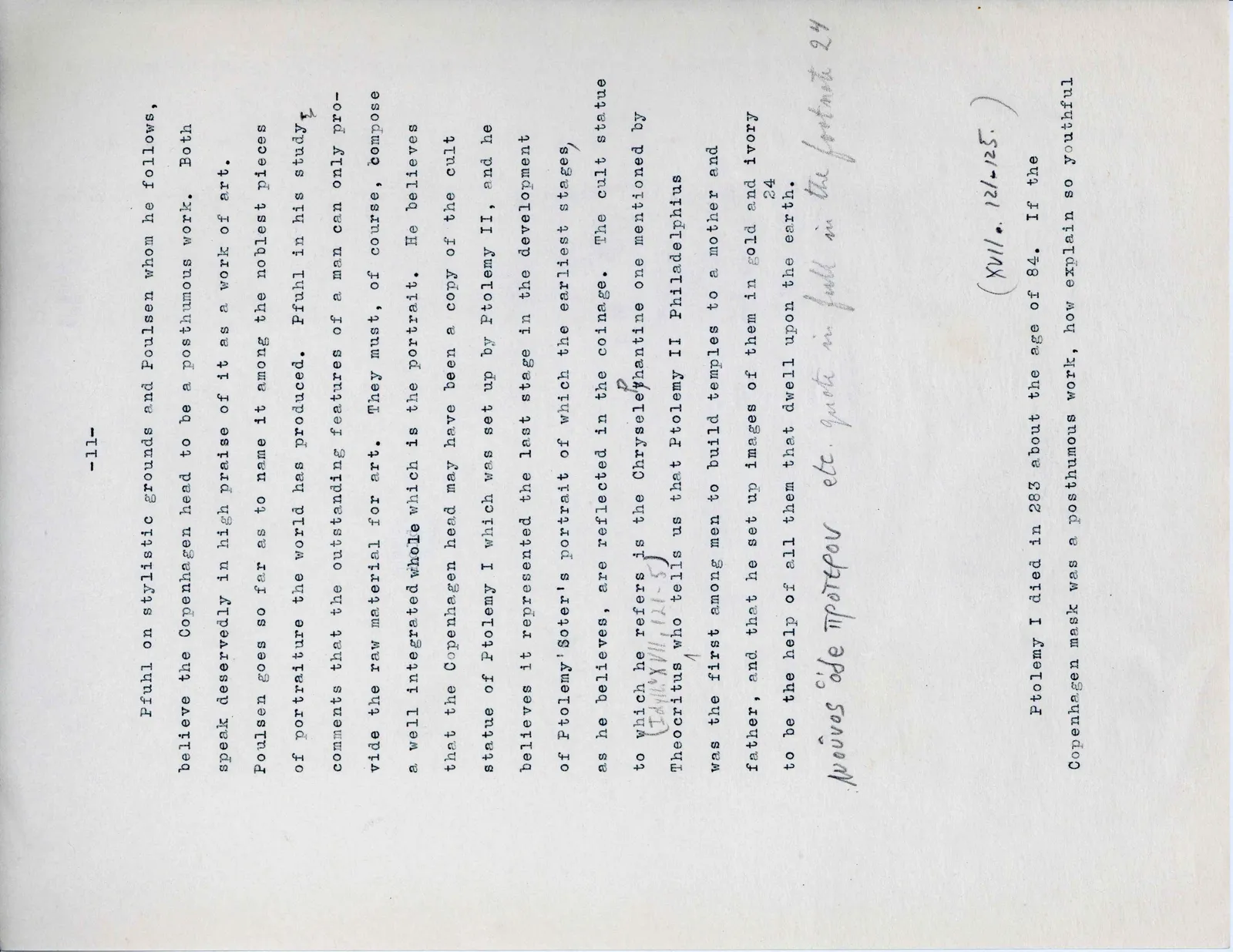
Pfuhl on stylistic grounds and Poulsen whom he follows, believe the Copenhagen head to be a posthumous work. Both speak deservedly in high praise of it as a work of art. Poulsen goes so far as to name it among the noblest pieces of portraiture the world has produced. [handwritten: 2] Pfuhl in his study comments that the outstanding features of a man can only provide the raw material for art. They must, of course, compose a well integrated whole which is the portrait. He believes that the Copenhagen head may have been a copy of the cult statue of Ptolemy I which was set up by Ptolemy II, and he believes it represented the last stage in the development of Ptolemy's Soter's portrait of which the earliest stages, as he believes, are reflected in the coinage. The cult statue to which he refers is the Chryselephantine one mentioned by [handwritten: P] [handwritten: (Theocritus XVII 121-5)] [handwritten: 1] Theocritus who tells us that Ptolemy II Philadelphus was the first among men to build temples to a mother and father, and that he set up images of them in gold and ivory [handwritten: 24] to be the help of all them that dwell upon the earth.
Handwritten: Ποιῶ ὁδε πρότερον etc. quote in full in the portrait 21
Handwritten: (XVII. 121-125.)
Ptolemy I died in 283 about the age of 84. If the Copenhagen mask was a posthumous work, how explain so youthful
65 figures hard to readstruck struck outadded written in above” jug ditto, and what it repeatsword reading not certain