
Unnumbered pageScan 54 of 97
Continued from scan 53
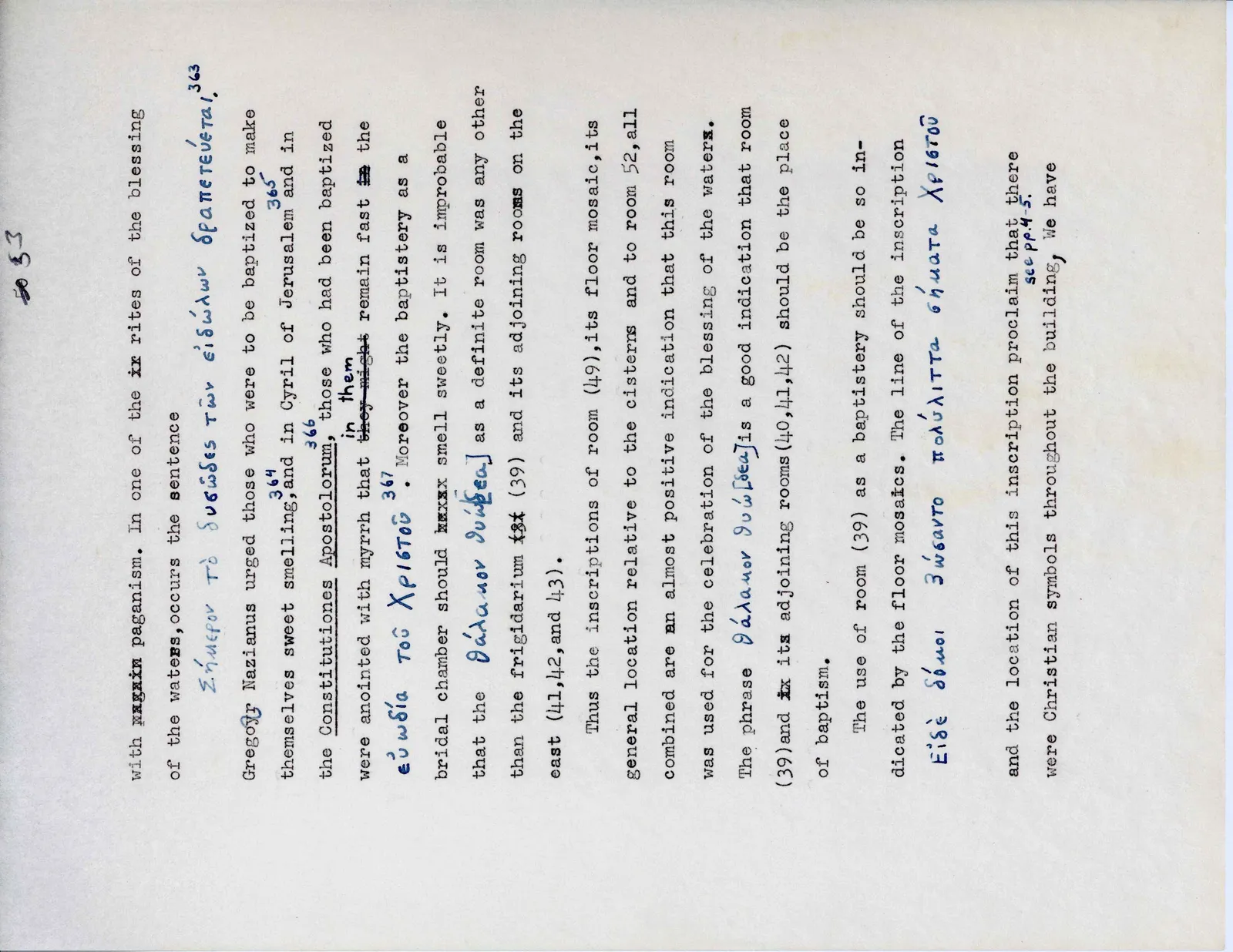
… with the paganism. In one of the xx rites of the blessing of the waters, occurs the sentence
Handwritten: Σήμερον τὸ ἁγιασθῆναι ... ἐἰδώλων δραπετεύεται
Gregory Nazianus urged those who were to be baptized to make themselves sweet smelling, and in Cyril of Jerusalem and in the Constitutiones Apostolorum, [handwritten: 365] those who had been baptized were anointed with myrrh that they might remain fast in the [handwritten: εὐωδία τοῦ Χριστοῦ] [handwritten: 367]. Moreover the baptistery as a bridal chamber should smell sweetly. It is improbable that the [handwritten: θάλαμον ἀνάπαυσα] as a definite room was any other than the frigidarium (39) and its adjoining rooms on the east (41,42, and 43).
Thus the inscriptions of room (49), its floor mosaic, its general location relative to the cisterns and to room 52, all combined are an almost positive indication that this room was used for the celebration of the blessing of the waters. The phrase [handwritten: θάλαμον ψυχῆς] is a good indication that room (39) and its adjoining rooms (40,41,42) should be the place of baptism.
The use of room (39) as a baptistery should be so indicated by the floor mosaics. The line of the inscription [handwritten: Εἰδὲ δὸμοι ζῶντο πολλὰ ἡμέρα Χριστοῦ] see pp.4-5. and the location of this inscription proclaim that there were Christian symbols throughout the building, we have … continues
65 figures hard to readstruck struck outadded written in above” jug ditto, and what it repeatsword reading not certain