
Unnumbered pageScan 41 of 97
40
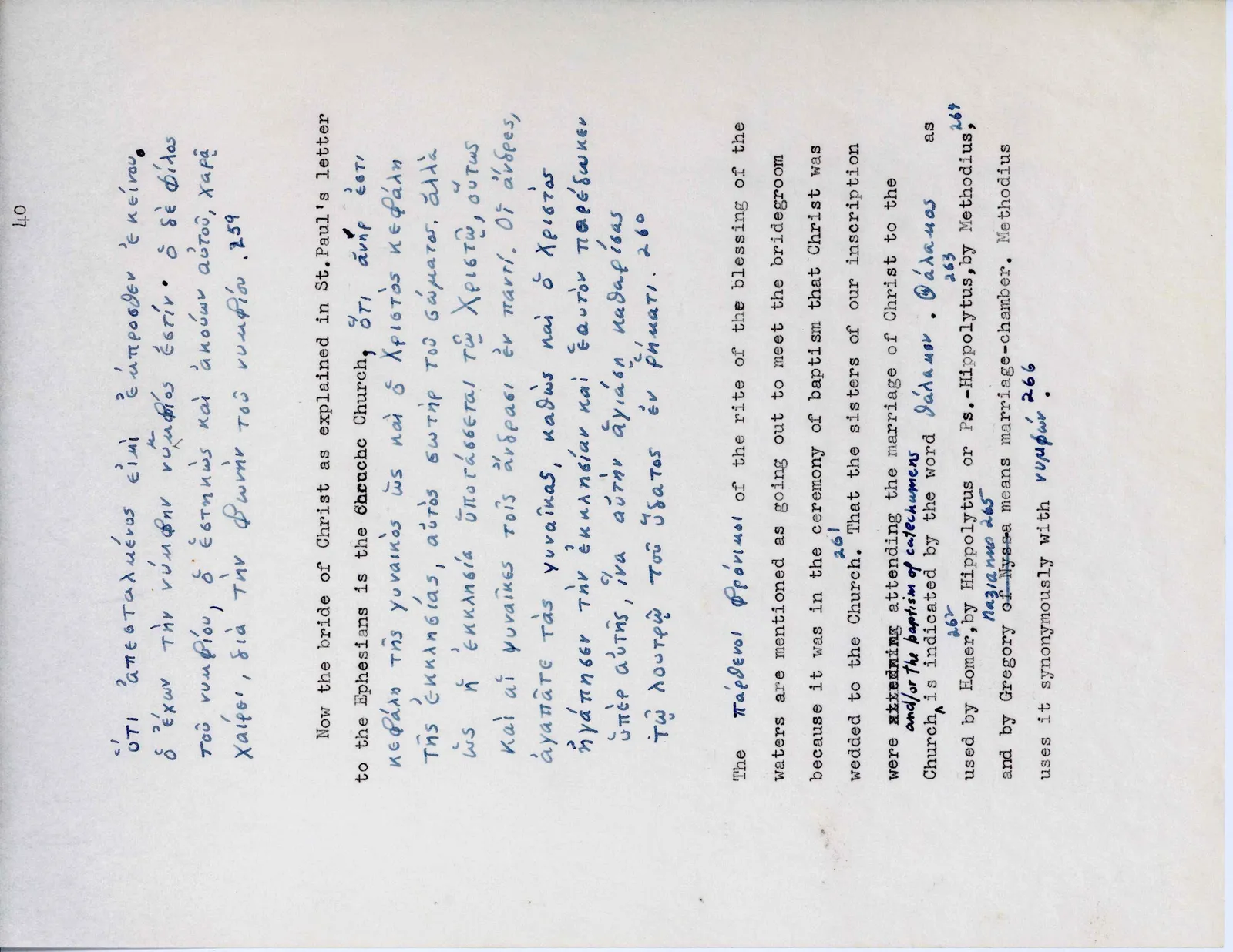
Handwritten: ὅτι ἀπεσταλμένος εἰμὶ ἐμπροσθεν ἐκείνου.
[handwritten: ὁ ἔχων τὴν νύμφην νυμφίος ἐστίν· ὁ δὲ φίλος τοῦ νυμφίου, ὁ ἑστηκὼς καὶ ἀκούων αὐτοῦ, χαρᾷ χαίρει διὰ τὴν φωνὴν τοῦ νυμφίου.] [handwritten: 259]
Now the bride of Christ as explained in St. Paul's letter to the Ephesians is the [handwritten: Church], [handwritten: ὅτι ἀνήρ ἐστι] Church κεφαλὴ τῆς ἐκκλησίας, [handwritten: ὡς καὶ ὁ Χριστὸς κεφαλὴ τῆς γυναικὸς ὡς καὶ αὐτὸς σωτὴρ τοῦ σώματος. ἀλλὰ] ὡς ἡ ἐκκλησία ὑποτάσσεται τῷ Χριστῷ, οὕτως καὶ αἱ γυναῖκες τοῖς ἀνδράσιν ἐν παντί. Οἱ ἄνδρες, ἀγαπᾶτε τὰς γυναῖκας, καθὼς καὶ ὁ Χριστὸς ἠγάπησεν τὴν ἐκκλησίαν καὶ ἑαυτὸν παρέδωκεν ὑπὲρ αὐτῆς, ἵνα αὐτὴν ἁγιάσῃ καθαρίσας τῷ λουτρῷ τοῦ ὕδατος ἐν ῥήματι. [handwritten: 260]
The [handwritten: παρθένοι] of the rite of the blessing of the waters are mentioned as going out to meet the bridegroom because it was in the ceremony of baptism that Christ was [handwritten: 261] wedded to the Church. That the sisters of our inscription were attending attending the marriage of Christ to the Church, [handwritten: and/or the baptism of catechumens] is indicated by the word [handwritten: γάλαμον · Φάλαμος] [handwritten: 263] as used by Homer, by Hippolytus or Ps.-Hippolytus, by Methodius [handwritten: 264] and by Gregory of Nyssa means marriage-chamber. Methodius [handwritten: Ναζιανζηνός 265] uses it synonymously with [handwritten: νυμφών 266].
65 figures hard to readstruck struck outadded written in above” jug ditto, and what it repeatsword reading not certain