
Unnumbered pageScan 18 of 97
17
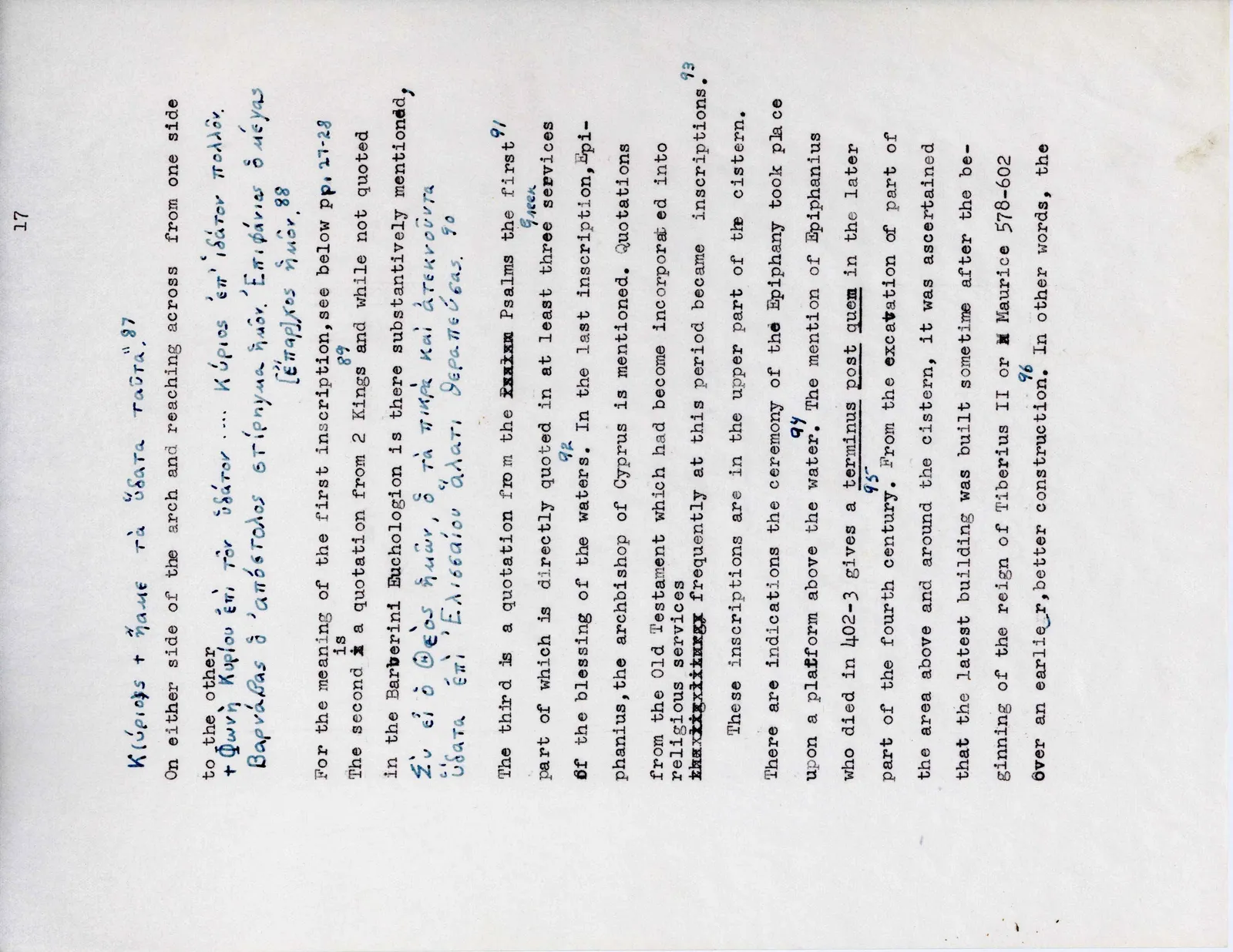
Kύριος + ἡμεῖς τὰ ὕδατα ταῦτα.[handwritten: 87] On either side of the arch and reaching across from one side to the other [handwritten: Κύριος ἐπὶ τὸν ὕδατον ... Κύριος ἐπ' ὑδάτον πολλὸν. + Φωνὴ Κυρίου ἐπὶ τὸν ὕδατον ἡμῶν. Ἐπιφάνιος ὁ μεγας Βαρναβας ὁ ἀπόστολος στίρνυμα ἡμῶν. [Ἐπαρχος ἡμῶν.] 88]
For the meaning of the first inscription, see below pp. [handwritten: 27-28] The second [handwritten: is] a quotation from 2 Kings [handwritten: 89] and while not quoted in the Barberini Euchologion is there substantively mentioned, [handwritten: Σὺ εἰ ὁ Θεὸς ἡμῶν, ὁ τὰ πίκρα καὶ ἀτεκνούντα ὕδατα ἐπὶ Ἐλισσαῖου ἀλλατι Θεραπεύσας. 90]
The third is a quotation from the Psalms [handwritten: 91] the first [handwritten: Psalm] part of which is directly quoted in at least three services of the blessing of the waters. In the last inscription, Epiphanius, the archbishop of Cyprus is mentioned. Quotations from the Old Testament which had become incorporated into religious services frequently frequently at this period became inscriptions. [handwritten: 93]
These inscriptions are in the upper part of the cistern.
There are indications the ceremony of the Epiphany took place upon a platform above the water. The mention of Epiphanius who died in 402-3 gives a terminus post quem in the later part of the fourth century. From the excavation of part of the area above and around the cistern, it was ascertained that the latest building was built sometime after the beginning of the reign of Tiberius II or Maurice 578-602 over an earlier, better construction. [handwritten: 96] In other words, the
65 figures hard to readstruck struck outadded written in above” jug ditto, and what it repeatsword reading not certain